Gambling Addiction (Part III)
Wasted Lives, Wrecked Legacies
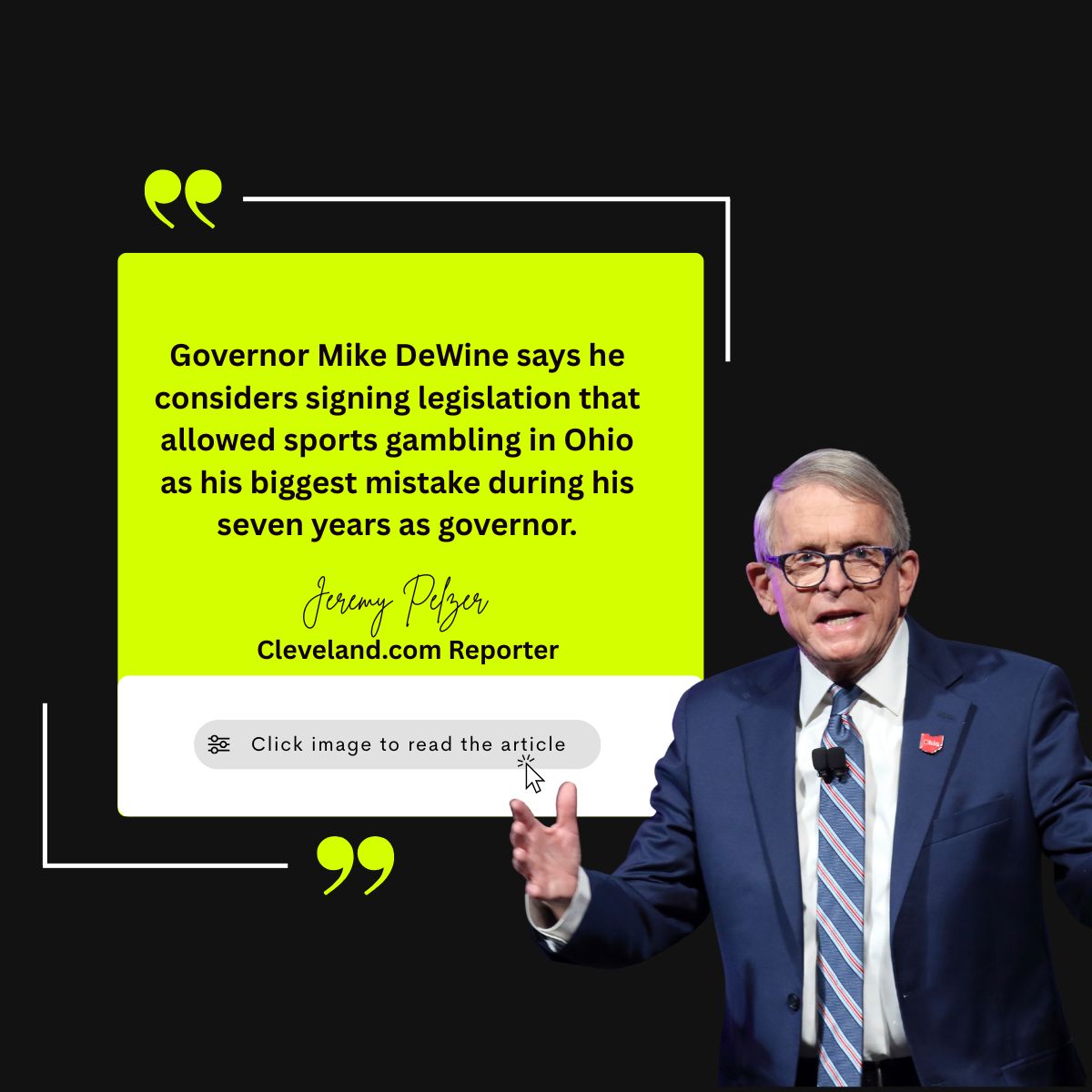
The fate of most problem gamblers who aren’t able to break free from their sports-betting addiction is some combination of a shortchanged life and a short-circuited legacy. Living is what they lose (in addition to a lot of money), and heritage is who suffers close to them (as a result of compulsive gamblers’ forfeited meaning or purposeless existence). Money lost, meaning less. And Ohio Governor Mike DeWine is intimately familiar with the personal brokenness journey behind the legislation he signed into law in 2021 but didn’t take effect until 2023. His jaw-dropping admission is one of the most shocking mea culpas I’ve ever heard a politician share in a public or private forum. I do applaud Governor DeWine for admitting his mistake, especially when so many gambling addicts have squandered their savings or home equity lines of credit, sabotaged their once-thriving marriages, and some have even taken their own lives. It’s so sad. On the sports side, Northeast Ohio native, Terry Rozier, tops the list. This former star basketball player at Shaker Heights High School and current NBA player (on suspended leave) has been implicated in a federal gambling probe. Two Cleveland Guardian pitchers, Emmanuel Chase and Luis Ortiz, were caught rigging pitch counts. Several University of Dayton basketball players faced threats from disgruntled sports gamblers. Brendan Sorsby, the star quarterback at Cincinnati over the past two seasons, admitted to placing thousands of sports bets while in college. (Sorsby has since transferred to Texas Tech; he did check himself into a residential treatment facility to address his gambling addiction.) Now think about how bad the side effects of sports gambling are for Ohio’s general population! Let’s discuss a few of them.
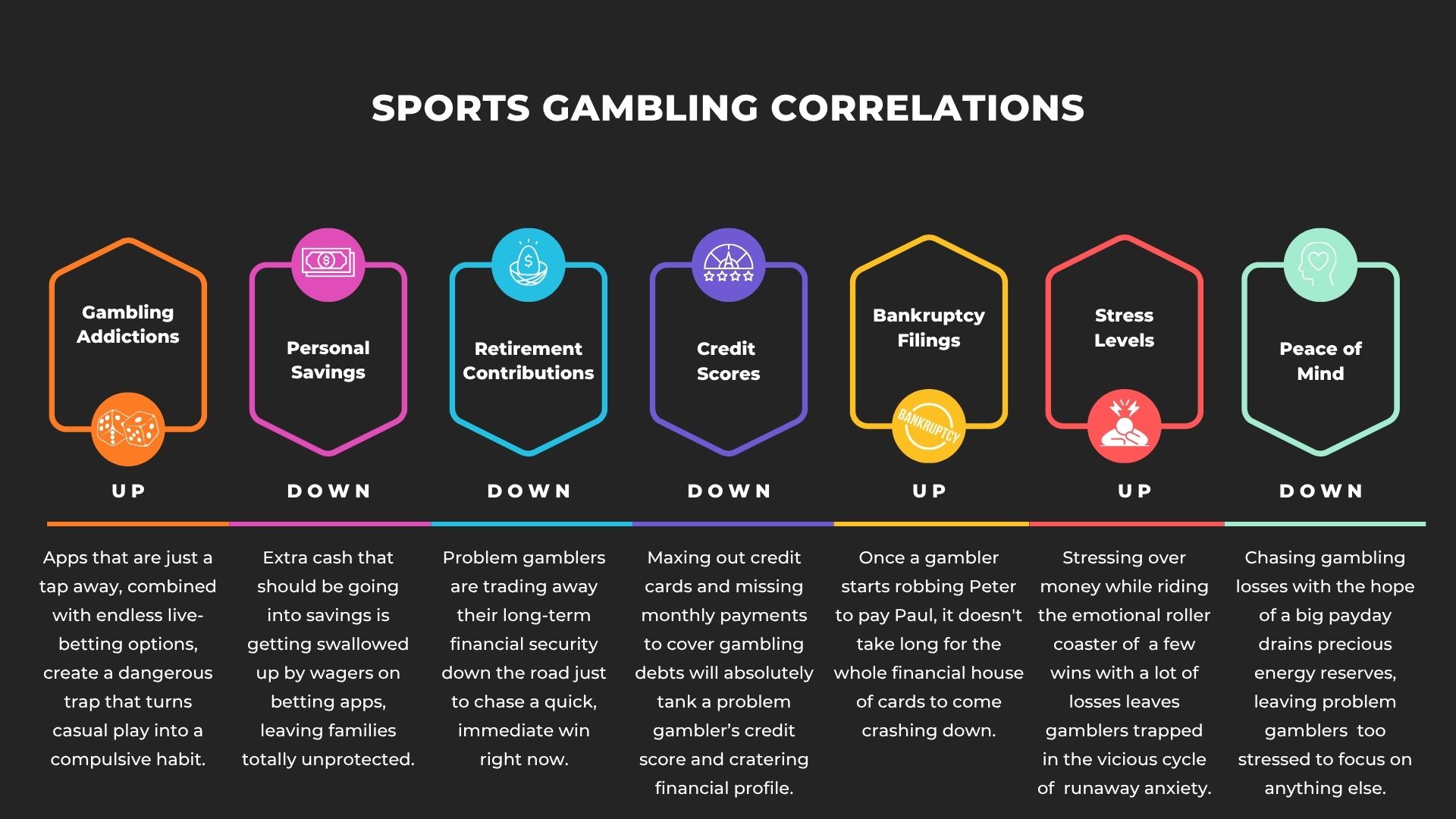
Side Effect #1: Financial Distress
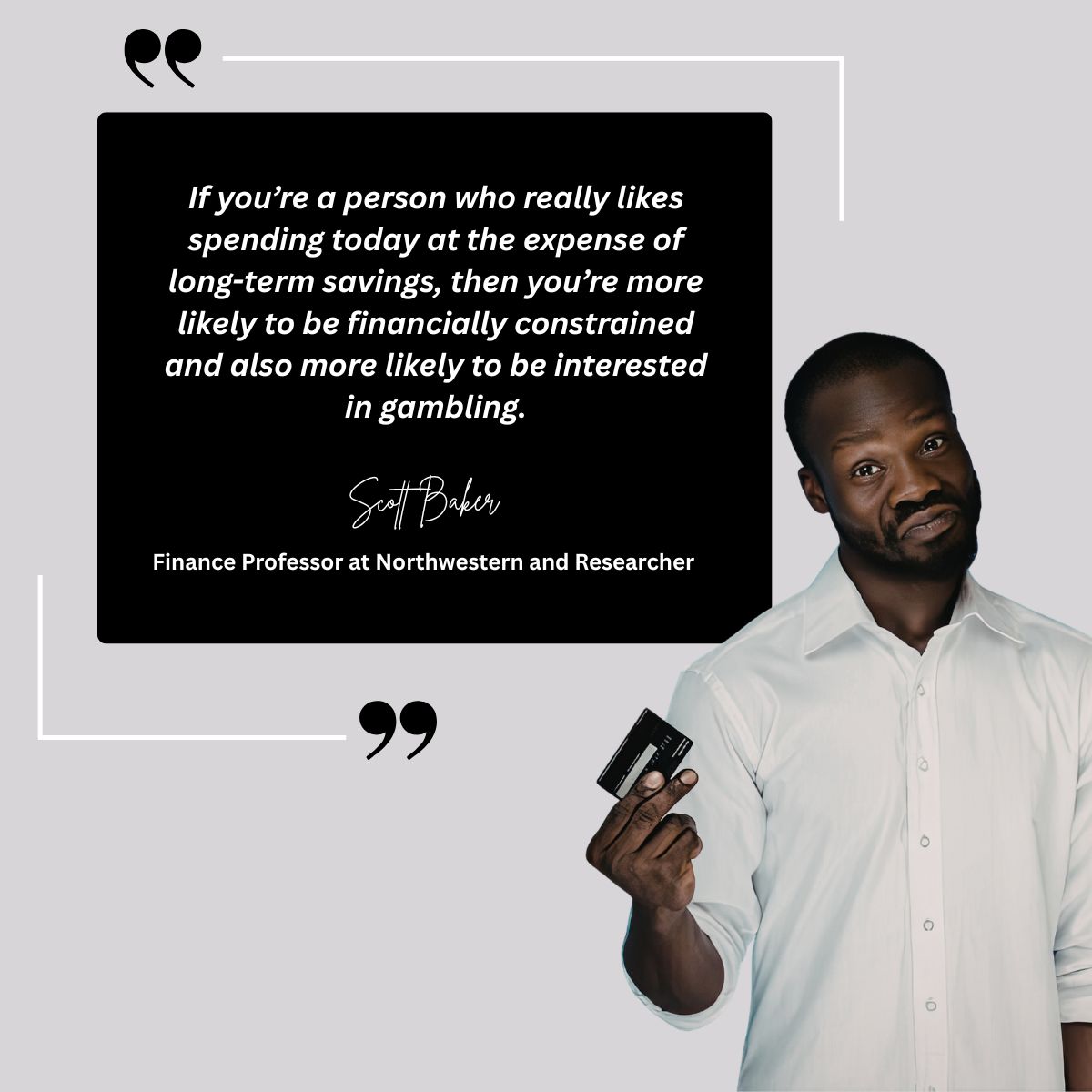
Throwing good money at incredibly bad odds is a painful lesson in futility. For most sports gamblers, chasing that next high will typically result in suffering through a new low. That new low—and the desperate measures that follow—has a ripple effect on personal or family finances for months (or even years) to come. “It’s a huge problem among young males up to 45,” Governor DeWine says. “And many of them are addicted, many of them spending money that they do not have.” Check this out. A groundbreaking study tracked the damage sports gambling has had in America over a five-year period from 2018 to 2023. Scott Baker, a finance professor at Northwestern University’s Kellogg School of Management and lead researcher, shared the following five conclusions, among others:
-
Researchers saw that nearly 8 percent of households were involved in some form of gambling.
-
While the amount of money people put into legal sports gambling rose, their net investments fell by nearly 14 percent.
-
For every $1 a household spent on betting, it put $2 fewer into investment accounts.
-
Evidence suggests greater access to sports gambling increased general participation in lottery games, particularly among households that frequently overdraw their bank accounts.
-
Beyond this, sports gambling also led to increased spending on cable TV, restaurants, and other forms of entertainment—possibly, the researchers speculate, driven by a greater engagement with live sporting events.
https://insight.kellogg.northwestern.edu/article/online-sports-betting-is-draining-household-savings
We, as a collective group, don’t have any money to waste. African Americans are at the bottom of the economic rung, with gambling debts and lottery losses adding to our shared misery. For every Oprah and Jay Z, we have Pookie and Ray Ray, Shamika and Sha Nay Nay. (By the way, my oldest niece is named Shamika.) As a community, we’re way behind financially when viewed from the prism of median net worth: $44,100 (African Americans), $62,000 (Hispanic Americans), $250,400 (Caucasian Americans), $535,400 (Asian Americans). We spend more on food, clothing, and entertainment than any other ethnic group. We contribute the least to our 401k retirement accounts than any other ethnic group. We are more prone to get-rich-quick schemes that promise huge payouts on small wagers than any other ethnic group. The 2022 census shared a shocking finding. Almost a quarter of black households had a negative to zero net worth compared to whites at 8.6 percent. So many ex-pro athletes and mega-paid celebrities claim to be pro black, but their endorsement deals with gambling companies contradict what they actually promote. Many of them were on the front lines of the Black Lives Matter Movement, but shouldn’t Black Legacies Matter More from an economic empowerment perspective? We’re quick to protest an unjust capitalistic system (and rightly so at times), but why are we setting up our own people for failure who gamble away money they can least afford to misspend? For African Americans, affinity bets using the advice of famous people who look, sound, and act like us do more harm than good. Sports gambling wagers should instead be redirected to fund 529 college savings accounts, increase contributions to retirement plans, start new businesses, make homeownership down payments, and more importantly, empower inner-city black youth through holistic initiatives.
Side Effect #2: Relational Distrust
Addiction found, trust lost. Troublesome measures are pursued by gambling addicts to cover their tracks in a relationship. As betting losses pile up, they must lie, hide, and/or steal to cover up the facade. Lying, hiding, and stealing are default responses that wounded players often display in the hurting games. Lie about the problem. Hide from personal responsibility. Steal from his, really their, financial future. To settle the score from the lost-bet scars—in their mind—all that’s needed is a big payout from the next wager. Unfortunately, problem gamblers end up digging an even deeper hole for themselves as well as the innocent bystanders around them. They not only lose more money; even worse, they mismanage relational capital with loved ones who feel betrayed. For many unsuspecting thrill-seekers who gamble, they are unaware of this roller-coaster outcome: The highs of relational deposits in the distant past are superseded by the lows of relational distrust in the present moment. Can the relationship recover? I guess it depends on two key factors, the gambling addict’s willingness to change and whether a loved one whose been deeply hurt has the heart to forgive. Both are required to build meaningful trust again, and they must occur simultaneously.
Jordan Acer (pronounced “Aker”), a certified financial planner and co-owner of Concordia Wealth Planning, has worked with hundreds of clients over his 10-year career. In a phone interview, he shared insights on several clients who’ve dealt with gambling struggles under his financial guidance. Acer points out, “When clients are withdrawing more than the plan is allowing, we, as planners, can highlight this in a loving way. But it’s their money, not ours.” He adds, “What ends up happening for some clients is that they’ll set up two separate financial planning accounts. Of course, this allows the husband to hide the gambling addiction from his wife.” He continues, “She knows when her husband is at the casino or a sports bar betting on games. His whereabouts are pinged by the location finder on her phone.” Trust is lost as the problem gambler burns through life savings, home equity lines, and retirement accounts to place ongoing bets. Wives or significant others don’t want to compete against an all-consuming gambling addiction; they want to be wholeheartedly pursued. Acer mentioned a close friend and problem gambler who stopped returning his calls, went through a difficult divorce, and moved out of state away from his kids. He notes, “And this phenomenon of relational distance has accelerated since sports gambling became legal in Ohio.” Unless something drastically changes on the legislative front, this will get far worse for those inside and outside the Buckeye state who are impacted by the side effects of gambling addictions.
Side Effect #3: Biochemical Disturbance
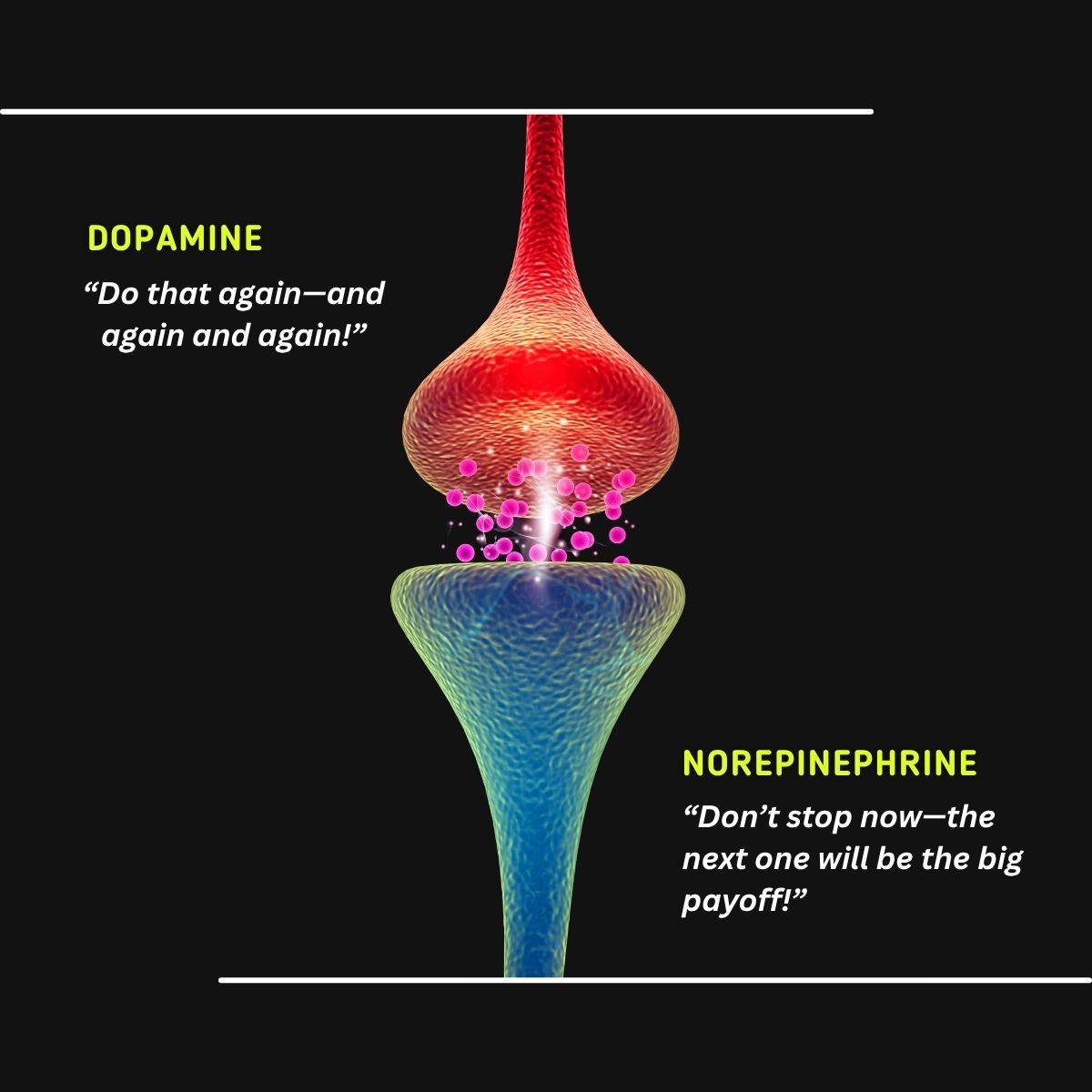
I know this to be true about addiction: the body doesn’t differentiate; it only responds. Doesn’t matter the addiction, the body is conditioned (through the reward pathway system) to replicate that initial high or low when the dopamine alert bells scream, “Do that again—and again and again!” And dopamine isn’t the only biochemical expression at play. A worn-out body needs a constant jolt of hyper-vigilance to keep a sports gambling addict locked in to the next wager. Norepinephrine, also known as noradrenaline, shows up and shows out with a vengeance. This excitatory neurotransmitter keeps the gas pedal on full throttle for problem gamblers who need every ounce of concentration from one bet to the next. It won’t let them miss out on a betting opportunity from sun up to sundown, whether it’s a west coast a west coast NBA playoff game or a table tennis tournament on the other side of the globe. There’s no rest for weary sports gamblers operating on fumes. They can’t deviate off course; norepinephrine, and it’s sidekick glutamate, won’t let them.
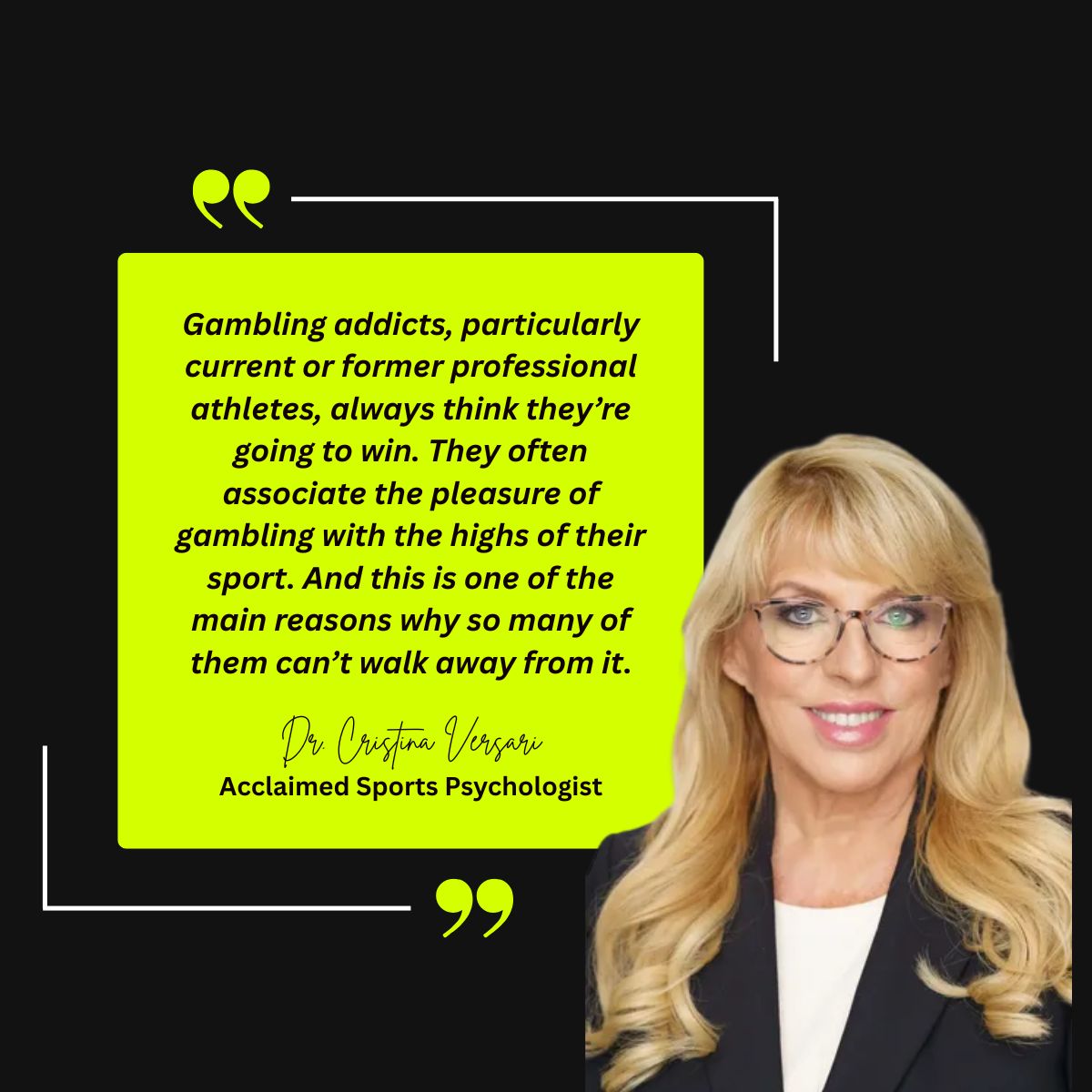
We can’t apply a bandaid to a gambling addict who is hemorrhaging from a wounded past. No, we must first offer a bandwidth solution, hopefully through the guidance of a qualified addiction counselor. Let me explain. Bandwidth is about tuning in to that gambling addict’s frequency meter or station of pain, say 106.5, where he plays or places 106 bets in 5 minutes by running from that permanent hurt to find his temporary relief. What permanent hurt? Being abandoned by his biological parents as a kid and shuffling between one foster care home to the next. Getting bullied on social media back in high school. Falling short as a misguided son, indecisive husband, or nonexistent father. The incessant betting is the remedy for his background noise or station of pain. (This also applies to females with gambling problems.) You see, most of us, if we’re honest, have background noise in our lives. We worry. We criticize. We doubt. The likely cause? Insecure attachments that still haunt us to this day, those maternal and/or paternal relationship deficits in childhood that follow us to adulthood. Experiences that aren’t even remembered before the age of six can negatively affect us decades later (Reference #1). Remember “Ryan” in the second article of this series? Well, he was born by Cesarean section; he also wasn’t breastfed as a baby. He admits, “I’ve always struggled with attachment issues as a teenager and young adult” (Reference #2). I’d venture to say that in the majority of cases, the roots of parental harm cause or greatly contribute to the offshoots of biochemical damage that lead to obsessive thoughts, compulsive tendencies, and addictive behaviors in children as they age.
Reference #1
Santiago Delboy. How Childhood Trauma Becomes Part of Who We Are as Adults. The origins of people pleasing, self doubt, shame, disassociation, and more. Psychology Today. March 31, 2025.
Reference #2
Marie-Andree Grisbrook and colleagues. The Association between Cesarean Section Delivery and Child Behavior: Is It Mediated by Maternal Post-Traumatic Stress Disorder and Maternal Postpartum Depression? January 17, 2024. NIH. National Library of Medicine.
Chasing Money, Losing Meaning
Regardless of the addiction, a life assignment has to be part of the remedy for those caught in the grips of one. And people who are guided by purpose don’t gamble with their money when meaning is on the line. Think about that for a moment. I define purpose as the assignment you were placed on this earth to accomplish for the benefit and betterment of others. With any life assignment, you’re going to have pop quizzes and open-book tests for growth-oriented purposes. And when chasing a lot of money, it’s easy to lose out on meaning. How so? Well, the allure of capitalizing on an improbable chance leads to getting caught up in a never-ending choice. What really happens is that problem gamblers lose the power of choice. You can only opt in to the next wager, not out of it. For gambling addicts, the choice is never binary (0 for not betting and 1 for the next bet). Because when choice is driven entirely by chance, which is the case with a gambling addiction, your life is operating in reverse order. This obviously will have a negative impact on a problem gambler’s circadian rhythm (how your body’s frequency or tuning system operates over a 24-hour period) and circaseptanrhythm (how in tune your life operates over an extended period of time, say 5 to 7 days). These two systems must be operating at peak efficiency for an individual to have a legitimate chance at fulfilling a purpose-centered, life assignment. And one of the telltale signs of a gambling addiction is a disrupted and dysregulated circadian rhythm. That’s when other vices show up—drinking, drugging, and drifting—to make up for the biochemical shortfall. This can lead to deep depression and suicidal ideation as losses mount. (The suicide continuum consists of fantasizing planning, vacillating, attempting, and completing self-inflicted death.)
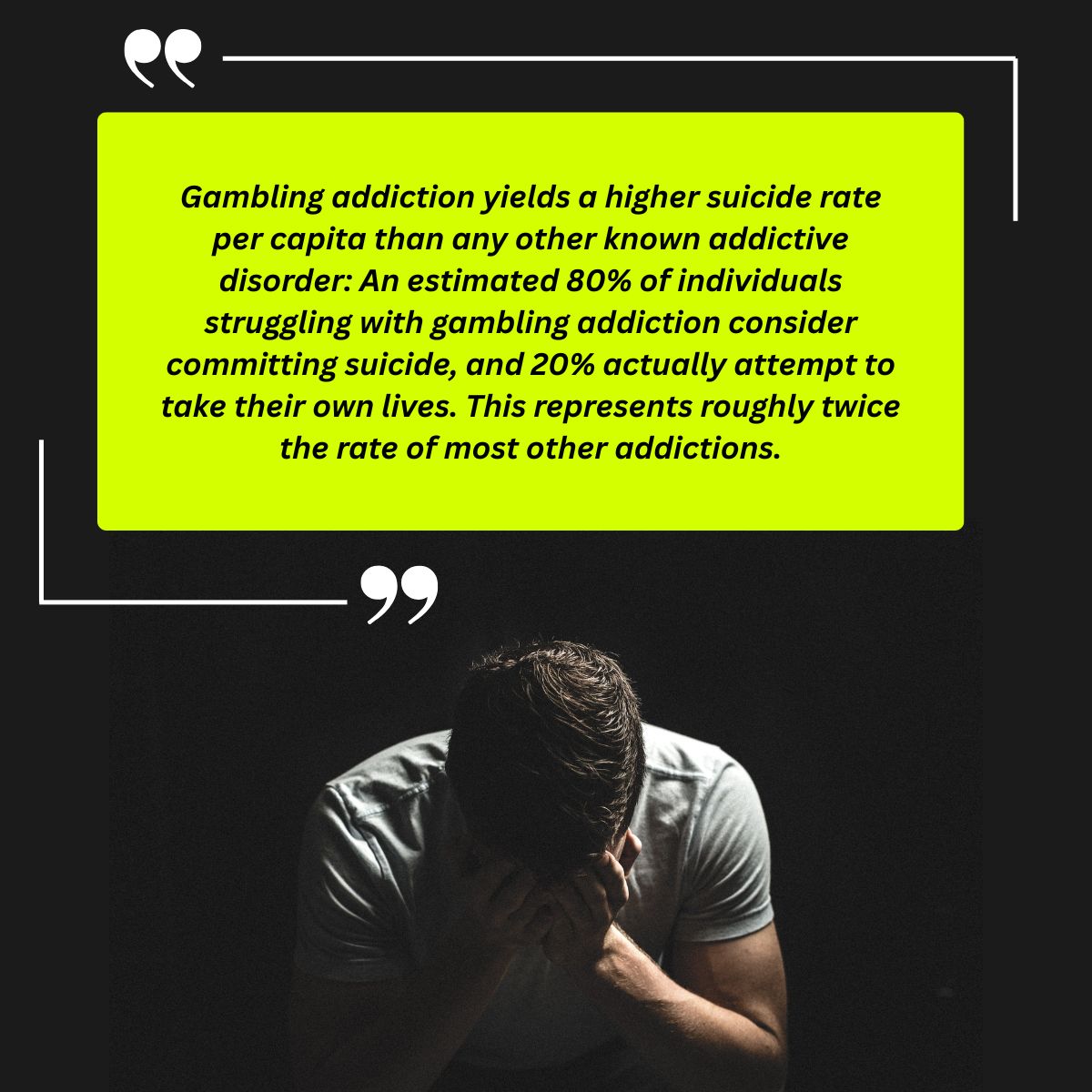
Let me close out the series with this heartbreaking stat from Ohio’s Casino Control Commission website:
Recent Articles

Gambling Addiction (Part II)

Cracking the Gambling Addiction Code
An algorithmic node—that’s what a problem gambler is—in the addiction network. Online sports gambling is a significant part of the prediction economy, a system in which future (or even split-second live) bets can result in lucrative payoffs for an infinitesimally small number of winners. The problem is not with the anticipated gain; it’s the assumption that somehow a loss will be altogether avoided, or worse, not considered at all. Here’s what I mean. In order for the sports gambling system to capture pools of willing players, significant amounts of data have to be collected on “monetized targets,” notably where they live, play, and work; who they follow in the sports world; why they enjoy live betting more than static gambling; when they’re likely to place small, medium, or large bets; how frequently they wager over a given time period; and which mix of parlays or prop bets are most appealing to them, among many other considerations. What gambling addicts don’t realize is this: the very same information they voluntarily share in responding to an affinity-based questionnaire or on a rapport-building phone call will, at some point, be used for their own demise. I call this the entrapment of systemic risk. Stay with me now. In effect, every sports gambler’s individual risk (and affinity, VIP profile) is added to the group’s mutual risks. The problem? Betters rarely share in collective gains but do quite often participate in cumulative losses through the law of large numbers. And when gamblers try to walk away from impulsive betting, frequency capital will be used to reel them back in. Managing moods is the biochemical manipulation key bookmakers deploy to unlock, really extract, more and more money from out-of-tune gamblers.
Sports bets are often made on the basis of superstitious beliefs, lucky hunches, past performances, forecasted trends, and of course, expert opinions (thanks, in large part, to celebrity endorsements from retired pro athletes and comedy icons). You see, the currency of assurance is the insurance of conviction. And this is precisely why gambling companies pay influential voices—who often leverage their larger than life colorful personalities or comedic routines in scripted, attention-grabbing advertisements—a boatload of money. The outlay is certainly worth the investment from a return-on-capital perspective. It’s a brilliant marketing tactic using an incredibly deceptive entrapment practice. This practice, among others, is what keeps gambling addicts locked into a game with bad outcomes. Pay up. Play on. Pray for. That next winning bet! By the way, humor influences human emotion and distorts logical thinking, serving as an embellishment hook to draw people in rather than to push them away. Don’t ask questions, just laugh at the joke, flow with the skit, embrace the punchline, and forget your problems. But there’s nothing funny about losing a job, spouse, or worse, a loved one through suicide due to a runaway gambling addiction.
“He’s Feeling It!”
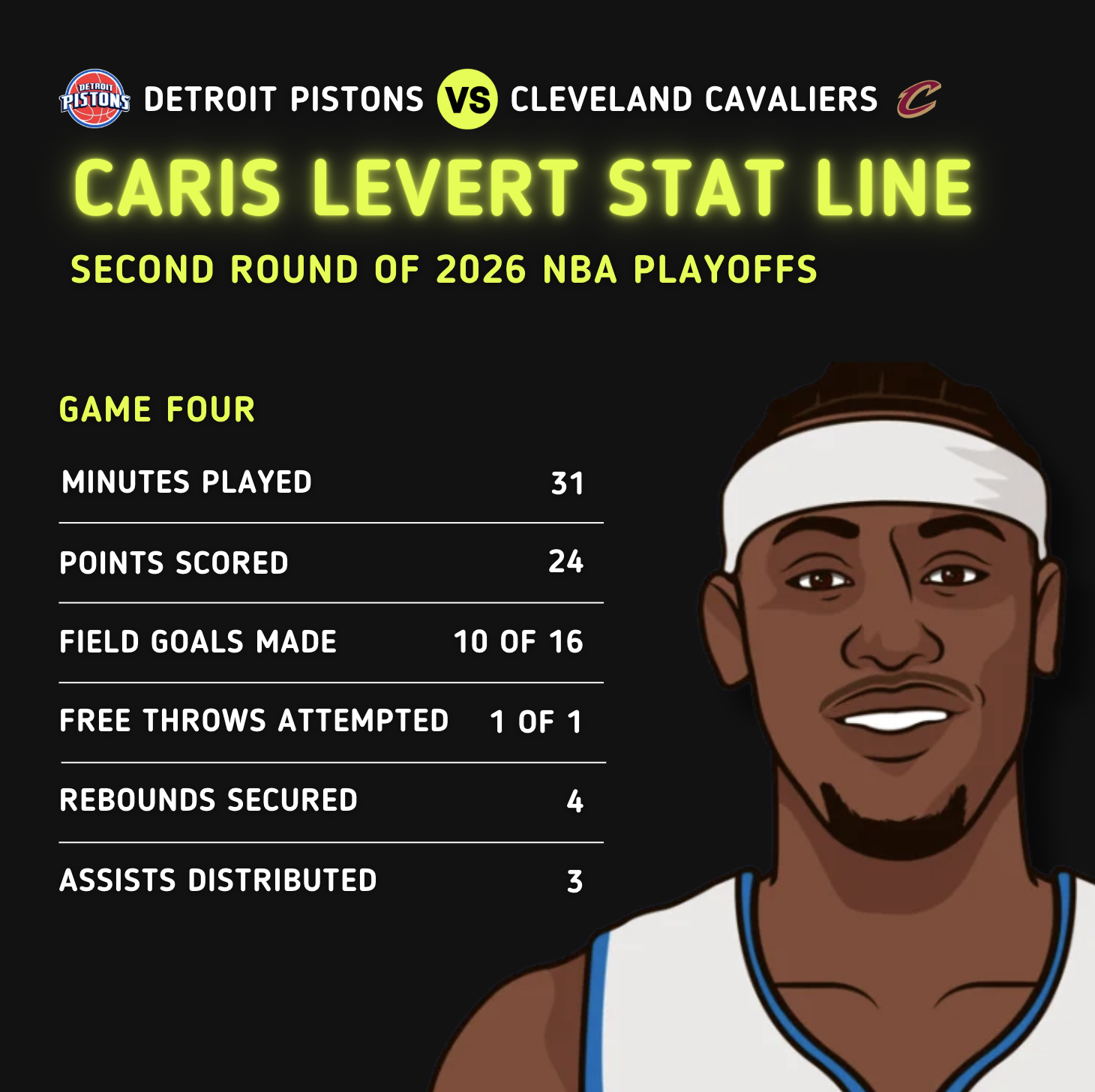
I’m a big fan of Carmelo (Mr. Cool) Anthony. I followed him at Syracuse, where he lead the Orangemen to a 2003 National Championship as a freshman. The Hall of Fame legend and three-time Olympic gold medalist had an illustrious NBA career. He scored 28,289 points in 19 NBA seasons. As the ultimate “Shot Hunter” and “Bucket Maker,” his confidence in scoring timely baskets was second to none. In our modern era, MJ was certainly next level, Kobe was a close second, and Kevin Durant right behind him. But Anthony could give all three of these all-world scorers a run for their money as the crème de la crème in making sure that spherical ball went through that orange hoop. With pinpoint accuracy! What I especially admired about Anthony was his ability to score—at will—on all four Olympic teams. Different makeup, same outcome. No matter who was on the floor with him, he knew how, where, and when to get his points. That’s why his insights carry a lot of weight as an NBC-Peacock basketball analyst for NBA games. During halftime of the fourth NBA playoff game between the Detroit Pistons and Cleveland Cavaliers, Anthony’s commentary on live player props for DraftKings caught my attention. Regarding Caris LeVert, a reserve player for the Pistons who scored 17 points in the first half, Anthony emphatically stated that LeVert would easily score more than the prop betting line, 23+. “All, that’s easy; he will get that in the third quarter!” LeVert had 22 points by the end of the third quarter, and finished with 24 for the game. Here’s the question to ask: How many viewers were persuaded by Anthony’s insights to bet on LeVert scoring more than 23 points before the start of the second half? Probably a lot.
The lure of predictive betting is very tempting to pass up. As noted in Part I of this series, I’m not a gambler. However, I do make predictive forecasts all the time as a former NBA player while watching college or pro basketball games. Because I am keenly familiar with the psychology and physiology of the sport, I do have “inside information” at my disposal. Through a production (more than a prediction) lens, I observe players’ and coaches’ body of work in previous games as well as their body language in the current game. Face of flight or focused for the fight? Blinking rapidly tends to convey stress, anxiety, and timidity, which may indicate that the moment is too big for a coach, player, or team to handle. My son Eli and I stayed up late to watch the first game of the 2026 Western Conference Finals. The San Antonio Spurs, led by Victor Wembanyama, won a thriller in double overtime against the Oklahoma City Thunder. I told him before heading to bed, “The Thunder are going to win game two by 8 to 10 points.” OKC won by 9. The Spurs gave a valiant effort, but OKC players had a different look in their eyes compared to the first game. They picked up their defense, pushed the tempo, and rode the wave of their electric crowd to a much-needed win. As the defending NBA champs, they had no other choice but to save face.
Incentives matter more than player stats or prop lines, which sports fans or gambling enthusiasts may not realize. Let’s revisit Caris LeVert’s game four breakout performance against the Cleveland Cavaliers. In the first round of the playoffs against the Orlando Magic, he averaged under 3 points a game. LeVert is a capable player; however, he struggled mightily against the Magic. But in the second round, LeVert averaged over 9 points, a 3x per-game scoring boost compared to the first round. What happened? Here’s my take. First, LeVert used to play for the Cavs. Obviously the team traded him; he may still have beef with Cavalier ownership about this. Second, he was born in the Buckeye State but played college basketball for that team up north. Cleveland Cavs fans reacted with boos to images on the jumbo screen of Jim Harbaugh, the former head coach of that team up north. I’m sure this fired up LeVert even more. Third, he is from Central Ohio, a roughly two-hour drive from downtown Cleveland. Now why wouldn’t he play better in front of family and friends who made the trip up from Columbus to support him against his former team? I would never share, no matter the financial incentive, any information for public consumption that could lead a problem gambler into financial ruin based on my “inside-information” recommendations. Keep the millions; I’m good.

Faith Framework, Belief Continuum
The faith framework (in what someone predicts while being a voice of trust) is part of the belief continuum, from plausibility to possibility to probability. Plausible. Possible. Probable. As you can tell by the synonym and semantic wordplay used, this type of belief offers the illusion of certainty at the expense of free choice through a cleverly packaged neuroscience hacking system. Guess where the faith framework and belief continuum are located in the brain? The temporal lobe, an area that also houses long-lasting memories, deep-rooted emotions, life-application scripts, trigger-inducing sounds, and aromatic-blended scents. The fragrance of a (perceived) winning bet passes the smell test long before, not after, it ever happens. And we know expectation and experience don’t always see eye to eye! Now, this doesn’t deter most gambling addicts who get caught up in the expectation-experience disappointment zone. No, they’re still convinced of the eventual outcome (in spite of evidence to the contrary), which is why they place their unwavering faith that it, or a follow-up wager, will at some point pay off.
This is the classic case of the stick dangling the proverbial carrot, also known as Pavlovian conditioning or associative learning (where a test subject can only opt in but not opt out of a reflex-guided experiment). Yes, dopamine may drive the conviction vehicle, but depleted levels of oxytocin are what fuel a wagering addict’s willingness to stay on the gambling belongingness bus, better yet, bankruptcy bust. And this, my friends, is an exhausting ordeal to pull off. Online all the time but in need of a lifeline. In a VIP suite full of other “lucky” gamblers while feeling alone in the corner of the room as the biggest loser. With family and close friends—at festive events full of laughter—who aren’t privy to the depth of darkness and newfound space-cadet ways of their loved one drowning in misery. If you’re an empath like me, you can feel their pain and grasp how problematic this whole setup is. It’s not a fair fight when a problem gambler can’t see or duck from the next punch coming. His reflexes are compromised, just the way gambling companies and their well-paid addiction scientists like it. (As a self-taught neuroscience hack and transparency ideologue, oxytocin is a connection pathway that I often appeal to as an empathetic-driven writer. Honesty is always the best policy.)
Before closing out this article, I want to introduce readers to a young man that I’ve had the pleasure of mentoring for the last year or so. To protect his identity, I’ll refer to him as “Ryan,” the alias he requested. Ryan’s a natural go-getter with an entrepreneurial spirit and stellar background in sales. His wisdom and understanding of life are quite impressive for a 24 year old. Heck, I learn just as much from him as he gleans from me. Unfortunately, Ryan’s a former sports gambling addict. At one point, his winnings exceeded $120,000. His losses? They were just over $225,000. Net-net, he’s in the hole more than $100,000. Some of his wins and losses are highlighted in the screenshots below. Ryan won early and often in the beginning, which kickstarted his gambling addiction. Off the rip, he won $28,000 in three hours without having a dollar of his own money at risk! As a result, BET365 banned him after he beat their algorithm; he won too much too quickly. However, the Midas touch eventually wears off for every above-average sports gambler, Ryan included. His addiction caught up with him, and he paid a handsome price for it—financially, relationally, and inspirationally.

A few years ago, Ryan’s sitting in the back seat of his parents car on the way to dinner with them. He notes, “I had just lost over $3,000—in a matter of minutes—using a sports betting app! Shocked and dazed, all I could do was continue scrolling while looking for my next pick-me-up bet.” The algorithm sent him into a state of fog, a common side effect experienced by problem gamblers. Ryan adds, “I couldn’t even have a meaningful conversation with my mom and dad. My mind was somewhere else, which was so disrespectful to them.” And that’s what a gambling addiction does to many players: they morph into (or take on) a scaled-down version of their best selves. It’s subtle, but as they bet and lose more, meaning is lost in lockstep with the money. Ryan continues, “I lived for that next wager. I made the erroneous assumption that this would be my purpose in life, an A-rated gambler who could consistently beat the odds.” His emotional state took a beating right alongside his betting: disgust, anger, shame, regret, and shock overwhelmed him. He concludes, “I lost myself and a girlfriend over my out-of-control gambling problem. What’s worse, I wasted so much time chasing an empty thrill.” Ryan’s still here, but some problem gamblers aren’t as fortunate. In the last installment of this series, I’ll discuss the pathological effects of runaway gambling addictions. Thank you.
Recent Articles
Gambling Addiction (Part I)
Huge risks, big(ger) payoffs. For the record, I’m not a gambler. Nope, it has never been a gravitational pull of mine. However, I have seen many people, including former NBA teammates, get bitten by the gambling bug over the years. The side effects? Well, they’re dose dependent and ever present. More on them a bit later. Gambling has always been a part of the NBA culture, whether it’s card games with multi-thousand dollar jackpots on long road trips to the east (or west) coast in private planes, frivolous bets on half-court trick shots before and after practice, or locker room wagers on which referees are likely to officiate hotly contested playoff games, from one round to the next. I witnessed these scenarios—and many others—firsthand in the NBA. “Bet that” was part of our everyday, testosterone-driven lexicon; nothing was off the gambling table. It’s much worse today! The side effects of gambling addictions result in long-lasting symptoms, from financial problems to relationship challenges to internal stressors to sleepless nights to mental health issues, in particular, circadian rhythm disruptions. By the way, May is Mental Health Awareness Month. And yes, even casual betting indulgences can morph into full-blown gambling pursuits when triggered by an unforeseen setback, such as a job loss, economic downturn, death of a life partner (or beloved family member), or any number of crises-related events. What usually happens here is the chase becomes the run to the fun. To a place of refuge or from a space of torment. Either way, the addiction fix is in.
Are some individuals, like myself, predisposed to addictive tendencies because of genetic (or heritable) traits, epigenetic (or environmental) influences, or optogenetic (or shiny-object) sources? The evidence is mixed. Opinions vary in the medical community from “not at all” to “significantly so.” Here’s what we do know about people who have an innate ability to bet on themselves, many gambling addicts included. These individuals generally fall into one or more categories: movers and shakers, risk takers, and/or opportunity makers. Let’s break each of these down from a psychological point of view:
Movers and Shakers
Movers and shakers make things happen. Right now! For them, sitting still is missing out on the action. Even in a confined space of intense boredom, their mind is moving from one thought to the next. Broadly speaking, they’re long on creating million-dollar ideas in record time but short on producing the feasibility studies needed to pull them off. The number one drawback of movers and shakers? It’s easy for them to confuse movement for progress. In fact, going somewhere may not get them anywhere.
Risk Takers
Next up is risk takers, who cover the gamut. At one end of the spectrum are methodical and meticulous risk-taking brain types. Planning typically comes before acting. They’re philosophical and are often described as having “mundane personalities.” They usually excel in math and sciences, which is why they’re drawn to analytics and arbitrage strategies when gambling. At the other end of the risk-taking spectrum, we find carefree and careless brain types. When they feel it—that urge to splurge or need for speed—they’ve already acted upon it. An impulsive purchase. An unsolicited critique. A high-stakes wager. For these individuals, they assume delay automatically means denial. And in the world of sports betting, they’re prone to losing their shirts. Literally! Due to their spontaneous and combustible personalities, they’ll jump in the pool at the casino after a big win or pledge their home as collateral to chase a huge loss. One thing is fairly certain: they often move in lockstep with their mood. (I’ll cover this phenomenon in greater detail in Part II of this series.)
Opportunity Makers
Opportunity makers do just that … make opportunities happen for themselves and others. With this group, where there’s a will, there’s a way. Gut instincts, not impulses, drive their opportunity bus. As hockey legend Wayne Gretzky once said, “You miss 100 percent of the shots that you don’t take.” So true, but some shots are not worth taking regardless of the colorful appearances, celebrity endorsements, or commercial advertisements. Why gamble with your health or wealth using somebody else’s opinion?
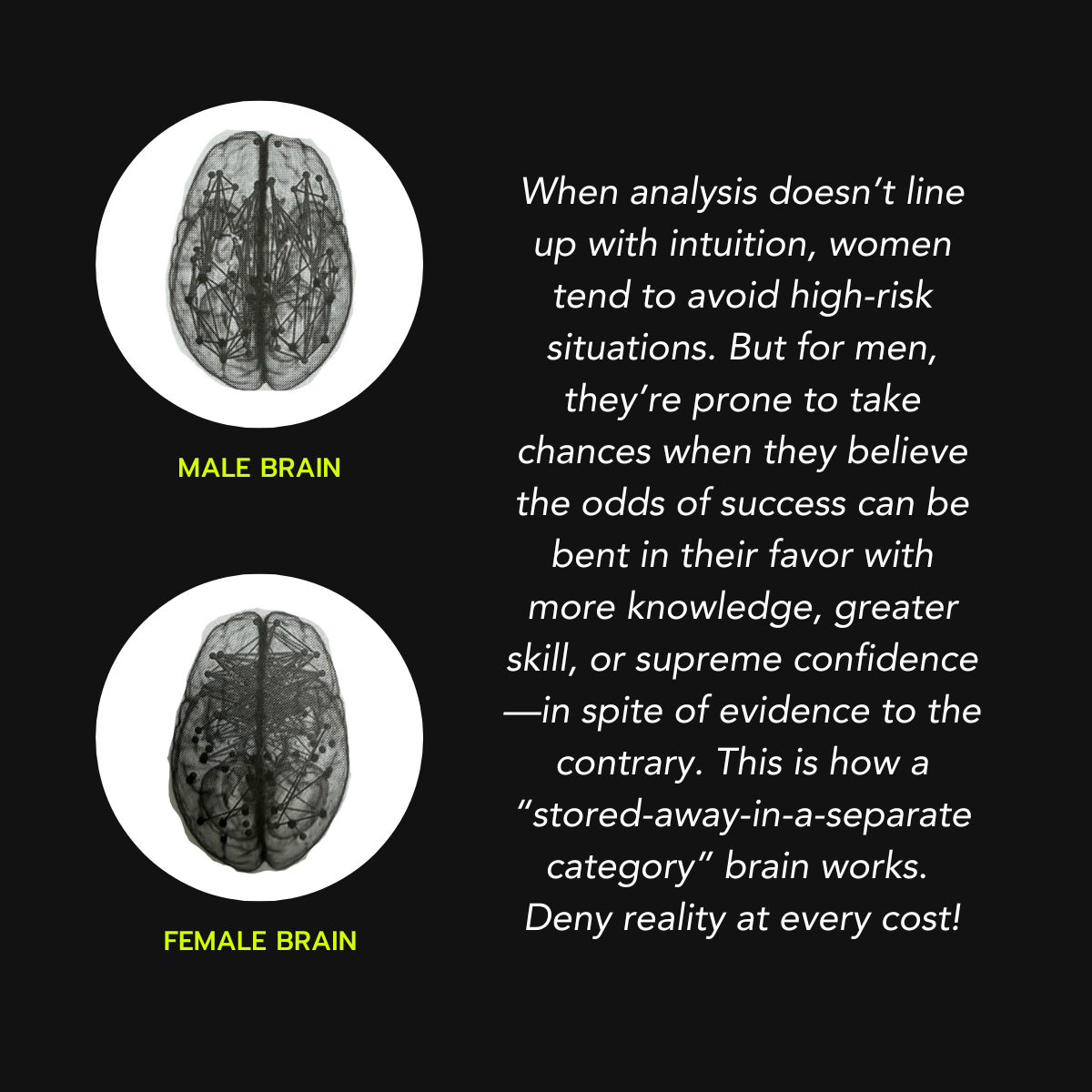
Why Males Can Compartmentalize Gambling Losses at the Expense of Isolated Wins
Not surprisingly, males are more impacted by gambling addictions than females. By a wide margin! Sounds controversial, but it shouldn’t be. According to Dr. Helena Boschi, an accomplished author and renowned psychologist specializing in applied neuroscience, she writes, “Men’s brains display front-to-back connectivity within the [left and right] hemispheres, moving between perception and decision-making” (reference #1). Women’s brains, Boschi notes, “are wired more laterally, between the hemispheres, suggesting greater communication between analysis and intuition.” (reference #2). Fellas, don’t shoot the messenger, but women are generally more intelligent than men. Ladies, I’m sure you already know this :). Neuroanatomy differences may also explain why male drivers pay higher car insurance premiums than female motorists. If male and female brains are exactly the same, then why are our risk profiles for automobile insurance so vastly different? Independent of ADD and ADHD diagnoses, risk-seeking behaviors are usually par for the course in the male brain. And gaming companies know this, which is why pubescent boys are being set up to become lifelong gaming and gambling customers through addictive video games with picturesque backdrops, exhilarating sounds, and masculine messages. Optical illusions. Acoustic frequencies. Semantic associations. A marketing campaign trifecta with terrible societal consequences.
Reference #1 and #2
Dr. Helena Boschi. Why We Do What We Do: Understanding Our Brain to Get the Best Out of Ourselves and Others. Chapter One, page 15. Wiley Publishing, 2020.
Chris Broussard is a sports analyst and commentator on FS1. Alongside Nick Wright, he is the co-host of the popular afternoon sports show, First Things First. A devout Christian, family man, and community ambassador, Broussard has worked for The New York Times, ESPN, ABC, and Fox Sports Radio. He covered the NBA’s blockbuster gambling scandal in 2025 involving Terry Rozier, Chauncey Billups, and Damon Jones. Rozier, a guard with the Miami Heat, and Billups, an NBA Champion and Portland Trail Blazers head coach, have been placed on indefinite suspension by the league as their cases are still under FBI investigation. Jones, a former NBA player and teammate of mine in Sacramento, pleaded guilty on April 24, 2026, to two counts of wire fraud conspiracy. In an interview, Broussard highlights, “The professional leagues may have inadvertently made a deal with the devil by getting in bed with these gambling companies.” He adds, “And there was no way to shield players from getting caught up in some kind of gambling scandal.”
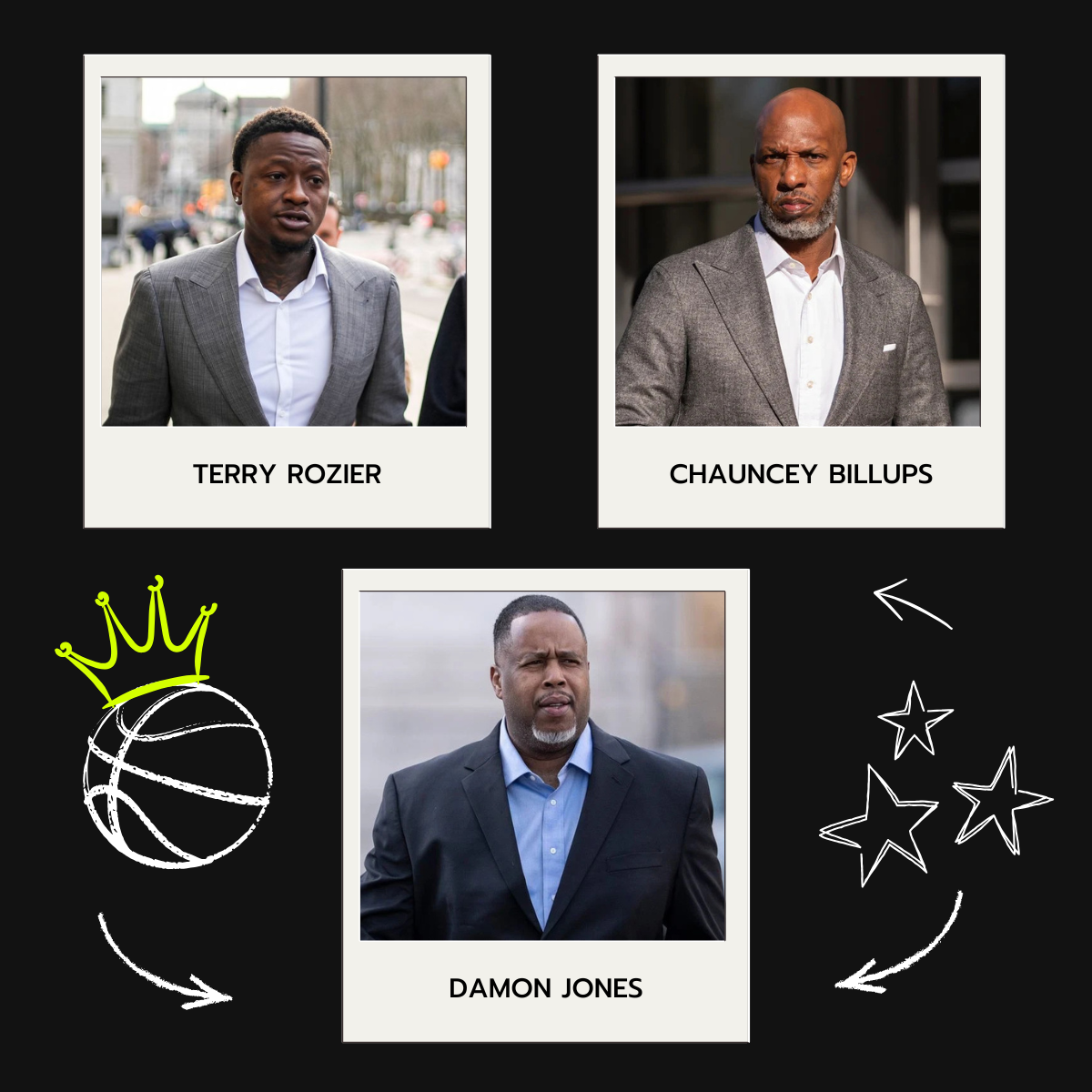
I was heartbroken by the news when it first broke. I thought to myself, “This is a really bad nightmare. Current and former NBA players allegedly mixing and mingling with mob families to dupe unsuspecting poker players out of millions of dollars through rigged setups. Say it ain’t so?” The game I love and league I defend is facing a crisis in confidence on three fronts. First, this scandal will fuel skeptics who already think (with this serving as added proof) that the NBA is nothing more than scripted choreography. It’s not, but every missed open shot, careless turnover, or senseless foul will be scrupulously examined from a “suspect-entertainment lens.” Second, current players will face even more scrutiny from sports betters masquerading as diehard fans when wagers miss the payoff mark. An irate sports bettor rolled down his car window to confront NBA superstar, Jimmy Butler, who was standing on the curb in New Orleans while in town to play the Pelicans. “Bro, I put $3,000 to win 30 [thousand]. Why you ain’t have 30 points? Jimmy Butler, why you didn’t have the 30 points? You were supposed to go OVER b—h. You work for Vegas? You work for Vegas?” Third, how will America’s youth be affected, really infected, by the gambling bug if no safeguards are put in place to protect them? Without an alternative course of action, they’ll likely fall victim to gambling devices in adulthood, if not before. We’re in big trouble folks.
In closing, I shared the stage recently in Denver with Rob Minnick, a former gambling addict now turned recovery advocate. We were participating in an event hosted by Doura-Schawohl Consulting and several Colorado legislators to limit sports betting in the state. (The bipartisan bill passed this week and is awaiting Governor Jared Polis’ signature.) For six years, Minnick struggled with a runaway gambling addiction. From parlays to blackjack to slot machines, he gambled every day online and in the casinos for 6 to 8 hours. Upon first glance, he didn’t fit my jaded, gambling addict profile. Minnick is polite, soft-spoken, and measured with his words. His Youtube channel and One Day At A Time (ODAAT) website are timely resources that shed light on this growing epidemic, with over six million Americans battling mild to severe gambling addictions (reference #3). Minnick’s story is best illustrated against the backdrop of Dr. Steve Rose’s Seven Excuse Traps.
Reference #3
Dr. Kent S. Hoffman. Addiction Help: Gambling Addiction Statistics. March 3, 2026. www.addictionhelp.com/gambling/statistics/
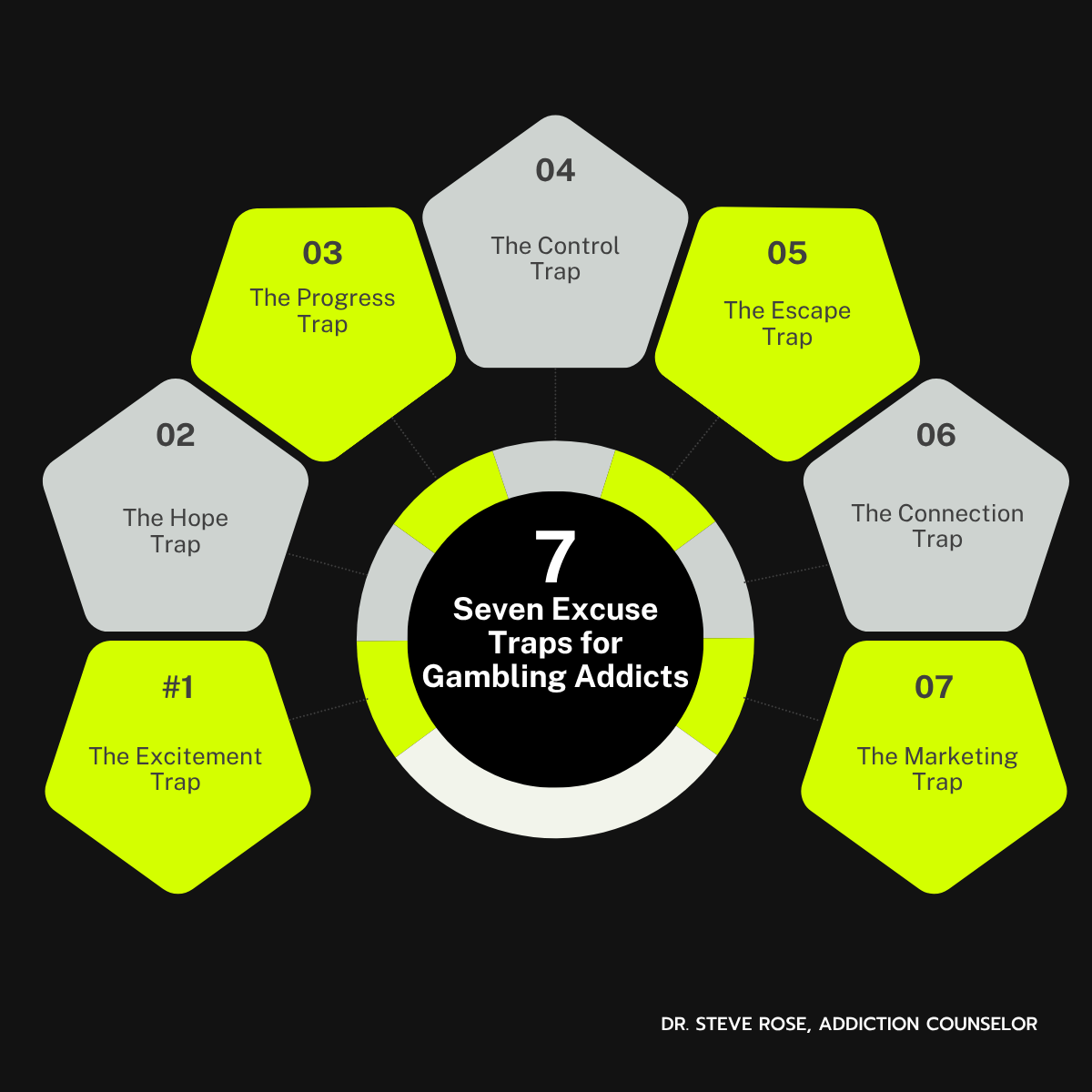
With Excuse #1: The Excitement Trap, Minnick’s addiction was set in motion by that initial dopamine hit coursing through his body. He points out, “This is where I got suckered in by the fun. Without that thrill, the gambling ride would have been boring and pointless for me.” The dangling carrot, Excuse #2: The Hope Trap, kept Minnick in the gambling feedback loop. Pay up. Play on. Pray for. That next win streak! Even when his losses piled up, Minnick convinced himself that one more bet—a winning wager—would cure his addiction in full. He admits, “Gambling addicts dig in when they should bail out.” That ray of hope, a promising payday, kept the hype fuel lit. The Progress Trap, Excuse #3, is where gamblers find themselves stuck in a rut with no tow truck in sight. Minnick warns, “Here is where the near-miss fallacy kicks in. You lose by a point and tell yourself, ‘Man, I was so close. Keep going.’” A gambling addict’s brain releases a larger dose of dopamine in comparison to someone in the general population who also almost wins. That extra surge fed Minnick’s urge.
Excuses 4 and 5 can be paired together, The Control Trap and The Escape Trap. Discipline, due diligence, and determination were factors that allowed Minnick to feel in control in an uncontrollable environment. He even developed some peculiar rituals while trying to escape from the madness. “I wore the same clothes, sat in the same spot, and hit the blackjack table in the same place every time before I bet. I even listened to vedic chants to center myself. Of course, nothing worked.” Excuse #6: The Connection Trap is where gambling delusions reach their highest peak. Minnick shares, “You’re paying for friendships with complete strangers.” He adds, “Your losses are funding the luxury suites gambling companies invite you to enjoy. Think about how crazy that is!” What’s even more disheartening is that VIP gamblers tell themselves, “I belong here and can get pretty good at this.” And just when a gambling addict tries to get out, the push notifications and free-cash ads ramp up. That’s why Excuse #7: The Marketing Trap, won’t let a betting enthusiast just walk away on his or her own terms. Minnick explains, “It’s so sinister what gambling companies do; they know us almost better than we know ourselves.” He concludes, “Fighting fair is not in their best interest financially.” Stay tuned for Part II in this series, The Physiology of Gambling Addictions, which will be released next week.
Recent Articles
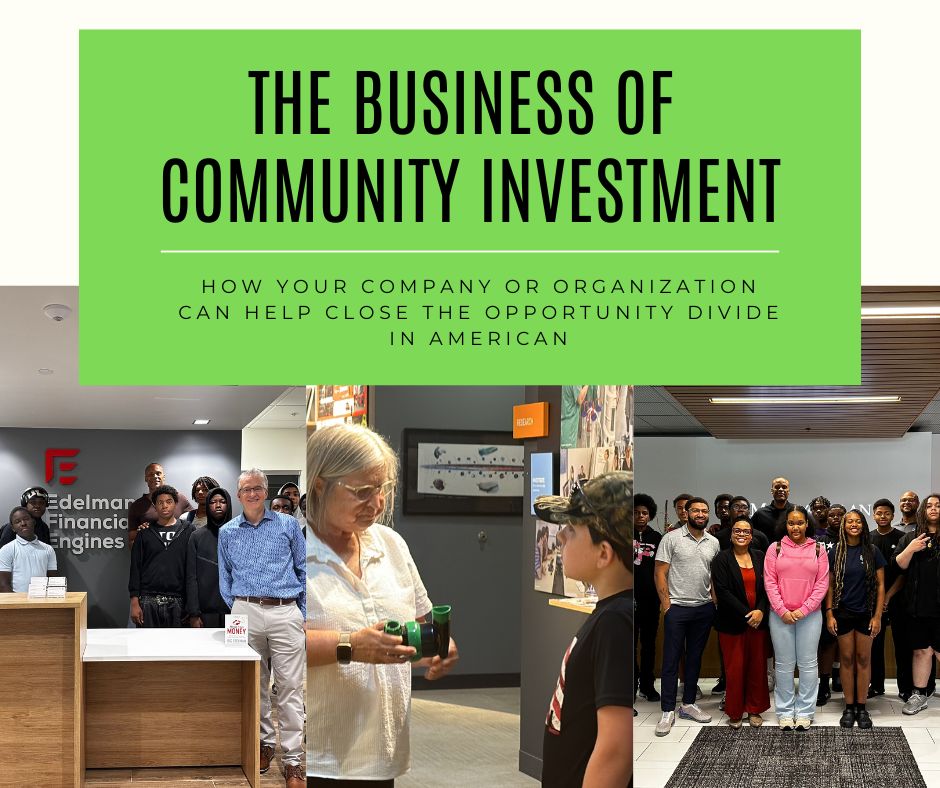
The Business of Community Investment
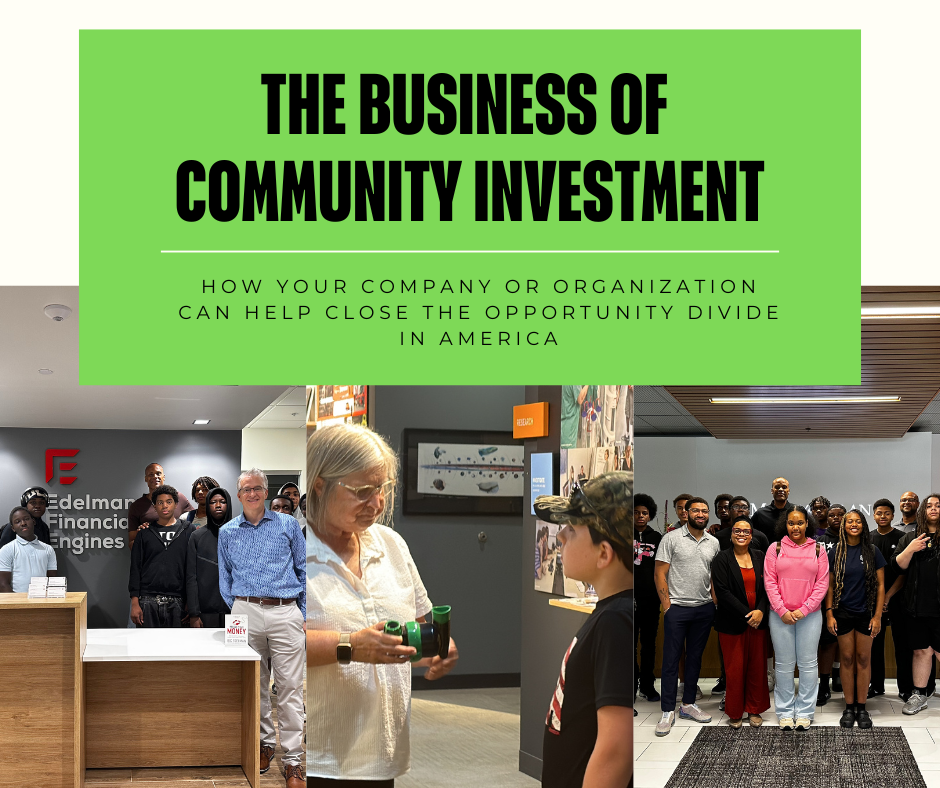
A Tribute to LFYO's 40 Business Partners
Brace yourself. If you don’t like personal and professional call-outs, really call-ups, then reading this article might set off your discomfort alarm bells. So be it, because our most vulnerable youth are in big trouble and they don’t even know it. That’s why we (you and I) need to do more. A whole lot more — right now! Writing checks to or volunteering at a local nonprofit organization is great. But here’s an even better alternative for high-impact companies with a social mandate: opening their doors so at-risk youth can see success up close, in real time. To learn what it takes to find a good job or start a thriving business. To discover where their skillset will be best used and most appreciated. To understand why they don’t have any time to waste in a highly competitive (and AI job-shrinking) labor market. You see, a lack of vision is arguably the biggest reason why young people from disadvantaged backgrounds check out. At school. On cue. In life. They often have nothing to look forward to regarding favorable outcomes in the future, which is why their interest capital is usually spent on what makes them feel good at the present moment. Here, their mood drives their mode. In other words, feelings (and not values) serve as their de facto guide. That’s a bad place for anyone to be, let alone a young person with a malfunctioning internal navigation system.
Solving problems. Following instructions. Producing results. Assessing (and taking calculated) risks. Maximizing opportunities. Controlling emotions. Handling pressure. Completing projects — on time and within budget. Working efficiently. Collaborating effectively. Communicating clearly. Embracing change. Inspiring others. Recognizing (and preventing) mistakes. Developing talents. Giving back. Dreaming big. These are the “soft” and “hard” skills employers expect, among others, from today’s multifaceted employees. And targeted brain development in these skill-building areas — inside and outside of traditional schooling — is critical to helping disadvantaged youth get up to speed in a dynamic and ever-changing employment landscape. Check this out. A shortchanged child needs a shortcut-providing mentor, or life-changing experience, to make up for lost ground. Vulnerable students, in the majority of cases, are way behind academically and inspirationally. Multiyear academic deficiencies and multigenerational systemic inequities are hard, if not impossible, to close without a bridge-building catalyst in place. Enter unforgettable field trips to area businesses to help connect the relevancy dots. Let me explain.
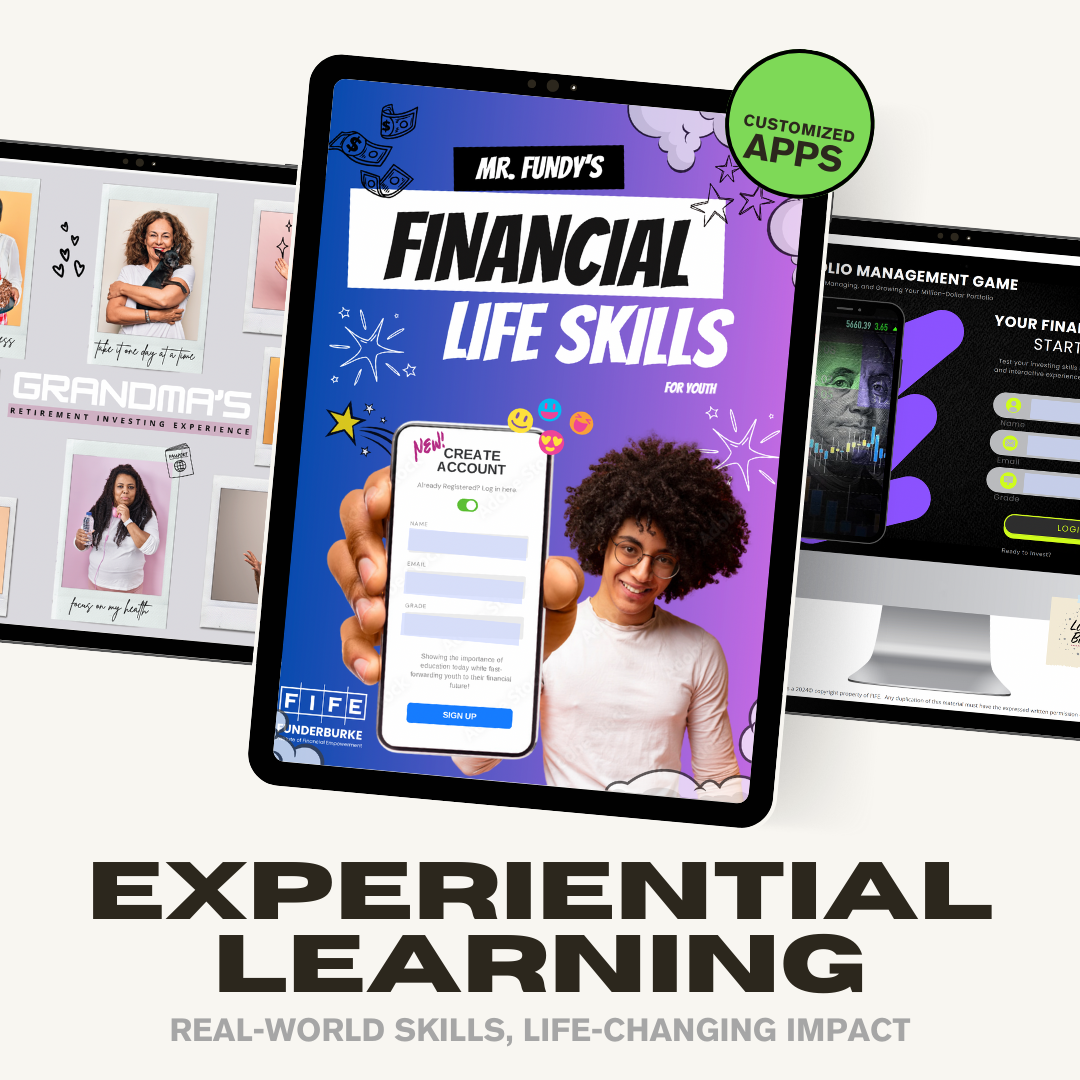
Although a lot of work for LFYO and our business partners, it is well worth the effort. On our end, we must align in-class activities with real-world applications before going on field trips. Without context, inner-city kids are totally lost in translation. No frame of reference, no short- or long-term buy-in. The result? Opportunity wasted, and worse, the learning experience will likely be immediately stored under the “pain avoidance” category in their amygdala, also known as the emotional memory center. That’s why we use sensory-based learning modalities (in the form of customized PDF games on iPads) to draw youth in. Overlay the fun, underlay the fundamentals — as in lessons learned, knowledge gained, and dream(er/ing) restored. For disadvantaged students, the field trips should be an engaging, exciting, and empowering experience.
With engagement, make them feel welcome the moment they enter the building. In fact, meet them outside just as they’re approaching the front door. Throw on a radiant smile. Offer a handshake (or dap if you’re a germaphobe like me), followed by an upbeat introduction. Remember: It’s your responsibility to establish the oxytocin bond right from the onset, not theirs. For some businesses, excitement is the hardest thing to pull off. Sorry traditional banks, engineering firms, and manufacturing companies, to name a few — I’m just saying. Don’t fret; be creative. Limit the lectures (that will lead them to boredom) … pass around the fixtures (that they can hold as future product designers) … highlight the features (that they’ll one day have access to as investors or homeowners) … allow the gestures (that they can freely express without being judged). Engagement is good, excitement is better, but empowerment is best. Empowerment is the litmus test for every field trip experience, which may take days, weeks, months, years, or decades to pay off. When it happens, attitudes improve, perspectives shift, and behaviors change. Yes, this is easier said than done. Again, it’s a lot of work, but there is a workable solution to closing the opportunity divide in America. One-third is on their frontline support system (caregivers, family members, and educators), one-third is on us (nonprofit organizations, social service agencies, and community-minded investors), and one-third is on them (at-risk youth).
Want to see our students in action? Hit the play button to watch a short recap video of our recent field trips to area businesses!
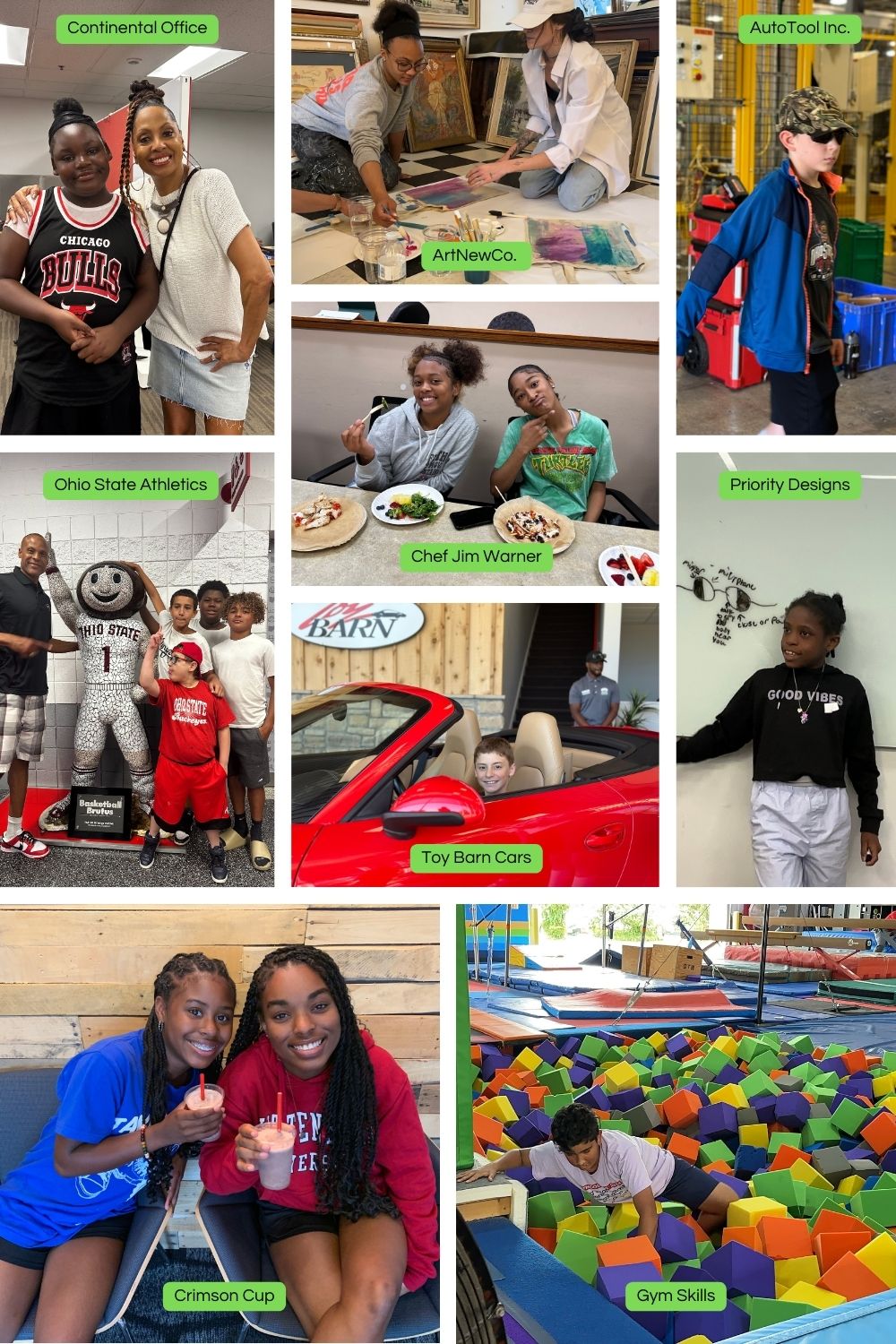
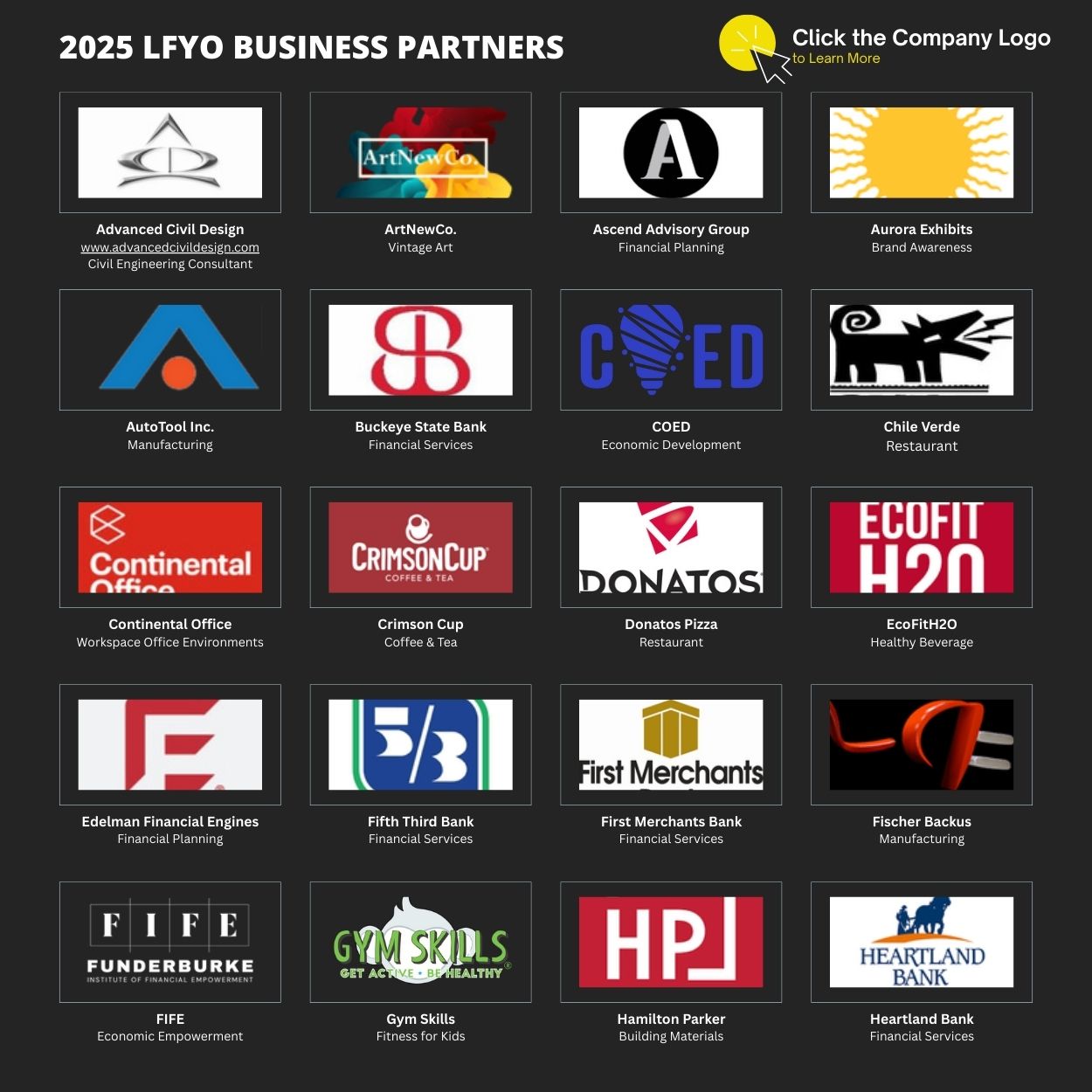
With limited space, I can’t highlight every one of our 40 business partners (and we need more!), but here are a few of them. First up is AutoTool Inc., an equipment and automation manufacturer. I’ve known Jason Moore, the CEO, for over forty years. He was one of the first white suburban kids here in Central Ohio to hoop, and hold his own, on an AAU team with black inner-city players. Well-spoken, well-dressed, and well-liked, he greets every teen by name at the front door. Jason provides a delicious lunch for the group, gives them a tour of the facility, and allows participants to ask lots of thought-provoking questions. Kim Bodrick is a client-experience manager at Continental Office, which offers full-service solutions for commercial interiors. Kim’s lively personality and friendly demeanor eases participants’ fears, who initially, aren’t quite sure what the experience will entail. After a brief tour of office space layouts to gain inspiration, the youth are placed in their respective teams. While competing in Kim’s Designer Challenge Game, disinterest vanishes and creativity picks up as the vulnerable teens design their office space masterpieces. Each team presents their finished project to the entire group, with bragging rights and prizes up for grabs. This two-hour field trip goes by so fast!
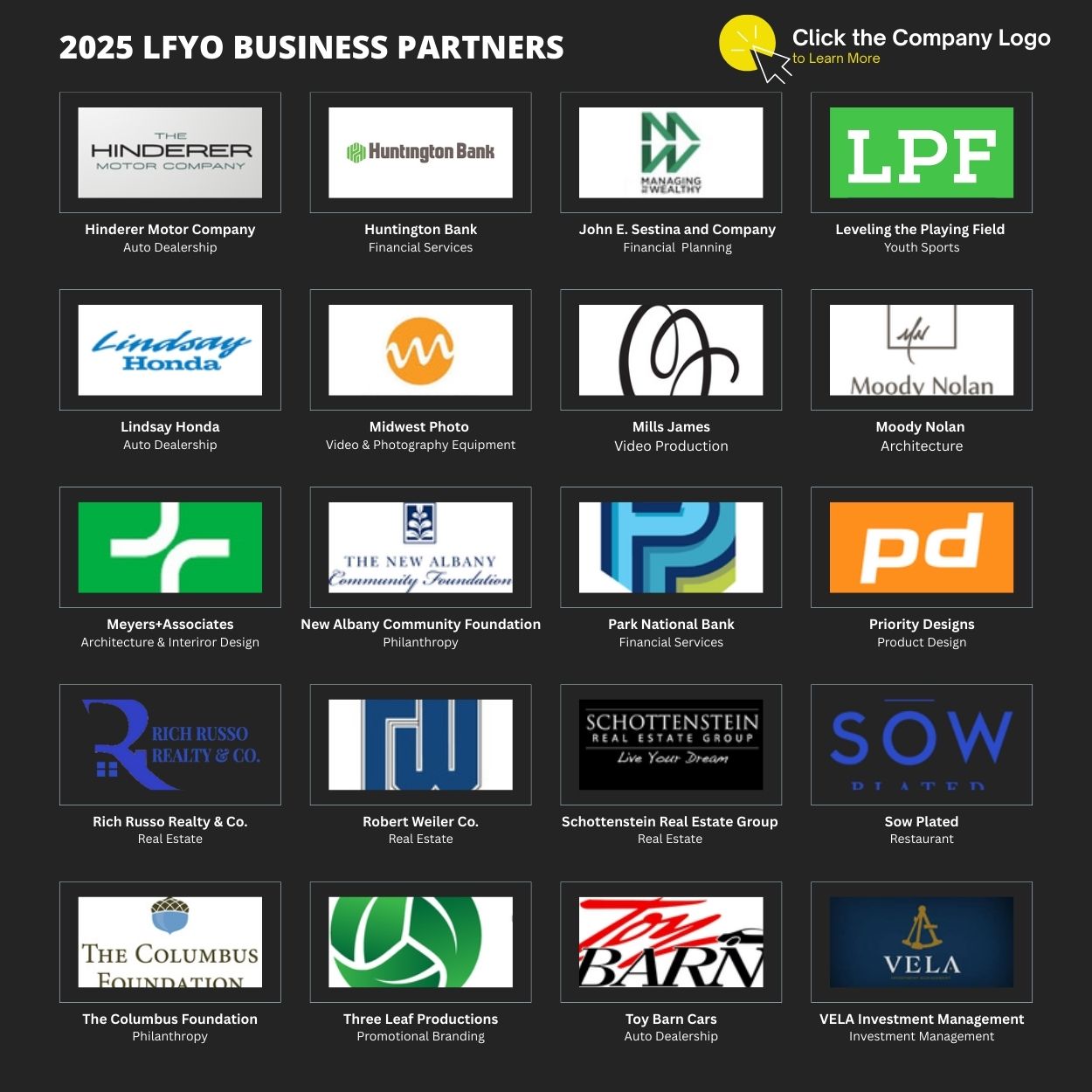
One of our newest partners is ArtNewCo., a whimsical vintage art boutique owned by entrepreneur and art lover Hannah Gleason. With over 800 pieces of rare vintage art and jewelry, ArtNewCo. offers a range of affordable price-points for even the most cost-conscious customers. Hannah invited our group into her studio this summer for a painting activity It was a life-changing experience for many of our teens, in some cases, doubling as a therapy session to move beyond their pain. For that 75-minute window, they didn’t have a care in the world. Musicians were also brought in, a keyboardist and violinist, for biochemical-boosting and circadian-rhythm purposes. Last but certainly not least is The Columbus Foundation, one of the top 10 community foundations in the United States, serving thousands of individuals, families, and businesses with their unique funds and planned giving efforts. Hosted by Steve Moore, Chief of Staff at The Columbus Foundation, he shares with our teens what philanthropy is, why it’s important, and how they can even become philanthropists right now using their time (as community volunteers) and talents (as peer-to-peer mentors). Of course, receivers should at some point transition to givers; the countdown is on. Click the link below to view a comprehensive list with background information on LFYO’s 40 Business Partners:
2025
LFYO Community Partners
Click the link below to view the full list of our community partners.
In closing, here’s how you help under-resourced youth dream big in spite of their current challenges or past failures. First, take the time to understand the roots and offshoots of generational poverty from an empathy-assimilation point of view. Place your physiological self in their physical shoes. The complexities of economic distress are multifaceted and cannot be reduced to a simple explanation. Its branches extend far and wide, including but not limited to structural barriers, psychological disorders, physical disabilities, societal biases, nutritional deficiencies, relational hardships, educational setbacks, and spiritual hangups. Second, assist high-need students in compiling an ownership checklist of synonyms and catchphrases that clarify and crystallize what it means to dream big. Among others, they include “thinking outside the box,” “challenging the status quo,” “defying the odds,” “chasing limitless possibilities,” “reaching for the stars,” “aiming high,” “setting bodacious goals,” “having a driving ambition,” “thinking big and bold,” “aspiring for great things,” and my favorite, “never settling for less” when more is available. More progress. More success. More happiness. What is an ownership checklist? This to-do list or schedule of activities can place students in the driver’s seat, where they’re in control of their respective dream — as they imagine it. In effect, this list holds students accountable for their growth gains in thought, word, and deed. Third, provide vulnerable youth with unforgettable field trips and life-changing experiences that can enlarge their possibility filter. In this article, I’ve shared a working template that you can follow or modify to your satisfaction. Let’s move out so they can move up!
Letters from LFYO Business Partners
Ascend Advisory Group
Tony Reilly
CEO
Hamilton Parker
Laura Wagner
Director of Human Resources
Schottenstein Real Estate Group
Kerri Ward
Director of Corporate Marketing & Communications
This is a very long headline to turn your visitors into users
Change the color to match your brand or vision, add your logo, choose the perfect layout, modify menu settings and more.
Medium length display headline
Change the color to match your brand or vision, add your logo, choose the perfect layout, modify menu settings, add animations, add shape dividers, increase engagement with call to action and more.
Short headline
Change the color to match your brand or vision, add your logo, choose the perfect layout, modify menu settings and more.

Upstream Problem, Downstream Playbook (Part Four)
Hype fizzles and hope fades without the help. To whom much is given, much more is required. And when you see a need and don’t fulfill it — ardent capitalists, I’m speaking to you! — a lot of innocent people get hurt (and left behind) in the process. Now, capitalism gets a bad rap when certain segments of society who have less begrudge, and sometimes berate, those who have a whole lot more. Obviously, it’s nearly impossible to move up the socioeconomic ladder when you have tremendous disdain or utter contempt for those who’ve legitimately climbed to the top of it. These ladder climbers have worked hard, played by the rules, and taken the necessary risks to generate wealth. No harm, but why are they being called for a foul? Without question, capitalism has its fair share of embedded flaws, and they’re too numerous to cover in this article. But this flawed system is still the best option we have among competing alternatives, notably socialism, collectivism, marxism, egalitarianism, and transhumanism. Without access to capital, it’s easy, really quite natural, to take issue with the excesses of capitalism.
I get it. Equal opportunities do not always translate into equitable outcomes. This is where the haters of capitalism miss the mark, demanding that the government step in and legislate social outcomes based solely from the lens of economic justice. Serving as the de facto referee to mitigate wealth inequalities is a slippery slope for any governmental agency to oversee. In sports, the best referees are those who aren’t noticed, no matter where the game is being played — at home or on the road. They intervene only when the “right call” requires it, independent of the background noise. As a compassionate capitalist myself, we’re free to earn a great living individually or entrepreneurially, so long as we’re good stewards of the planet while empowering the least among us in lockstep with our money-making endeavors. Arms-length donors are good, where high net worth individuals and families write sizable checks to charitable organizations. However, in-person philanthropists are best. They’re not afraid to fund worthwhile causes and embrace sociophilanthropy, where mega-affluent Americans reach and teach the less fortunate, on their court, how to build legacy wealth. One income stream or investment asset at a time.

An Opportunity (and Free Meal!) Too Good to Pass Up
I enjoy being in the presence of really smart people who are also extremely successful, even if we disagree politically or philosophically. Nearly two decades ago, I had the pleasure of meeting former New York City mayor, Rudy Giuliani. He was in town to discuss a sizable investment in the Central Ohio market with a group of business leaders, a who’s who consortium of power brokers across the Midwest and East Coast. I was sitting in the lobby at the New Albany Country Club. Walking by, Mayor Giuliani found out who I was and asked, “Would you like to join us for lunch?” I responded, “Absolutely!” The look on some of his colleagues’ faces, all white men except me, said it all. “Why is he being invited in our group? He’s clearly not one of us.” I wasn’t, but that didn’t stop me from being present and making my presence felt that afternoon (as I usually do in settings where I stick out like a sore thumb). As the lunch meeting wrapped up, Mayor Giuliani turned and asked me, “Lawrence, would you like to share anything?” The grin on my face was from ear to ear. I enthusiastically replied, “Sir, I do have something to add, actually two questions to ask.” I continued, “Gentlemen, we’re talking about the economics of construction projects, right?” They nodded in agreement. “But what are we doing to bridge the wealth gap in our society between the haves and have-nots?” No one, not even Mayor Giuliani, had a response to this question — just blank stares and personal reflections. Yes, the “troublemaker” was in the building.

Making Waves So That Every Opportunity Boat Can Rise
Sounds harsh to the sensitive types, but this jaw-dropping quote by Dr. Phil is heartbreaking. On the financial front, think about the ramifications this has for taxpayers (in the hundreds of billions of dollars each year) who have to foot the bill when millions of unsuspecting Americans move from childhood to adulthood without being properly educated. The result? Prison populations and welfare rolls swell up even more. We are setting our most vulnerable kids up for failure down the road if we do not intervene before these students reach middle school. And high school is way too late! This is why a downstream playbook is needed to combat an upstream problem, one in which poorly performing students don’t even know they’ll face in the future. Remember my emphasis on the alpha brain wave state in the first three articles of this series? Watch this. Between the ages of 9 and 12, third through sixth grade, children start questioning their view of reality. “Hey, wait a minute — this doesn’t make any sense!” They also find out that the Easter Bunny, Tooth Fairy, and Santa Claus aren’t real, which captured their imagination in the fantasy world state of theta wave frequencies (or the two to six age range). My apologies for being Ebenezer Scrooge in breaking this news 🙂
During the alpha brain wave state, kids are still receptive or open to new information. This is the sweet spot of personal growth and financial education downloads, where children are forming their beliefs and shaping their values, among over 100 other areas of brain development. In general, here’s what is taking place in young minds when alpha wave frequencies are in overdrive mode throughout their waking hours: They’re making estimations and drawing conclusions about what is (or isn’t) possible in life from a macro or big-picture perspective. In other words, young people are making decisions about what opportunities they do or don’t want to weigh on the scales of possibility. Literally, they will talk themselves into or out of a faith commitment with life-altering future consequences. Now, most youth won’t likely know their career path at this time — becoming a lawyer, teacher, trainer, truck driver, fashion designer, computer programmer, or business owner, among other noteworthy professions — but they’ll have a pretty good idea whether they’re game for embracing or avoiding the workload to achieve a successful life. That’s why fifth grade is the perfect time to introduce at-risk students to getting a job, earning a paycheck, managing a household, building good credit, and investing in stocks. The further ahead they can see, the less distracted underprivileged youth will be — right now when neuronal connections are expanding. Their life scripts and self-talk filters are being set in motion during this pivotal age range.

Right Foundation Laid, Success Bridge Built
Our three bridge-building pillars to improve the educational outcomes for at-risk students include financial preparedness, physical fitness, and nutritional wellness. Lessons learned early in life can prevent costly problems later in life. Whether it’s an abbreviated or extended program for inner-city schools, we start with money. Our signature game, Reality Days, helps students see the correlation between post-secondary education and lifetime earnings. Now, college isn’t for everyone but some type of education is mandatory, even if it’s an apprenticeship for a skilled trade. For higher-income earning game participants, they gripe (okay, complain) about paying more taxes than their lower-income counterparts. Enter a riveting discussion on our progressive tax code. Assumptions are made, given that each player is presumed to be a married, seasoned adult and primary breadwinner. Some of the game participants have children to take care of, others do not. Food, clothing, and childcare quickly add up, causing several students to blurt out, “I ain’t having no kids; they’re too expensive!” To which I’ll reply, “Children are a blessing. But parents shouldn’t bring a child into this world until they’re mentally prepared and financially ready for the responsibility.” Although this insight is anecdotal, many past LFYO participants have avoided unplanned pregnancies (as teenagers) after taking part in one of our programs. In some small way — perhaps due to emotive association — I suspect this real-world game may have influenced their thought process to delay an untimed pregnancy. I also share with every group that middle-to-high-income caregivers, on average, will spend between $150,000 to $300,000 from birth to age 17 for each child. That’s right, per kid! Of course, this does not include college expenses.

When the body moves, the brain improves. That’s why physical fitness is so important to our educational mission. Those of us who are over 50 can remember the time in grammar school when gym class and two recesses were the daily rule, not the weekly exception. And standardized test scores have been plummeting ever since physical education was devalued in the late 1990s and early 2000s, especially for our ants-in-their-pants boys (who should be moving more outside and sitting less inside). Is it an ADHD problem or an NATD issue, as in a “no activity today disaster”? That sugared-up energy boost from an artificially sweetened breakfast or calorie-packed, nutrient-deficient lunch has to be expended somehow. In some districts around the country, kids barely move, outside of walking from one classroom to the next. Activity levels are way down across the board, while obesity rates and poor health outcomes have skyrocketed. Fewer kids competing in after-school activities mean more time playing video games, watching mind-numbing TV, or surfing the internet when they go home. In fairness, working-class parents may not have the time, money, or transportation to get their children involved in a sports-based program after school. We incorporate balancing exercises, tug-of-war games, and agility drills into our physical fitness routine. Students also learn how to stretch and breath properly. They even get a chance to play me one-on-one in basketball! What kids don’t know is that every activity is designed to improve a specific area of their brain, belly, or body. (We are cognizant of the fact that some kids have major anxiety around their weight. Thus, we do take measures — without letting them be excused from participating — to ease their fears due to embarrassment.)

Hacking Their Own Biochemical Code: It’s More Art Than Science
Perhaps the biggest benefit for high-need populations who take part in our program is this: we teach them how to hack their own biochemistry through practical and tactical, sensory-driven approaches. When they wake up in the morning, or look to the future, vulnerable students are stimulating glutamate receptors in the retina. This neurotransmitter provides visual, mental, and emotional stimulation to tackle each day’s demands. And food, what they eat nutritionally and consume inspirationally, will play a huge role in their upgraded olfactory and gustatory systems. Yes, success has a sweet-smelling aroma and flavorful profile to those who’ve faced a great deal of bitterness in life. Tasting success is not a figment of one’s imagination. In fact, it’s hardwired into mammalian taste buds. In addition to glutamate, other neurotransmitters on the tongue include serotonin (think sublime joy), norepinephrine (think intense concentration), acetylcholine (think muscle memory), GABA (think unshakable peace), and adenosine triphosphate or ATP (think cellular energy). It hasn’t been confirmed by researchers yet, but I have a sneaky suspicion that endorphins — think pain relievers and self-esteem boosters — may also be part of the taste bud apparatus. We do know that spicy foods boost endorphin levels with regularity. (This may explain why food scientists, aka neurotransmitter manipulators, place addictive ingredients in cakes, cookies, pastas, potato chips, French fries, hamburgers, and other American delicacies that elicit euphoric emotions in the bellies of satisfied customers.)
Biochemical wholeness is heavily reliant upon nutritional wellness, especially when it comes to regulating the autonomic nervous system (which consists of the sympathetic and parasympathetic nervous systems). Sympathetic dominance is par for the course in generational poverty, where financial hardships, toxic thoughts, and poor eating habits wreak havoc on depleted, stressed-out bodies. Turning down the sympathetic system’s emergency alarm bells and tuning into the parasympathetic system’s relaxation station is critical for emotional stability that can segue into personal growth. We provide healthy snacks — with organic ingredients — to students every session. The awards ceremony includes a certificate of achievement, $50 custodial savings account, share of publicly traded stock, and mentoring playbook poster for each participant. There’s more! Plus, a live cooking demo with Chef Jim Warner closes out the program in style. High-need populations deserve a first-class experience, complete with return-on-investment (ROI) expectations that can excite their success palates. For better life prospects and legacy projections.

In summary, it is only fitting for me to pay tribute to one of my mentors, a man who has been candid about his triumphs and trials throughout life, including being incarcerated for several years in the 2000s. Meet Dr. Roger D. Blackwell, a bestselling author and former business marketing professor of mine at Ohio State. I credit him a great deal for helping me incorporate personal branding as a key tenet of The Mr. Fundy’s Financial Life Skills for Youth Mentoring Initiative. It’s a theme that I emphasize in every empowerment class or workshop that we present to low-to-moderate income (LMI) communities. In his book Objective Prosperity, which Professor Blackwell co-authored with Dr. Roger A. Bailey, the birth lottery is highlighted. In short, the true currency of excess for the seniority class is their access. To more opportunities. To more options. To more opinions (from seasoned professionals who offer priceless advice). Children of wealthy parents have more access to goods and services than do their scarcity- or security-class peers. In baseball terminology, this is akin to someone being born on third base, also known as financial privilege. The authors note, “But here is a secret that [wealthy] people learn: It is better to have parents that give you values that help you to become prosperous than parents who give you money or capital.” Let that sink in for a moment. For at-risk populations and vulnerable students, financial values are what drive and define the meaning behind (or in front of) the money they’ll eventually earn and hopefully grow when hype, hope, and help are in ample supply. Let’s do our part in bridging the wealth gap in America.

Brain Coaching
If you’re interested in brain coaching for your individual or organizational needs, please reach out to Lawrence Funderburke by email at info@Mr Fundy.com. Thank you.
ABC6 On Your Side News Segment
Mr. Fundy's Financial Life Skills for Fifth Graders
Books
Purchase Books
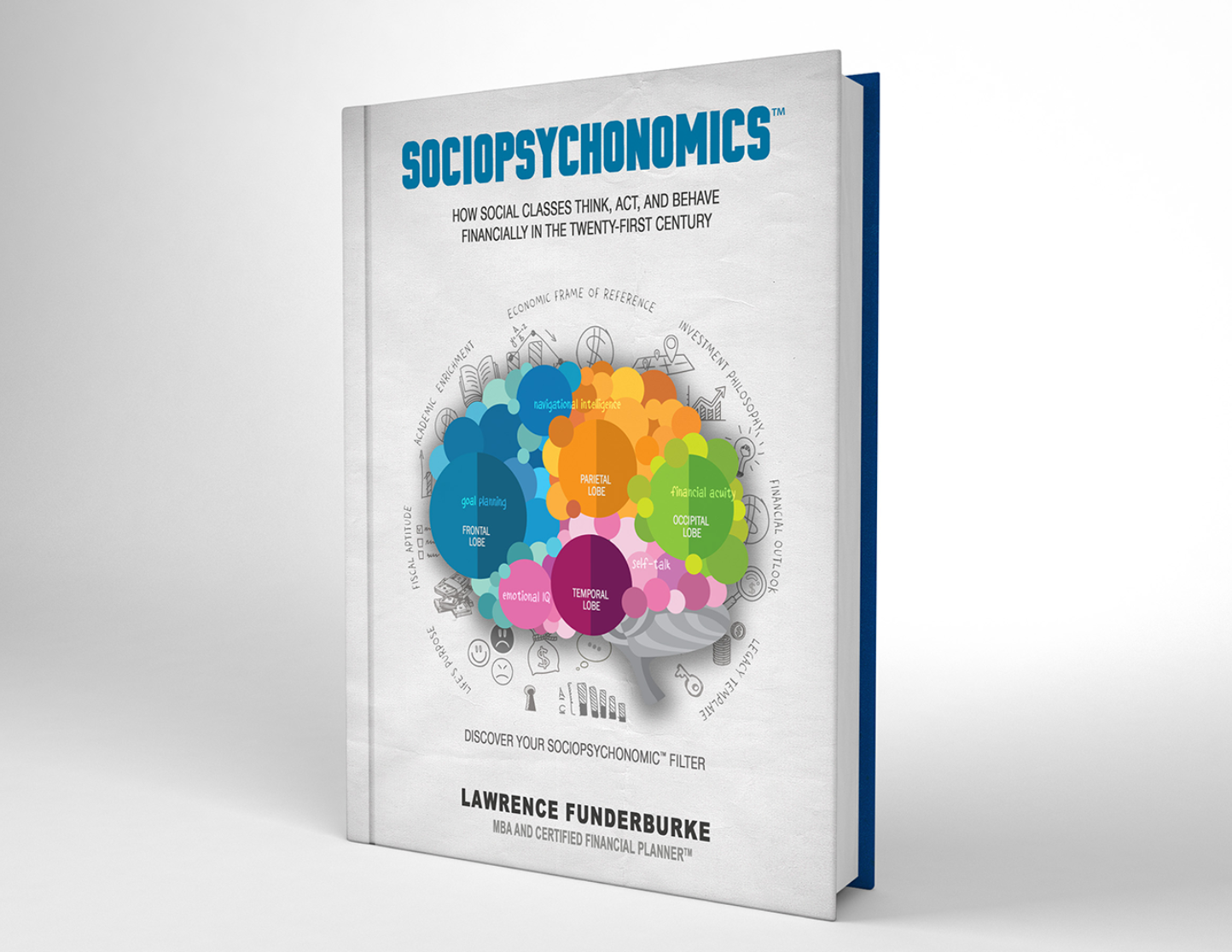
For more information on Sociopsychonomics, please click the link below.
Event
2025 LFYO Fundraising Luncheon

Click the button below for details on our upcoming fundraising event and our keynote speaker, Jim Tressel, former OSU football coaching legend and current Ohio lieutenant governor.

Upstream Problem, Downstream Playbook (Part Three)
Hype first, then comes the hope. This word has many noteworthy synonyms, including a longing, yearning, urging, aspiring, or wanting for something better and brighter. A better opinion. A better option. A better opportunity. A brighter day. A brighter future. A brighter outcome. And financial education can provide a ray of hope to those who are stuck or stranded, sometimes through no fault of their own, at the bottom rung of the socioeconomic ladder. Miss the mark here with high-need populations, and they might not ever take the chance of climbing out of their economic hellhole. For those of you who have a disdain for (or distrust of) organized religion, please keep reading. This is an illustrative example, not a proselytizing sermon. Hope can’t survive without faith. In fact, hope and faith, along with vision, are inseparable tenets but not interchangeable terms. Hope expects (where both greatness and excellence lead the way in a purposeful life); faith believes (when the odds of success seem insurmountable or unattainable); and vision imagines (what could be in spite of how bad things have been). We’re told in Romans 11:1, “Faith is the substance of things hoped for, the evidence of things not yet seen.” This famous Bible verse has spiritual and practical applications. Why? Because life can’t be lived — eternally or internally — without some measure of faith-inspired and vision-guided hope. Literally and figuratively, it can push or propel those who’ve been beaten down by life across the financial success finish line. Here’s the problem for most of them: Hope is in shorter supply than money.

Rydell Gibson, a mentor and close friend of mine from Sacramento, shared these two faith acronyms with me over 20 years ago. Obviously, I’ve never forgotten them, nor his prophetic declaration over my life back when I played with the Sacramento Kings. He told me, “Lawrence, your assignment in life will be to instill hope into the hopeless.” He added, “You have the rare gift of helping people see their future lives from a present lens.” As I write this article, tears are swelling up in my eyes. I didn’t quite understand what Rydell meant back then, but I clearly do now. In his F.A.I.T.H acronym, “for all individuals there’s hope,” the key word is all. Everyone needs hope to express a given level of faith. Without it, life becomes a meaningless activity or uninspiring voyage. Here’s what I’ve learned while working with (and being a former member of) the scarcity class. Hope deprived is hype denied. Hype runs out of gas — to achieve better and brighter economic outcomes — when hope is missing from the picture. That’s why it is incredibly dangerous to get at-risk communities fired up about a financial future that can’t be seen or experienced up close and personal. This is the classic case of a gimmick trap, which was highlighted in the previous article. Gassed up, with no place to go. The result? Another letdown, and potential meltdown, is added to their disappointment ledger account, as lives and legacies hang in the balance.

If you’re in a leadership position — personally, parentally, pastorally, professionally, or philanthropically — I would highly encourage you to do (if you haven’t already) a comprehensive study into the cerebellum. What the mind expresses, the body experiences. Through the cerebellum. It’s located below the occipital lobe and behind the temporal lobe. Among other functions, the cerebellum coordinates the motor system, notably balance, coordination, and posture. It is also faced with the task of error prediction as well as overseeing (or being overrun by) fear responses. And when trauma gets trapped or stored in the body, the mind follows rather than leads. According to renowned psychiatrist and celebrity brain coach, Dr. Daniel Amen, “doubt shuts down the cerebellum,” as in not being able to operate or perform in an efficient manner. What’s fascinating about this area is that it occupies roughly 10 percent of the brain’s volume but requires 50 to 80 percent of the neurons. But for some reason, the cerebellum doesn’t garner a lot of attention. One more point: a doubt-ridden mind, hope’s antithesis, produces a deflated body and defeated soul. Did you get that? Let’s look at some real-world examples of doubt’s effects on the brain, belly, and body.

Enough of the technical stuff. Inside and outside the world of sports, I’ve witnessed collective doubt firsthand for over three decades. It can negatively impact a family, work group, classroom, community, or even basketball team. Duke Blue Devil fans, I’m not picking on your legendary program. But I’m still a bit shocked by your team’s epic loss to the Houston Cougars in the 2025 NCAA Final Four Tournament. Like most viewers, I assumed the game was over and Duke would win comfortably. I turned the TV off when the Blue Devils were up by six with about a minute to go in the game, and with a chance to extend their lead by eight points. “No way they’re gonna lose,” I thought. “Game over.” I didn’t know Duke had lost the game until I returned home from church the next day and my son Eli blurted out as I walked through the door, “Dad, did you know Houston beat Duke, 70-67?” I replied, “Bad joke son. Try again.” He was telling the truth.
For the next hour, I watched dozens of replays of the last few minutes of the game. Missed free throws. Questionable inbound passes. Careless, unforced turnovers. A short-arm shot — at close range — by college basketball’s best player. So what happened to the Blue Devils? As doubt crept in, player struggles picked up. Like clockwork, body language matched, really synced up with, the mental state of Duke’s players. And as the error predictor, their individual cerebellums mirrored what their collective minds expressed. Fearful thoughts (“What if we lose this game?”) Rigid movements (“I’m not sure about making this pass.”) Stunned looks (“Can you believe we just lost?”) Whatever inputs have the most tag-team partners in the mind before an action is taken, the cerebellum carries them out in proportionate fashion, even if the signals are mixed. Telling each other in the huddle with lukewarm enthusiasm, “We got this victory,” didn’t work for the Blue Devils. Why not? Allow me to speculate as an observer and former player who also unfortunately faced similar circumstances as an Elite Eight participant in 1992 with Ohio State. Decades have since passed, but that sick feeling in missing out on a trip to the Final Four is still there. As the second overall number one seed behind Duke that year, we got beat in overtime by the Fab Five, aka that team up north. Our consolation prize? Coulda, woulda, shoulda regrets regarding that lost opportunity.

Duke’s reversal of fortunes on that fateful day in San Antonio, Texas, likely produced the following conditions in the players and possibly coaches, too: With their stomach in knots, Duke looked (and probably felt) unsure about the outcome. Their lung capacity and muscle endurance took a huge hit, likely the result of mouth rather than nose breathing, which impacted their nitric oxide and testosterone levels. They were tight, not loose, a telltale sign of shaky confidence, rising doubt, and amplified stress (yes, excess cortisol in the bloodstream). I could go on and on, but you get the picture. Their defeat was set in motion long before the game actually ended. That moment got the best of them. The Duke Blue Devils paid the ultimate price by losing out on a chance to play for (and likely would have won) the 2025 NCAA Men’s Basketball Championship.
Let’s move from the court to the classroom and discuss how we can help at-risk youth knock down their success shot in life under pressure. Meet three of the students that LFYO has had the privilege of working with in our Financial Life Skills Mentoring Initiative. Aliases are given to protect each child’s identity. First up is Raina, a Hispanic female with a pleasant disposition. She’s a polite, calm, and quiet student who “disappears” in group settings. Very seldom does she speak, let alone participate in class. Raina is often confused about what to do in an activity, how it should be done, and where to start first. Michael, of Appalachian descent, has faced tremendous difficulties in life. His parents have battled emotional safety, housing stability, and job security challenges. Michael freezes when he’s introduced to new experiences. He pulled me aside one day to share, “Mr. Fundy, I have trouble reading and spelling. Can you help me?” The last student we’ll highlight is Shanice, an African American student from a broken home. Her mood dictates how she’ll perform in class. She has trouble looking me in the eyes, which might have something to do with deep-rooted daddy issues. Shanice rarely smiles and needs constant motivation to keep her mind from drifting.
When you make plans, you have to look ahead. When you look ahead, you have to be held accountable to achieve a desired state of beneficial outcomes. The gap between today and your future is how you leverage or develop your potential right now.
All three students — Raina, Michael, and Shanice — struggle with their future outlook. One of the best ways to inspire hope-deprived students is by helping them develop an upgraded vision filter. Our financial apps assist vulnerable youth in revamping their visual forecasting skills while making adult-related economic decisions through fun-friendly games. They’re given a glimpse into their future world, where experientially, they have the insight and incentive to influence right now. This is a key pillar of our empowerment protocol and wealth-building initiative for at-risk communities. Observational intelligence, along with navigational aptitude, allows LFYO participants to look ahead, plan accordingly, and act decisively. Life, really the semblance of a productive one, is not left up to chance. These students can now hold themselves accountable and responsible for achieving favorable outcomes down the road. Plus, we also help students excel in their core school subjects by offering each participant a customized game plan to dream big, ask questions, organize thoughts, follow instructions, formulate strategies, analyze data, make decisions, evaluate choices, overcome setbacks, control impulses, manage emotions, and achieve goals, among 100 other skill-building exercises that are specifically designed to improve cerebral lobe development. It’s not a capability issue with our at-risk youth; it’s an accessibility problem. Here’s a simple formula: [Access x Excess] + Process = Success. Why should at-risk students settle for less when more is available?

In closing, lives and legacies transform for high-need populations when their collective mindset improves. And nothing changes downstream without an upstream game plan — targeted cerebrum and cerebellum development. (The cerebrum, aka the cerebral cortex, consists of the frontal lobe, parietal lobe, temporal lobe, and occipital lobe, or roughly 80 percent of what we know of as the brain.) I suspect the cerebellum‘s primary objective is to protect the body, even at the expense of the brain’s wellbeing. My rationale? PTSD, a condition that I battled and overcame several years ago. The easiest way to explain PTSD is that your brain-body connection is often working in reverse order. What seems sensible to someone with this debilitating condition, notably erratic behaviors and intrusive thoughts, is quite illogical to those not affected by the disorder.
With PTSD, the body is usually in control of the mind. I’m certainly not an expert, but it appears that traumatic memories can get stored in acetylcholine receptor sites housed in visceral tissues of the neuromuscular system. If this sounds confusing, does the term muscle memory ring a bell? And once bad memories get stored or trapped in the body, especially at an early age, hope will have a difficult time leaving the feeling runway. “The dream of _________” will likely be permanently grounded, while that nightmarish scenario becomes reality. Seeing a parent die from a drug overdose (emotional trauma). Watching someone in the neighborhood get shot over a trivial matter (environmental trauma). Getting evicted from section-eight housing for the third time in a year (financial trauma). The world of generational poverty ain’t no joke, which millions of innocent children experience on a daily basis here in America. Hype is good, hope is better, but what’s the best approach to close the wealth gap? In the final installment of this series, you’ll find out.
Books
Purchase Books
For more information on Sociopsychonomics, please click the link below.
Event
2025 LFYO Fundraising Luncheon
Click the button below for details on our upcoming fundraising event and our keynote speaker, Jim Tressel, former OSU football coaching legend and current Ohio lieutenant governor.

Upstream Problem, Downstream Playbook (Part Two)
“If I could show you a picture of your financial future right now, how excited would you be?” This is the question I open with when meeting at-risk students for the first time. I must admit though, their varied facial expressions, teenagers in particular, speak louder than words, ranging from radiant happiness to heightened curiosity to utter surprise to profound doubt to outright indifference. Some lean forward in their chairs — a welcoming sign for me. Some lean back or slump down in their chairs — a distancing sign for me. Some fold their arms, purse their lips, wiggle (or rub) their noses, and/or tilt their heads up — a troubling sign for me. Regardless of their facial expression or body language responses, I still move forward with my uplifting message. I continue, “This financial life skills program will help you connect the success dots between your present reality and future possibility.” Now, I can’t share all of my observational frameworks or trade secrets with you, but here are two of them free of charge. With a happy facial expression, students will usually smile (and show their teeth), nod their heads in agreement, and breath a sigh of relief, among other behavioral gesture clusters. Their biochemical mood follows and flows with their upbeat, emotional mode. Feel-good neurotransmitters provide them reassurance, notably dopamine, serotonin, and GABA as well as oxytocin, the comfort hormone. Testosterone, the muscle-flexing hormone, also plays a huge role when joy is expressed as the body readies itself for action. These students view me as a battle-tested ally, someone who can coach or cheer them on from the sidelines.
With an indifferent facial expression, blank stares can convey emptiness (which might be a sign of numbness or callousness); closed mouths often indicate silence; and measured breathing typically mirrors static (or frozen) eye blinks. It’s as though these students are suspended in midair without a safety net in sight, all while being totally oblivious or detached from reality. Obviously, this disposition is even more problematic than a doubting demeanor. Not believing that favorable outcomes are possible is bad enough, but not caring about one’s future is far worse. Neurotransmitters that are likely to impact an attitude of indifference — also known as the orphan spirit of insignificance — include those that offer numbing relief (and, in some cases, can even produce pain), such as endorphins, enkephalins, and dynorphins. Apathetic students might see me as a pain contributor, someone who might cause them to revisit or reopen a trauma wound.

Time for a neuroscience lesson. What is taking place during the accelerated stage of alpha brain wave synchronization between the ages of 9 and 12? Well, let’s take a trip down memory lane. What do you vividly remember about this time of your life as an impressionable youth? Seriously, stop right now and reflect on this pivotal time growing up in childhood. (For some of you, I realize this might be difficult if painful memories are being triggered. Feel free to bypass this exercise if necessary.) During this period of rapid personal development and inspirational nourishment, children are forming their interests, preferences, curiosities, concerns, beliefs, values, expectations, goals, aspirations, pursuits, priorities, habits, talents, skills, abilities, emotions, feelings, boundaries, benchmarks, baselines, relationships, friendships, narratives, methodologies, disciplines, and more. And what drives all of these growth-oriented tasks, key objectives, and foundational pillars in our youth? Their unique experiences! Thus, it’s imperative for us to help our young people (or even current clients’ children and grandchildren) build their knowledge base in financial education while their life script is being shaped. Why wouldn’t we make a strategic investment right now to get them started on the right economic foot?
More Art Than Science: Play on Emotions, Pull with Feelings
Emotive association. On the negative side, this is what keeps high-need populations trapped in the vortex of personal brokenness and perpetual lack. For them, the opportunity glass (based on previous setbacks or current hardships) is always half-empty. On the positive side, affective experiences can fill their inspirational cup to the brim when the foreseeable future — even in a hypothetical game-based setting with real-world implications like our financial education apps — looks more promising than their dismal past. Here, vulnerable communities view the opportunity glass as being half-full. Yes, semantics and optics matter a great deal when economic freedom is on the line. Why? Because salient experiences with favorable outcome profiles allow inner-city students to scan their Rolodex of memories for those momentum boosters, just when the “quit now” or “give up” prompting grows deafening loud. And the sweet spot for personal growth or financial education downloads should take place when the brains of vulnerable youth are operating in the fertile ground state of alpha wave frequencies. During this time, children are making inferences and drawing conclusions about what is (or isn’t) possible in life based on environmental priming. They’re also starting to integrate both the right and left hemispheres of their brains, the emotional side working in tandem with the rational side. One more point, the alpha wave state offers children the luxury of shifting between imagination and realization in a rather seamless fashion. What’s prophetically pictured in the mind from a distance, can certainly be achieved through a marketable skillset and resilient mindset. In due season, of course. That is, when underserved students, who eventually become incredibly successful adults, capitalize on the timeless practice of betting on themselves. At an early age, this is how they bend the odds of success in their favor. I did. So let’s help them roll the self-development dice before it’s too late!

Don't Hate the Player, Take Issue with the Game
My methods aren’t always well-received in traditional school settings. Given the fact that teachers are, by and large, grossly underpaid and under-appreciated for their efforts — especially the good ones — money can be a rather taboo subject in a public- or private-school environment with middle class norms. The atmosphere is one of modesty and frugality, not vanity. But I not only talk about how students can make and manage a lot of money, I also give them a chance to win some of it. Here, the ends are intended to justify the means. Too much is on the line to shortchange their financial education experience. Most educators believe meaning trumps money any day of the week. I wholeheartedly agree! Money without meaning will eventually lead to misery. Meaning answers the “why-you’re-here-on-planet-earth” question, as in finding and fueling one’s purpose in life. But dollar bills are noteworthy props that get students’ immediate attention, even in a world where cash is becoming obsolete. Michael Jackson was known as “The King of Pop.” My self-described moniker as a bridge-the-wealth-gap crusader? “The King of Props.” For those who struggle seeing past their front door, props serve as visual aids or illustrative reminders of what could be in spite of how bad things have been.
In our Investing 101 app-based game, fifth-grade students are introduced to the basics of stock market investing. After a brief discussion on the risk-and-return profile of several mainstream investment categories, students test their skills as newbie investors. We keep things simple in this introductory game; only five options exist. One bank stock. One utility stock. Two technology stocks. One sporting goods stock. Participants select three out of the five for their portfolio. I’ll ask the class, “Are you ready to make some real money with your knowledge?” I then follow up with, “Can you name a publicly traded bank or financial institution?” Hands immediately shoot up in the air, and each correct answer is rewarded with a dollar. “Huntington Bank.” “Chase Bank.” “Bank of America.” “PNC Bank.” “Park National Bank.” “Fifth Third Bank.” “Key Bank.” The same question is asked about utility, technology, and sporting goods stocks. I end the session with this comment, “You can make money in an up, down, or sideways stock market.” Lesson learned by the fifth graders; the down payment to get them fired up about their financial future has been made. Check this out. Low-income communities walk past publicly traded company brands everyday without even realizing it. Grocery stores, gas stations, gaming systems, to name just a few. Thus, wealth-building opportunities are hidden in plain sight from them. As U.S. congresswoman Joyce Beatty pointed out to me over a decade ago, “At-risk populations can’t just be on the customer side of the cash register. They also need to be on the owner and investor side, too!” Great advice.

Before closing out this article on getting high-need populations fired about their financial futures, we need to address gimmick traps. These failure flaws trick vulnerable groups, really set them up, into believing there’s no groundwork involved. That earning, saving, managing, protecting, and investing money is easy. It’s not, no matter how cleverly orchestrated a one-off financial presentation is that uses pie-in-the-sky, money-making tactics to reel the gullible in. Magical solutions often have nightmarish endings for marginalized communities. That’s why they’re more susceptible to get-rich-quick, bait-and-switch schemes. But you can’t play around with the emotions of fragile people who already have a heightened affinity for superstitious outcomes. The lottery system and casino industry prey on scarcity class vulnerabilities (who allow fleeting feelings to guide instinctive behaviors), where “lucky hunches” promise huge payoffs for those who are willing to take the gamble. Magnified reward, minimized risk. With the law of large numbers, a few inevitably win but most will regrettably lose. Win once and watch what that dopamine surge does to a depleted body in need of an economic bonanza. Yes, hype can get at-risk populations to the door of financial freedom, but what will allow them to go through it? Stay tuned to find out in the third installment of this four-part series. (I discuss the phenomenon of lucky hunches and other social class dynamics in my book, Sociopsychonomics.)
Books
Purchase Books
For more information on Sociopsychonomics, please click the link below.
Event
2025 LFYO Fundraising Luncheon
Click the button below for details on our upcoming fundraising event and our keynote speaker, Jim Tressel, former OSU football coaching legend and current Ohio lieutenant governor.

Upstream Problem, Downstream Playbook (Part One)
A day late, a dollar short. April is financial literacy (or capability) month, which was recognized in the U.S. in 2004 to help youth and adults improve their economic prospects, notably those from low-to-moderate income backgrounds. In the past 21 years however, the wealth gap has unfortunately widen between the haves and have-nots. By a large margin! And it’s time we get serious about the holistic remedies, practical approaches, and innovative solutions to close it — posthaste. Even with the proliferation of free content on the Internet, wealth gaps still persist. Banks and credit unions are gratuitous in their financial literacy offerings for public consumption. Workshops are offered, pro Bono in many cases, on a regular basis by nonprofit organizations throughout the county to enhance the financial wellbeing of at-risk populations. Colleges and trade schools provide seminars and online tutorials free of charge to students to boost their economic knowledge. But this upstream problem requires a downstream playbook — of the real-world, experiential kind. Those who have less, low(er) and middle-income Americans, need a lot more. Introducing young people to the world of high-stakes finance in high school is good, middle school might be better, but elementary school would be best. I’ll delve into this more a bit later. Next up though, a discussion on DEI policies verses FEI practices.
I realize that some Americans, including many in this current administration (at the federal level in D.C.), take issue with DEI initiatives that are racially ameliorated. Now, these same individuals have a lot of diversity in their investment portfolios, along with equity in their primary and secondary residences, and inclusion capital with the “in crowd” at their good ole boys networking events and prestigious country clubs (while hiding behind their golf handicap, aka the level-the-playing-field score card). I get it. United we stand, divided we fall. But those in positions of power can’t pick and choose which DEI principles they’ll sanctimoniously uphold and which ones they’ll conveniently discard, especially when it comes to closing economic gaps in our society. DEI may be out of favor for the time being, but FEI should always be in the lineup, as in the implementation of a financial empowerment initiative that works for every American, not just the well-connected, entrepreneurially gifted, or privileged few. This empowerment protocol includes but is not limited to the following opportunities and options for vulnerable populations: personal branding, workforce development, professional etiquette, trauma-informed care, life planning, legacy forecasting, physical fitness, nutritional wholeness, and financial wellness.

You see, this is where a costly mistake was made, which I warned DEI proponents about many years ago. Their line-of-sight focus was on curtailing discriminatory practices (against minority or carve-out groups) rather than crafting emancipatory principles (that benefit every person, however one wishes to be identified). And when the topic of discrimination leads and emancipation lags with a movement, this is what happens when the political pendulum swings in the opposite direction. Whether you’re a black or brown American, a woman, or part of the LGBTQ+ community, you want to be treated fairly under the economic law. Right? Things got quite messy, actually diluted, when these groups were all thrown in the same opportunity bucket — by their own coordinated, advocacy representatives! Boxed in with no “fair” way out. Not a smart strategy. Well, when you aggregate divergent groups of people into a single-minded cause, you’re bound to alienate millions of Americans who fall outside that box. Suburban moms. Committed dads (aka involved fathers). Straight men. Traditional families. Conservative voters. As a black man who grew up on welfare in a single-parent home, my advocacy for DEI opportunities was always wrapped around FEI options. Diverse candidates with noteworthy credentials who are promoted to C-Suite positions can also leverage diversity within their portfolios — stocks, bonds, mutual funds, real estate holdings, private equity offerings, and other investments — and lucrative compensation packages. Equitable employment practices allow targeted minority groups to create equity as first-time homeowners, a key step to building generational wealth. Inclusive workplaces and inviting educational spaces allow marginalized communities to be part of a dynamic, inclusionary environment that prioritizes financial wellbeing. The FEI pull should have led the DEI push.
Economic gaps in our society are more class defined than color confined.
Why a downstream playbook for an upstream problem? Truth be told, social class habits, really ingrained economic mindsets, are hard to break. And once they are deposited in early childhood, they’re usually solidified in young adulthood. As a certified financial planner for 15 years, very little training is received in our profession to address a client’s root system issues from a social class perspective. Exceptions to the rule do exist, but the foundation for a person’s monetary template or socioeconomic grid is typically laid early in life through observational programming, environmental priming, and biochemical prompting. I discuss these three topics in great detail in my book, Sociopsychonomics: How Social Classes Think, Act, and Behave Financially in the Twenty-First Century. In short, how caregivers act or overreact in handling financial resources, children invariably pick up through osmosis … unless they’re shown a different way by an outside tour guide with inside knowledge. Three social class mindsets come into play: the scarcity class, the security class, and the seniority class. I’ll address each of these mindsets over the next three articles while making this case: financial education programs should be offered in elementary school when students’ brain waves are in alpha mode, a time of intuitive breathing, introspective storytelling, and inquisitive downloading. Between the ages of 9 and 12 — alpha mode’s sweet spot — children are exploring what they want (and are willing to pursue) out of life. Let that sink in for a moment.

Before closing out the first installment of this four-part series, I need to highlight a pet peeve of mine. The term financial literacy really gets under my skin. I’m cool with economic empowerment, fiscal diligence, wealth accumulation, debt elimination, or money management, but not financial literacy. Actually, it’s akin to hearing that aggravating sound back in the day while sitting in class as a kid when the teacher’s nails would scrape the chalkboard. On a return flight from D.C. to Columbus on March 16th of this year, I had an interesting conversation on this very topic with a hedge fund manager and avid sports fan named Mike. He wasn’t from Ohio, but he did recognize me. After our customary introduction, this abbreviated discussion followed:
Mike: I was a big fan of yours when you played basketball. What are you up to these days?
Me: I’m a certified financial planner and independent trustee of a publicly traded mutual fund company, but most of my work is on the financial education side. Our for-profit business and nonprofit organization both focus on closing the wealth gap. How about you?
Mike: I’m in the hedge fund industry — so you teach financial literacy?
Me: With all due respect, that’s not a term I use. I prefer financial education because it’s more liberating rather than incriminating. ‘Literacy’ can imply that a person is illiterate or incapable of learning about financial matters.
Mike: Wow, I never thought of it that way. You’re right! Financial literacy can be viewed from a pejorative sense.
Me: If you don’t mind me asking, what was your upbringing like in childhood?
Mike: Well, I was really fortunate. I grew up in a privileged home with significant resources. And I can’t imagine how difficult it is to look ahead three years when someone only has the attention span to stay engaged for the next three hours.
For the remainder of our flight, Mike listened to (and chimed in on) my game plan to bridge the wealth gap between the haves and have-nots, one financial education download at a time. Stay tuned for the next weekly article — how to get high-need populations fired up about their future prospects.
Books
Purchase Books
For more information on Sociopsychonomics, please click the link below.
Event
2025 LFYO Fundraising Luncheon