Huge risks, big(ger) payoffs. For the record, I’m not a gambler. Nope, it has never been a gravitational pull of mine. However, I have seen many people, including former NBA teammates, get bitten by the gambling bug over the years. The side effects? Well, they’re dose dependent and ever present. More on them a bit later. Gambling has always been a part of the NBA culture, whether it’s card games with multi-thousand dollar jackpots on long road trips to the east (or west) coast in private planes, frivolous bets on half-court trick shots before and after practice, or locker room wagers on which referees are likely to officiate hotly contested playoff games, from one round to the next. I witnessed these scenarios—and many others—firsthand in the NBA. “Bet that” was part of our everyday, testosterone-driven lexicon; nothing was off the gambling table. It’s much worse today! The side effects of gambling addictions result in long-lasting symptoms, from financial problems to relationship challenges to internal stressors to sleepless nights to mental health issues, in particular, circadian rhythm disruptions. By the way, May is Mental Health Awareness Month. And yes, even casual betting indulgences can morph into full-blown gambling pursuits when triggered by an unforeseen setback, such as a job loss, economic downturn, death of a life partner (or beloved family member), or any number of crises-related events. What usually happens here is the chase becomes the run to the fun. To a place of refuge or from a space of torment. Either way, the addiction fix is in.
Are some individuals, like myself, predisposed to addictive tendencies because of genetic (or heritable) traits, epigenetic (or environmental) influences, or optogenetic (or shiny-object) sources? The evidence is mixed. Opinions vary in the medical community from “not at all” to “significantly so.” Here’s what we do know about people who have an innate ability to bet on themselves, many gambling addicts included. These individuals generally fall into one or more categories: movers and shakers, risk takers, and/or opportunity makers. Let’s break each of these down from a psychological point of view:
Movers and Shakers
Movers and shakers make things happen. Right now! For them, sitting still is missing out on the action. Even in a confined space of intense boredom, their mind is moving from one thought to the next. Broadly speaking, they’re long on creating million-dollar ideas in record time but short on producing the feasibility studies needed to pull them off. The number one drawback of movers and shakers? It’s easy for them to confuse movement for progress. In fact, going somewhere may not get them anywhere.
Risk Takers
Next up is risk takers, who cover the gamut. At one end of the spectrum are methodical and meticulous risk-taking brain types. Planning typically comes before acting. They’re philosophical and are often described as having “mundane personalities.” They usually excel in math and sciences, which is why they’re drawn to analytics and arbitrage strategies when gambling. At the other end of the risk-taking spectrum, we find carefree and careless brain types. When they feel it—that urge to splurge or need for speed—they’ve already acted upon it. An impulsive purchase. An unsolicited critique. A high-stakes wager. For these individuals, they assume delay automatically means denial. And in the world of sports betting, they’re prone to losing their shirts. Literally! Due to their spontaneous and combustible personalities, they’ll jump in the pool at the casino after a big win or pledge their home as collateral to chase a huge loss. One thing is fairly certain: they often move in lockstep with their mood. (I’ll cover this phenomenon in greater detail in Part II of this series.)
Opportunity Makers
Opportunity makers do just that … make opportunities happen for themselves and others. With this group, where there’s a will, there’s a way. Gut instincts, not impulses, drive their opportunity bus. As hockey legend Wayne Gretzky once said, “You miss 100 percent of the shots that you don’t take.” So true, but some shots are not worth taking regardless of the colorful appearances, celebrity endorsements, or commercial advertisements. Why gamble with your health or wealth using somebody else’s opinion?
Why Males Can Compartmentalize Gambling Losses at the Expense of Isolated Wins
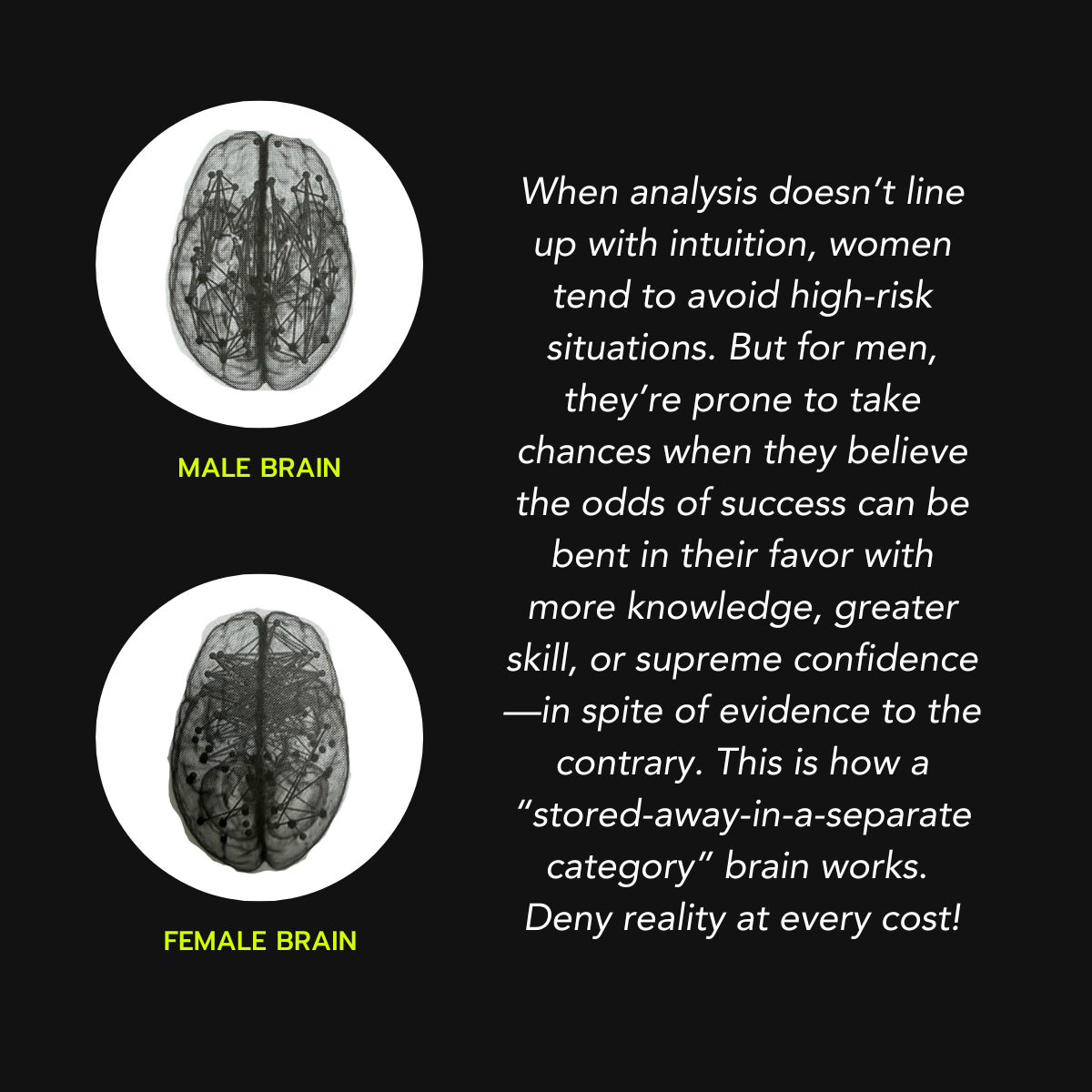
Not surprisingly, males are more impacted by gambling addictions than females. By a wide margin! Sounds controversial, but it shouldn’t be. According to Dr. Helena Boschi, an accomplished author and renowned psychologist specializing in applied neuroscience, she writes, “Men’s brains display front-to-back connectivity within the [left and right] hemispheres, moving between perception and decision-making” (reference #1). Women’s brains, Boschi notes, “are wired more laterally, between the hemispheres, suggesting greater communication between analysis and intuition.” (reference #2). Fellas, don’t shoot the messenger, but women are generally more intelligent than men. Ladies, I’m sure you already know this :). Neuroanatomy differences may also explain why male drivers pay higher car insurance premiums than female motorists. If male and female brains are exactly the same, then why are our risk profiles for automobile insurance so vastly different? Independent of ADD and ADHD diagnoses, risk-seeking behaviors are usually par for the course in the male brain. And gaming companies know this, which is why pubescent boys are being set up to become lifelong gaming and gambling customers through addictive video games with picturesque backdrops, exhilarating sounds, and masculine messages. Optical illusions. Acoustic frequencies. Semantic associations. A marketing campaign trifecta with terrible societal consequences.
Reference #1 and #2
Dr. Helena Boschi. Why We Do What We Do: Understanding Our Brain to Get the Best Out of Ourselves and Others. Chapter One, page 15. Wiley Publishing, 2020.
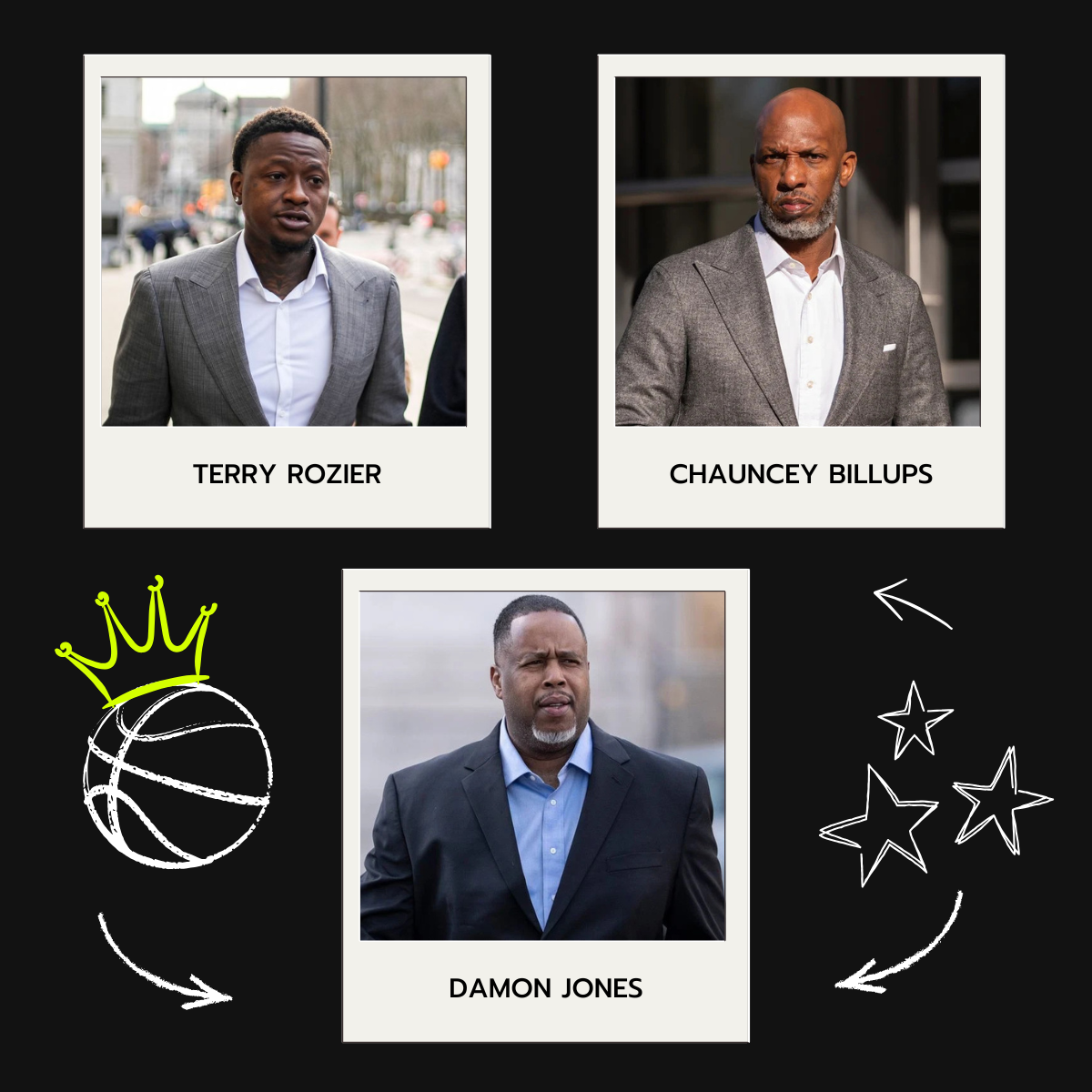
Chris Broussard is a sports analyst and commentator on FS1. Alongside Nick Wright, he is the co-host of the popular afternoon sports show, First Things First. A devout Christian, family man, and community ambassador, Broussard has worked for The New York Times, ESPN, ABC, and Fox Sports Radio. He covered the NBA’s blockbuster gambling scandal in 2025 involving Terry Rozier, Chauncey Billups, and Damon Jones. Rozier, a guard with the Miami Heat, and Billups, an NBA Champion and Portland Trail Blazers head coach, have been placed on indefinite suspension by the league as their cases are still under FBI investigation. Jones, a former NBA player and teammate of mine in Sacramento, pleaded guilty on April 24, 2026, to two counts of wire fraud conspiracy. In an interview, Broussard highlights, “The professional leagues may have inadvertently made a deal with the devil by getting in bed with these gambling companies.” He adds, “And there was no way to shield players from getting caught up in some kind of gambling scandal.”
I was heartbroken by the news when it first broke. I thought to myself, “This is a really bad nightmare. Current and former NBA players allegedly mixing and mingling with mob families to dupe unsuspecting poker players out of millions of dollars through rigged setups. Say it ain’t so?” The game I love and league I defend is facing a crisis in confidence on three fronts. First, this scandal will fuel skeptics who already think (with this serving as added proof) that the NBA is nothing more than scripted choreography. It’s not, but every missed open shot, careless turnover, or senseless foul will be scrupulously examined from a “suspect-entertainment lens.” Second, current players will face even more scrutiny from sports betters masquerading as diehard fans when wagers miss the payoff mark. An irate sports bettor rolled down his car window to confront NBA superstar, Jimmy Butler, who was standing on the curb in New Orleans while in town to play the Pelicans. “Bro, I put $3,000 to win 30 [thousand]. Why you ain’t have 30 points? Jimmy Butler, why you didn’t have the 30 points? You were supposed to go OVER b—h. You work for Vegas? You work for Vegas?” Third, how will America’s youth be affected, really infected, by the gambling bug if no safeguards are put in place to protect them? Without an alternative course of action, they’ll likely fall victim to gambling devices in adulthood, if not before. We’re in big trouble folks.
In closing, I shared the stage recently in Denver with Rob Minnick, a former gambling addict now turned recovery advocate. We were participating in an event hosted by Doura-Schawohl Consulting and several Colorado legislators to limit sports betting in the state. (The bipartisan bill passed this week and is awaiting Governor Jared Polis’ signature.) For six years, Minnick struggled with a runaway gambling addiction. From parlays to blackjack to slot machines, he gambled every day online and in the casinos for 6 to 8 hours. Upon first glance, he didn’t fit my jaded, gambling addict profile. Minnick is polite, soft-spoken, and measured with his words. His Youtube channel and One Day At A Time (ODAAT) website are timely resources that shed light on this growing epidemic, with over six million Americans battling mild to severe gambling addictions (reference #3). Minnick’s story is best illustrated against the backdrop of Dr. Steve Rose’s Seven Excuse Traps.
Reference #3
Dr. Kent S. Hoffman. Addiction Help: Gambling Addiction Statistics. March 3, 2026. www.addictionhelp.com/gambling/statistics/
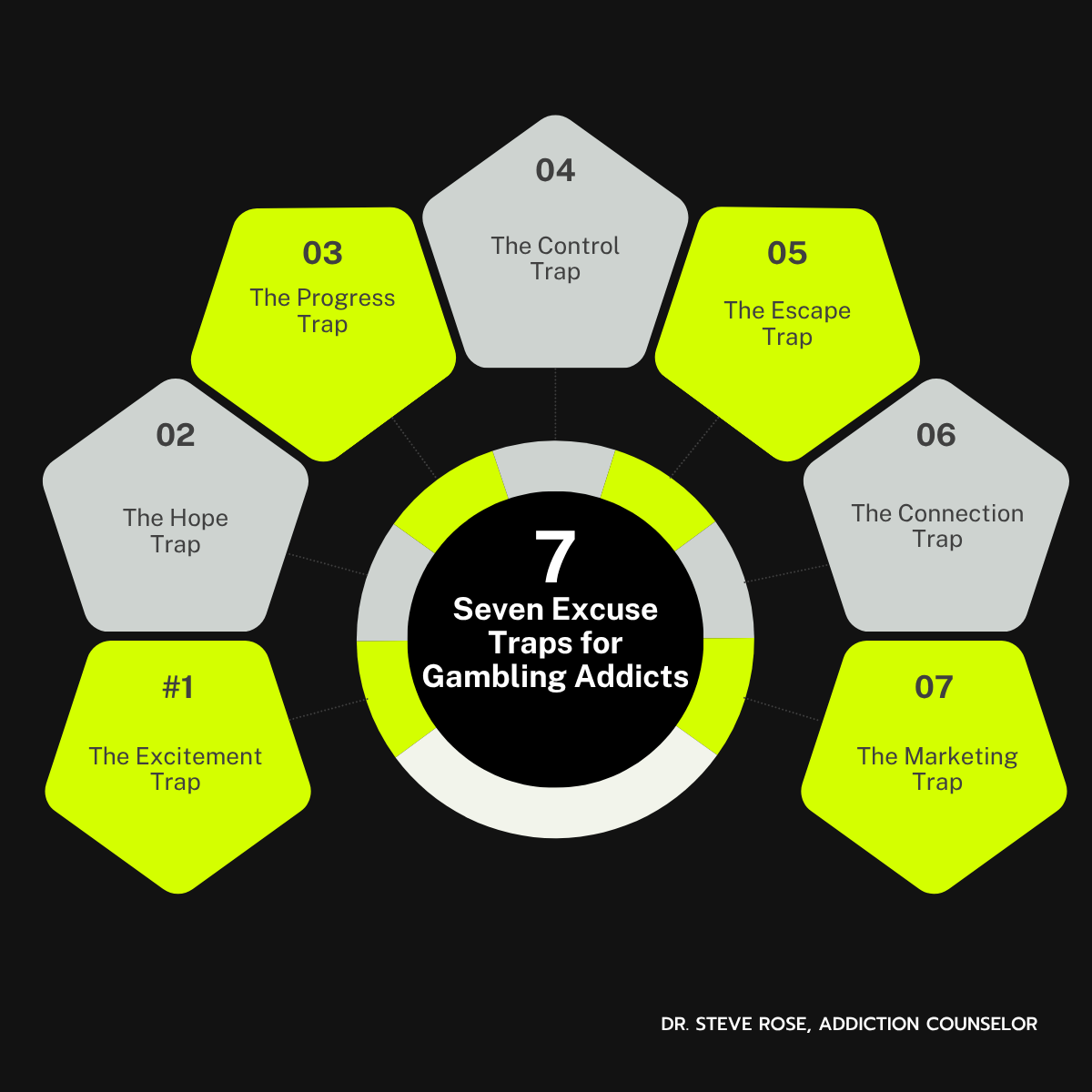
With Excuse #1: The Excitement Trap, Minnick’s addiction was set in motion by that initial dopamine hit coursing through his body. He points out, “This is where I got suckered in by the fun. Without that thrill, the gambling ride would have been boring and pointless for me.” The dangling carrot, Excuse #2: The Hope Trap, kept Minnick in the gambling feedback loop. Pay up. Play on. Pray for. That next win streak! Even when his losses piled up, Minnick convinced himself that one more bet—a winning wager—would cure his addiction in full. He admits, “Gambling addicts dig in when they should bail out.” That ray of hope, a promising payday, kept the hype fuel lit. The Progress Trap, Excuse #3, is where gamblers find themselves stuck in a rut with no tow truck in sight. Minnick warns, “Here is where the near-miss fallacy kicks in. You lose by a point and tell yourself, ‘Man, I was so close. Keep going.’” A gambling addict’s brain releases a larger dose of dopamine in comparison to someone in the general population who also almost wins. That extra surge fed Minnick’s urge.
Excuses 4 and 5 can be paired together, The Control Trap and The Escape Trap. Discipline, due diligence, and determination were factors that allowed Minnick to feel in control in an uncontrollable environment. He even developed some peculiar rituals while trying to escape from the madness. “I wore the same clothes, sat in the same spot, and hit the blackjack table in the same place every time before I bet. I even listened to vedic chants to center myself. Of course, nothing worked.” Excuse #6: The Connection Trap is where gambling delusions reach their highest peak. Minnick shares, “You’re paying for friendships with complete strangers.” He adds, “Your losses are funding the luxury suites gambling companies invite you to enjoy. Think about how crazy that is!” What’s even more disheartening is that VIP gamblers tell themselves, “I belong here and can get pretty good at this.” And just when a gambling addict tries to get out, the push notifications and free-cash ads ramp up. That’s why Excuse #7: The Marketing Trap, won’t let a betting enthusiast just walk away on his or her own terms. Minnick explains, “It’s so sinister what gambling companies do; they know us almost better than we know ourselves.” He concludes, “Fighting fair is not in their best interest financially.” Stay tuned for Part II in this series, The Physiology of Gambling Addictions, which will be released next week.