Cracking the Gambling Addiction Code
An algorithmic node—that’s what a problem gambler is—in the addiction network. Online sports gambling is a significant part of the prediction economy, a system in which future (or even split-second live) bets can result in lucrative payoffs for an infinitesimally small number of winners. The problem is not with the anticipated gain; it’s the assumption that somehow a loss will be altogether avoided, or worse, not considered at all. Here’s what I mean. In order for the sports gambling system to capture pools of willing players, significant amounts of data have to be collected on “monetized targets,” notably where they live, play, and work; who they follow in the sports world; why they enjoy live betting more than static gambling; when they’re likely to place small, medium, or large bets; how frequently they wager over a given time period; and which mix of parlays or prop bets are most appealing to them, among many other considerations. What gambling addicts don’t realize is this: the very same information they voluntarily share in responding to an affinity-based questionnaire or on a rapport-building phone call will, at some point, be used for their own demise. I call this the entrapment of systemic risk. Stay with me now. In effect, every sports gambler’s individual risk (and affinity, VIP profile) is added to the group’s mutual risks. The problem? Betters rarely share in collective gains but do quite often participate in cumulative losses through the law of large numbers. And when gamblers try to walk away from impulsive betting, frequency capital will be used to reel them back in. Managing moods is the biochemical manipulation key bookmakers deploy to unlock, really extract, more and more money from out-of-tune gamblers.
Sports bets are often made on the basis of superstitious beliefs, lucky hunches, past performances, forecasted trends, and of course, expert opinions (thanks, in large part, to celebrity endorsements from retired pro athletes and comedy icons). You see, the currency of assurance is the insurance of conviction. And this is precisely why gambling companies pay influential voices—who often leverage their larger than life colorful personalities or comedic routines in scripted, attention-grabbing advertisements—a boatload of money. The outlay is certainly worth the investment from a return-on-capital perspective. It’s a brilliant marketing tactic using an incredibly deceptive entrapment practice. This practice, among others, is what keeps gambling addicts locked into a game with bad outcomes. Pay up. Play on. Pray for. That next winning bet! By the way, humor influences human emotion and distorts logical thinking, serving as an embellishment hook to draw people in rather than to push them away. Don’t ask questions, just laugh at the joke, flow with the skit, embrace the punchline, and forget your problems. But there’s nothing funny about losing a job, spouse, or worse, a loved one through suicide due to a runaway gambling addiction.
“He’s Feeling It!”
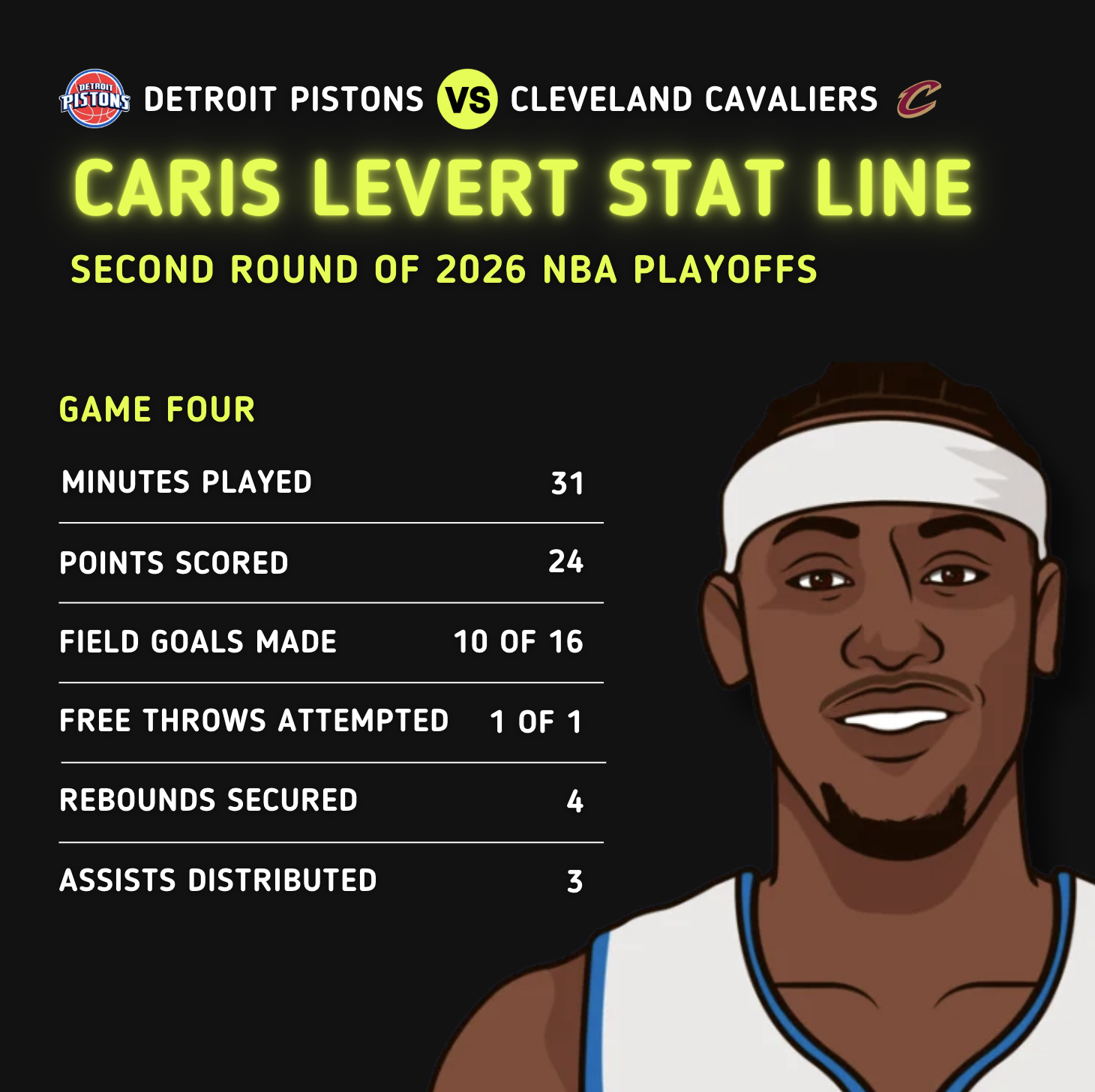
I’m a big fan of Carmelo (Mr. Cool) Anthony. I followed him at Syracuse, where he lead the Orangemen to a 2003 National Championship as a freshman. The Hall of Fame legend and three-time Olympic gold medalist had an illustrious NBA career. He scored 28,289 points in 19 NBA seasons. As the ultimate “Shot Hunter” and “Bucket Maker,” his confidence in scoring timely baskets was second to none. In our modern era, MJ was certainly next level, Kobe was a close second, and Kevin Durant right behind him. But Anthony could give all three of these all-world scorers a run for their money as the crème de la crème in making sure that spherical ball went through that orange hoop. With pinpoint accuracy! What I especially admired about Anthony was his ability to score—at will—on all four Olympic teams. Different makeup, same outcome. No matter who was on the floor with him, he knew how, where, and when to get his points. That’s why his insights carry a lot of weight as an NBC-Peacock basketball analyst for NBA games. During halftime of the fourth NBA playoff game between the Detroit Pistons and Cleveland Cavaliers, Anthony’s commentary on live player props for DraftKings caught my attention. Regarding Caris LeVert, a reserve player for the Pistons who scored 17 points in the first half, Anthony emphatically stated that LeVert would easily score more than the prop betting line, 23+. “All, that’s easy; he will get that in the third quarter!” LeVert had 22 points by the end of the third quarter, and finished with 24 for the game. Here’s the question to ask: How many viewers were persuaded by Anthony’s insights to bet on LeVert scoring more than 23 points before the start of the second half? Probably a lot.
The lure of predictive betting is very tempting to pass up. As noted in Part I of this series, I’m not a gambler. However, I do make predictive forecasts all the time as a former NBA player while watching college or pro basketball games. Because I am keenly familiar with the psychology and physiology of the sport, I do have “inside information” at my disposal. Through a production (more than a prediction) lens, I observe players’ and coaches’ body of work in previous games as well as their body language in the current game. Face of flight or focused for the fight? Blinking rapidly tends to convey stress, anxiety, and timidity, which may indicate that the moment is too big for a coach, player, or team to handle. My son Eli and I stayed up late to watch the first game of the 2026 Western Conference Finals. The San Antonio Spurs, led by Victor Wembanyama, won a thriller in double overtime against the Oklahoma City Thunder. I told him before heading to bed, “The Thunder are going to win game two by 8 to 10 points.” OKC won by 9. The Spurs gave a valiant effort, but OKC players had a different look in their eyes compared to the first game. They picked up their defense, pushed the tempo, and rode the wave of their electric crowd to a much-needed win. As the defending NBA champs, they had no other choice but to save face.
Incentives matter more than player stats or prop lines, which sports fans or gambling enthusiasts may not realize. Let’s revisit Caris LeVert’s game four breakout performance against the Cleveland Cavaliers. In the first round of the playoffs against the Orlando Magic, he averaged under 3 points a game. LeVert is a capable player; however, he struggled mightily against the Magic. But in the second round, LeVert averaged over 9 points, a 3x per-game scoring boost compared to the first round. What happened? Here’s my take. First, LeVert used to play for the Cavs. Obviously the team traded him; he may still have beef with Cavalier ownership about this. Second, he was born in the Buckeye State but played college basketball for that team up north. Cleveland Cavs fans reacted with boos to images on the jumbo screen of Jim Harbaugh, the former head coach of that team up north. I’m sure this fired up LeVert even more. Third, he is from Central Ohio, a roughly two-hour drive from downtown Cleveland. Now why wouldn’t he play better in front of family and friends who made the trip up from Columbus to support him against his former team? I would never share, no matter the financial incentive, any information for public consumption that could lead a problem gambler into financial ruin based on my “inside-information” recommendations. Keep the millions; I’m good.

Faith Framework, Belief Continuum
The faith framework (in what someone predicts while being a voice of trust) is part of the belief continuum, from plausibility to possibility to probability. Plausible. Possible. Probable. As you can tell by the synonym and semantic wordplay used, this type of belief offers the illusion of certainty at the expense of free choice through a cleverly packaged neuroscience hacking system. Guess where the faith framework and belief continuum are located in the brain? The temporal lobe, an area that also houses long-lasting memories, deep-rooted emotions, life-application scripts, trigger-inducing sounds, and aromatic-blended scents. The fragrance of a (perceived) winning bet passes the smell test long before, not after, it ever happens. And we know expectation and experience don’t always see eye to eye! Now, this doesn’t deter most gambling addicts who get caught up in the expectation-experience disappointment zone. No, they’re still convinced of the eventual outcome (in spite of evidence to the contrary), which is why they place their unwavering faith that it, or a follow-up wager, will at some point pay off.
This is the classic case of the stick dangling the proverbial carrot, also known as Pavlovian conditioning or associative learning (where a test subject can only opt in but not opt out of a reflex-guided experiment). Yes, dopamine may drive the conviction vehicle, but depleted levels of oxytocin are what fuel a wagering addict’s willingness to stay on the gambling belongingness bus, better yet, bankruptcy bust. And this, my friends, is an exhausting ordeal to pull off. Online all the time but in need of a lifeline. In a VIP suite full of other “lucky” gamblers while feeling alone in the corner of the room as the biggest loser. With family and close friends—at festive events full of laughter—who aren’t privy to the depth of darkness and newfound space-cadet ways of their loved one drowning in misery. If you’re an empath like me, you can feel their pain and grasp how problematic this whole setup is. It’s not a fair fight when a problem gambler can’t see or duck from the next punch coming. His reflexes are compromised, just the way gambling companies and their well-paid addiction scientists like it. (As a self-taught neuroscience hack and transparency ideologue, oxytocin is a connection pathway that I often appeal to as an empathetic-driven writer. Honesty is always the best policy.)
Before closing out this article, I want to introduce readers to a young man that I’ve had the pleasure of mentoring for the last year or so. To protect his identity, I’ll refer to him as “Ryan,” the alias he requested. Ryan’s a natural go-getter with an entrepreneurial spirit and stellar background in sales. His wisdom and understanding of life are quite impressive for a 24 year old. Heck, I learn just as much from him as he gleans from me. Unfortunately, Ryan’s a former sports gambling addict. At one point, his winnings exceeded $120,000. His losses? They were just over $225,000. Net-net, he’s in the hole more than $100,000. Some of his wins and losses are highlighted in the screenshots below. Ryan won early and often in the beginning, which kickstarted his gambling addiction. Off the rip, he won $28,000 in three hours without having a dollar of his own money at risk! As a result, BET365 banned him after he beat their algorithm; he won too much too quickly. However, the Midas touch eventually wears off for every above-average sports gambler, Ryan included. His addiction caught up with him, and he paid a handsome price for it—financially, relationally, and inspirationally.

A few years ago, Ryan’s sitting in the back seat of his parents car on the way to dinner with them. He notes, “I had just lost over $3,000—in a matter of minutes—using a sports betting app! Shocked and dazed, all I could do was continue scrolling while looking for my next pick-me-up bet.” The algorithm sent him into a state of fog, a common side effect experienced by problem gamblers. Ryan adds, “I couldn’t even have a meaningful conversation with my mom and dad. My mind was somewhere else, which was so disrespectful to them.” And that’s what a gambling addiction does to many players: they morph into (or take on) a scaled-down version of their best selves. It’s subtle, but as they bet and lose more, meaning is lost in lockstep with the money. Ryan continues, “I lived for that next wager. I made the erroneous assumption that this would be my purpose in life, an A-rated gambler who could consistently beat the odds.” His emotional state took a beating right alongside his betting: disgust, anger, shame, regret, and shock overwhelmed him. He concludes, “I lost myself and a girlfriend over my out-of-control gambling problem. What’s worse, I wasted so much time chasing an empty thrill.” Ryan’s still here, but some problem gamblers aren’t as fortunate. In the last installment of this series, I’ll discuss the pathological effects of runaway gambling addictions. Thank you.