Wasted Lives, Wrecked Legacies
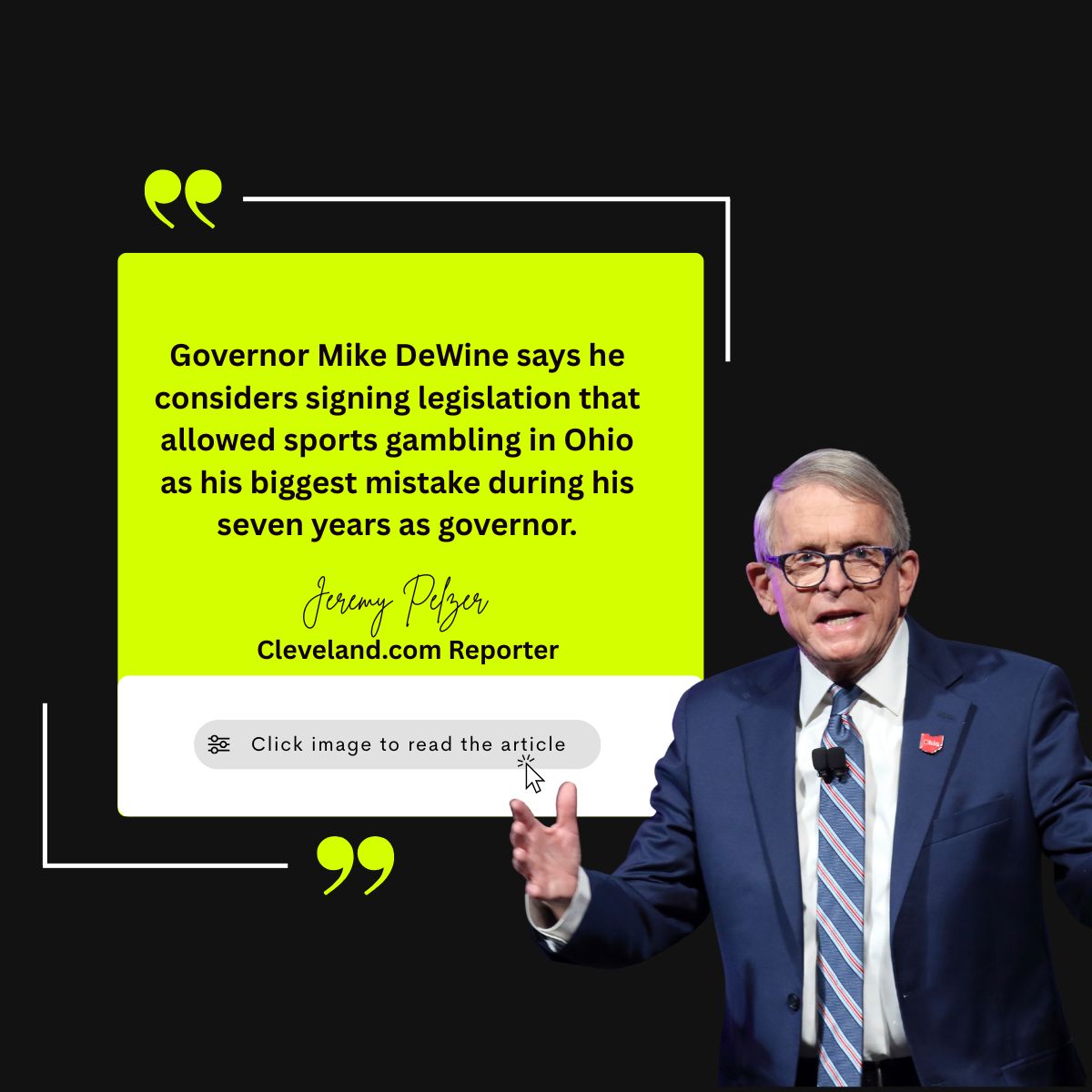
The fate of most problem gamblers who aren’t able to break free from their sports-betting addiction is some combination of a shortchanged life and a short-circuited legacy. Living is what they lose (in addition to a lot of money), and heritage is who suffers close to them (as a result of compulsive gamblers’ forfeited meaning or purposeless existence). Money lost, meaning less. And Ohio Governor Mike DeWine is intimately familiar with the personal brokenness journey behind the legislation he signed into law in 2021 but didn’t take effect until 2023. His jaw-dropping admission is one of the most shocking mea culpas I’ve ever heard a politician share in a public or private forum. I do applaud Governor DeWine for admitting his mistake, especially when so many gambling addicts have squandered their savings or home equity lines of credit, sabotaged their once-thriving marriages, and some have even taken their own lives. It’s so sad. On the sports side, Northeast Ohio native, Terry Rozier, tops the list. This former star basketball player at Shaker Heights High School and current NBA player (on suspended leave) has been implicated in a federal gambling probe. Two Cleveland Guardian pitchers, Emmanuel Chase and Luis Ortiz, were caught rigging pitch counts. Several University of Dayton basketball players faced threats from disgruntled sports gamblers. Brendan Sorsby, the star quarterback at Cincinnati over the past two seasons, admitted to placing thousands of sports bets while in college. (Sorsby has since transferred to Texas Tech; he did check himself into a residential treatment facility to address his gambling addiction.) Now think about how bad the side effects of sports gambling are for Ohio’s general population! Let’s discuss a few of them.
Side Effect #1: Financial Distress
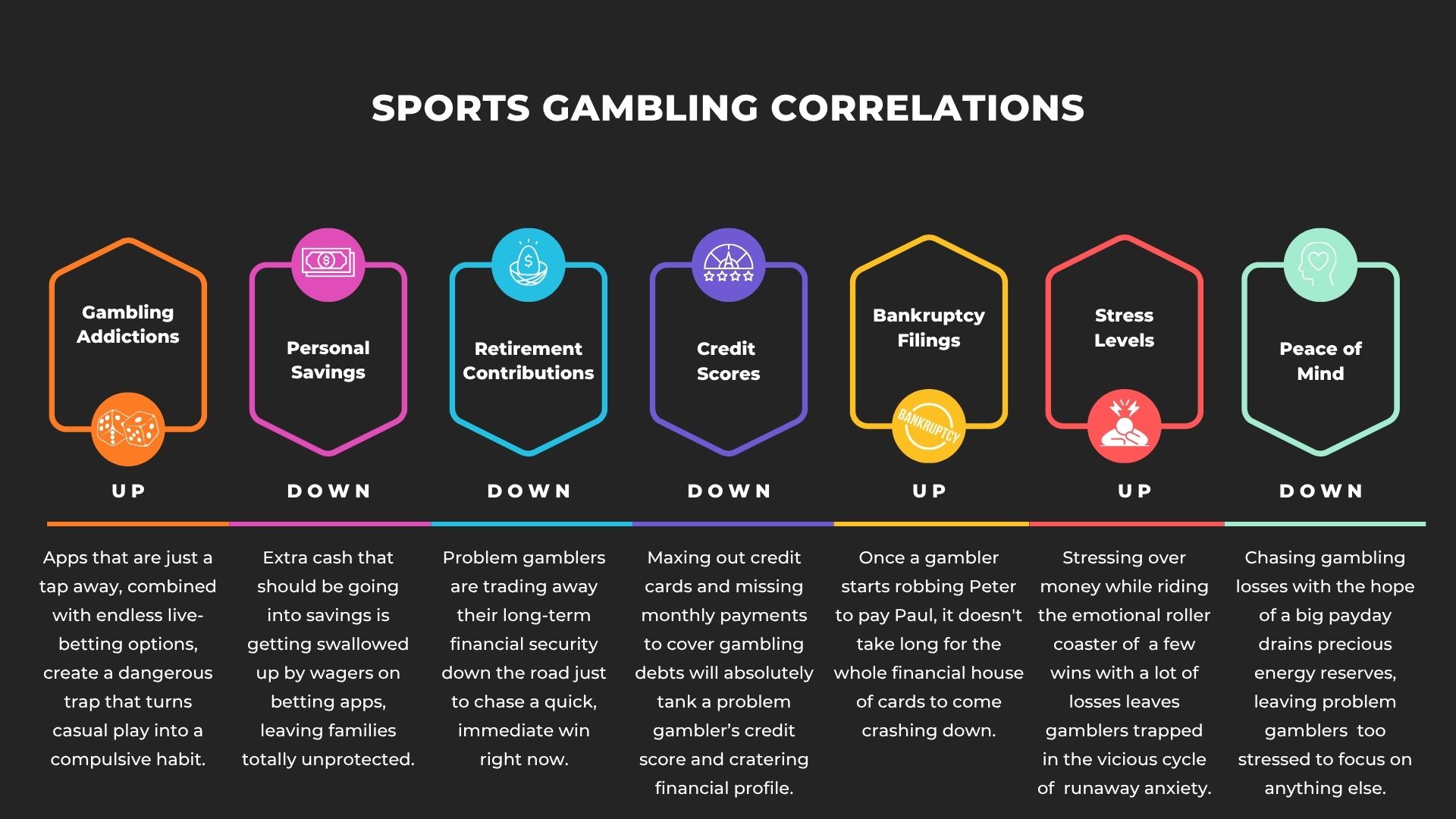
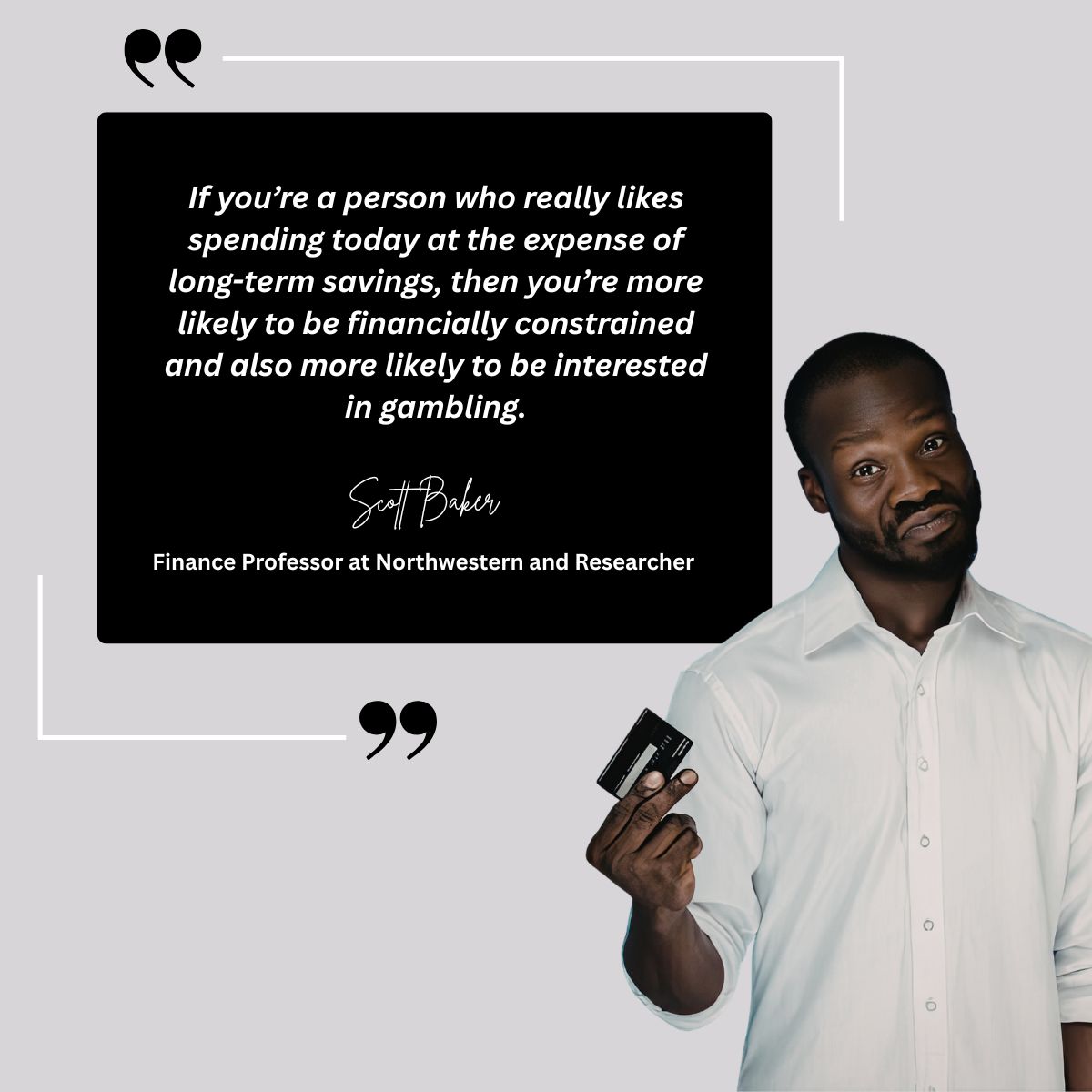
Throwing good money at incredibly bad odds is a painful lesson in futility. For most sports gamblers, chasing that next high will typically result in suffering through a new low. That new low—and the desperate measures that follow—has a ripple effect on personal or family finances for months (or even years) to come. “It’s a huge problem among young males up to 45,” Governor DeWine says. “And many of them are addicted, many of them spending money that they do not have.” Check this out. A groundbreaking study tracked the damage sports gambling has had in America over a five-year period from 2018 to 2023. Scott Baker, a finance professor at Northwestern University’s Kellogg School of Management and lead researcher, shared the following five conclusions, among others:
-
Researchers saw that nearly 8 percent of households were involved in some form of gambling.
-
While the amount of money people put into legal sports gambling rose, their net investments fell by nearly 14 percent.
-
For every $1 a household spent on betting, it put $2 fewer into investment accounts.
-
Evidence suggests greater access to sports gambling increased general participation in lottery games, particularly among households that frequently overdraw their bank accounts.
-
Beyond this, sports gambling also led to increased spending on cable TV, restaurants, and other forms of entertainment—possibly, the researchers speculate, driven by a greater engagement with live sporting events.
https://insight.kellogg.northwestern.edu/article/online-sports-betting-is-draining-household-savings
We, as a collective group, don’t have any money to waste. African Americans are at the bottom of the economic rung, with gambling debts and lottery losses adding to our shared misery. For every Oprah and Jay Z, we have Pookie and Ray Ray, Shamika and Sha Nay Nay. (By the way, my oldest niece is named Shamika.) As a community, we’re way behind financially when viewed from the prism of median net worth: $44,100 (African Americans), $62,000 (Hispanic Americans), $250,400 (Caucasian Americans), $535,400 (Asian Americans). We spend more on food, clothing, and entertainment than any other ethnic group. We contribute the least to our 401k retirement accounts than any other ethnic group. We are more prone to get-rich-quick schemes that promise huge payouts on small wagers than any other ethnic group. The 2022 census shared a shocking finding. Almost a quarter of black households had a negative to zero net worth compared to whites at 8.6 percent. So many ex-pro athletes and mega-paid celebrities claim to be pro black, but their endorsement deals with gambling companies contradict what they actually promote. Many of them were on the front lines of the Black Lives Matter Movement, but shouldn’t Black Legacies Matter More from an economic empowerment perspective? We’re quick to protest an unjust capitalistic system (and rightly so at times), but why are we setting up our own people for failure who gamble away money they can least afford to misspend? For African Americans, affinity bets using the advice of famous people who look, sound, and act like us do more harm than good. Sports gambling wagers should instead be redirected to fund 529 college savings accounts, increase contributions to retirement plans, start new businesses, make homeownership down payments, and more importantly, empower inner-city black youth through holistic initiatives.
Side Effect #2: Relational Distrust
Addiction found, trust lost. Troublesome measures are pursued by gambling addicts to cover their tracks in a relationship. As betting losses pile up, they must lie, hide, and/or steal to cover up the facade. Lying, hiding, and stealing are default responses that wounded players often display in the hurting games. Lie about the problem. Hide from personal responsibility. Steal from his, really their, financial future. To settle the score from the lost-bet scars—in their mind—all that’s needed is a big payout from the next wager. Unfortunately, problem gamblers end up digging an even deeper hole for themselves as well as the innocent bystanders around them. They not only lose more money; even worse, they mismanage relational capital with loved ones who feel betrayed. For many unsuspecting thrill-seekers who gamble, they are unaware of this roller-coaster outcome: The highs of relational deposits in the distant past are superseded by the lows of relational distrust in the present moment. Can the relationship recover? I guess it depends on two key factors, the gambling addict’s willingness to change and whether a loved one whose been deeply hurt has the heart to forgive. Both are required to build meaningful trust again, and they must occur simultaneously.
Jordan Acer (pronounced “Aker”), a certified financial planner and co-owner of Concordia Wealth Planning, has worked with hundreds of clients over his 10-year career. In a phone interview, he shared insights on several clients who’ve dealt with gambling struggles under his financial guidance. Acer points out, “When clients are withdrawing more than the plan is allowing, we, as planners, can highlight this in a loving way. But it’s their money, not ours.” He adds, “What ends up happening for some clients is that they’ll set up two separate financial planning accounts. Of course, this allows the husband to hide the gambling addiction from his wife.” He continues, “She knows when her husband is at the casino or a sports bar betting on games. His whereabouts are pinged by the location finder on her phone.” Trust is lost as the problem gambler burns through life savings, home equity lines, and retirement accounts to place ongoing bets. Wives or significant others don’t want to compete against an all-consuming gambling addiction; they want to be wholeheartedly pursued. Acer mentioned a close friend and problem gambler who stopped returning his calls, went through a difficult divorce, and moved out of state away from his kids. He notes, “And this phenomenon of relational distance has accelerated since sports gambling became legal in Ohio.” Unless something drastically changes on the legislative front, this will get far worse for those inside and outside the Buckeye state who are impacted by the side effects of gambling addictions.
Side Effect #3: Biochemical Disturbance
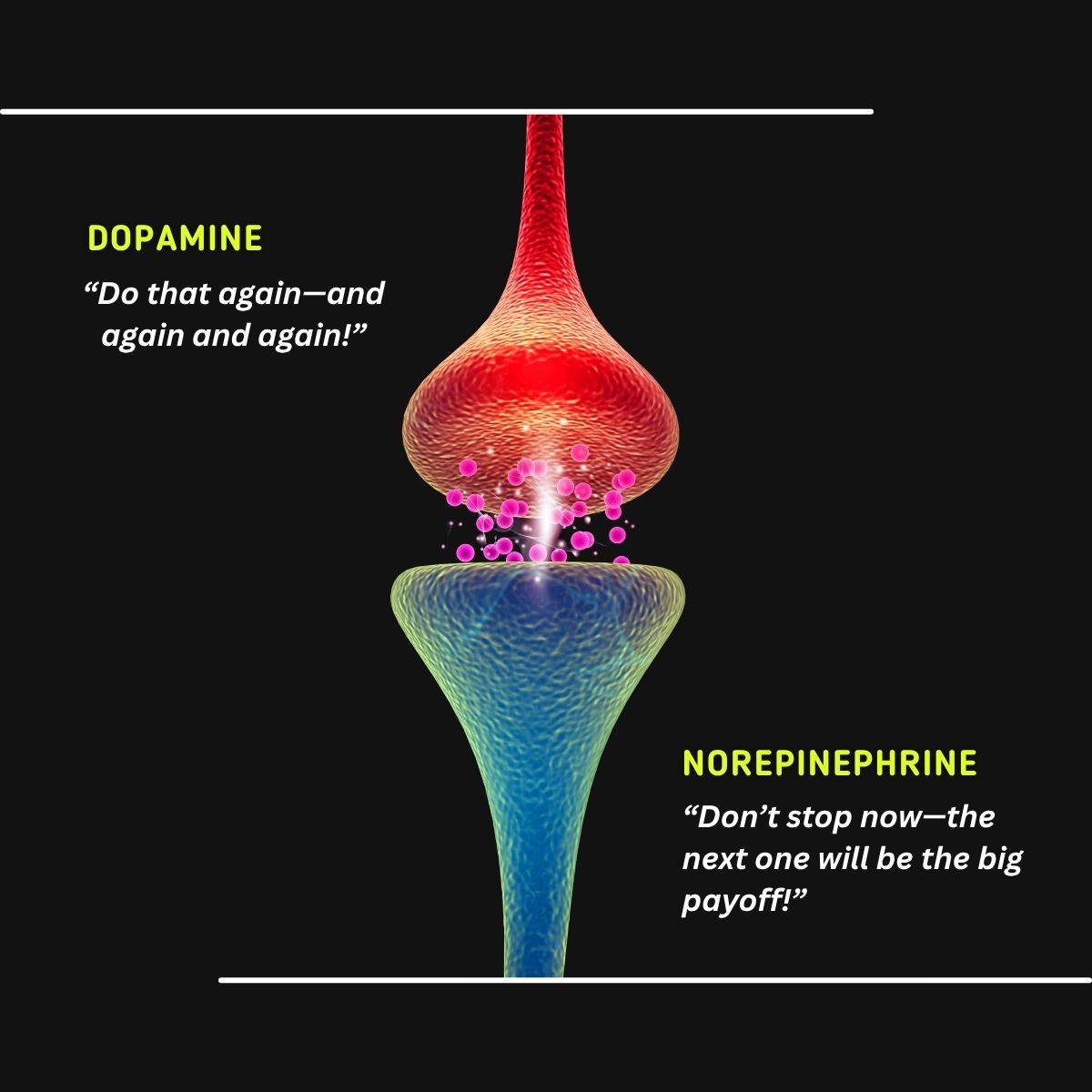
I know this to be true about addiction: the body doesn’t differentiate; it only responds. Doesn’t matter the addiction, the body is conditioned (through the reward pathway system) to replicate that initial high or low when the dopamine alert bells scream, “Do that again—and again and again!” And dopamine isn’t the only biochemical expression at play. A worn-out body needs a constant jolt of hyper-vigilance to keep a sports gambling addict locked in to the next wager. Norepinephrine, also known as noradrenaline, shows up and shows out with a vengeance. This excitatory neurotransmitter keeps the gas pedal on full throttle for problem gamblers who need every ounce of concentration from one bet to the next. It won’t let them miss out on a betting opportunity from sun up to sundown, whether it’s a west coast a west coast NBA playoff game or a table tennis tournament on the other side of the globe. There’s no rest for weary sports gamblers operating on fumes. They can’t deviate off course; norepinephrine, and it’s sidekick glutamate, won’t let them.
We can’t apply a bandaid to a gambling addict who is hemorrhaging from a wounded past. No, we must first offer a bandwidth solution, hopefully through the guidance of a qualified addiction counselor. Let me explain. Bandwidth is about tuning in to that gambling addict’s frequency meter or station of pain, say 106.5, where he plays or places 106 bets in 5 minutes by running from that permanent hurt to find his temporary relief. What permanent hurt? Being abandoned by his biological parents as a kid and shuffling between one foster care home to the next. Getting bullied on social media back in high school. Falling short as a misguided son, indecisive husband, or nonexistent father. The incessant betting is the remedy for his background noise or station of pain. (This also applies to females with gambling problems.) You see, most of us, if we’re honest, have background noise in our lives. We worry. We criticize. We doubt. The likely cause? Insecure attachments that still haunt us to this day, those maternal and/or paternal relationship deficits in childhood that follow us to adulthood. Experiences that aren’t even remembered before the age of six can negatively affect us decades later (Reference #1). Remember “Ryan” in the second article of this series? Well, he was born by Cesarean section; he also wasn’t breastfed as a baby. He admits, “I’ve always struggled with attachment issues as a teenager and young adult” (Reference #2). I’d venture to say that in the majority of cases, the roots of parental harm cause or greatly contribute to the offshoots of biochemical damage that lead to obsessive thoughts, compulsive tendencies, and addictive behaviors in children as they age.
Reference #1
Santiago Delboy. How Childhood Trauma Becomes Part of Who We Are as Adults. The origins of people pleasing, self doubt, shame, disassociation, and more. Psychology Today. March 31, 2025.
Reference #2
Marie-Andree Grisbrook and colleagues. The Association between Cesarean Section Delivery and Child Behavior: Is It Mediated by Maternal Post-Traumatic Stress Disorder and Maternal Postpartum Depression? January 17, 2024. NIH. National Library of Medicine.
Chasing Money, Losing Meaning
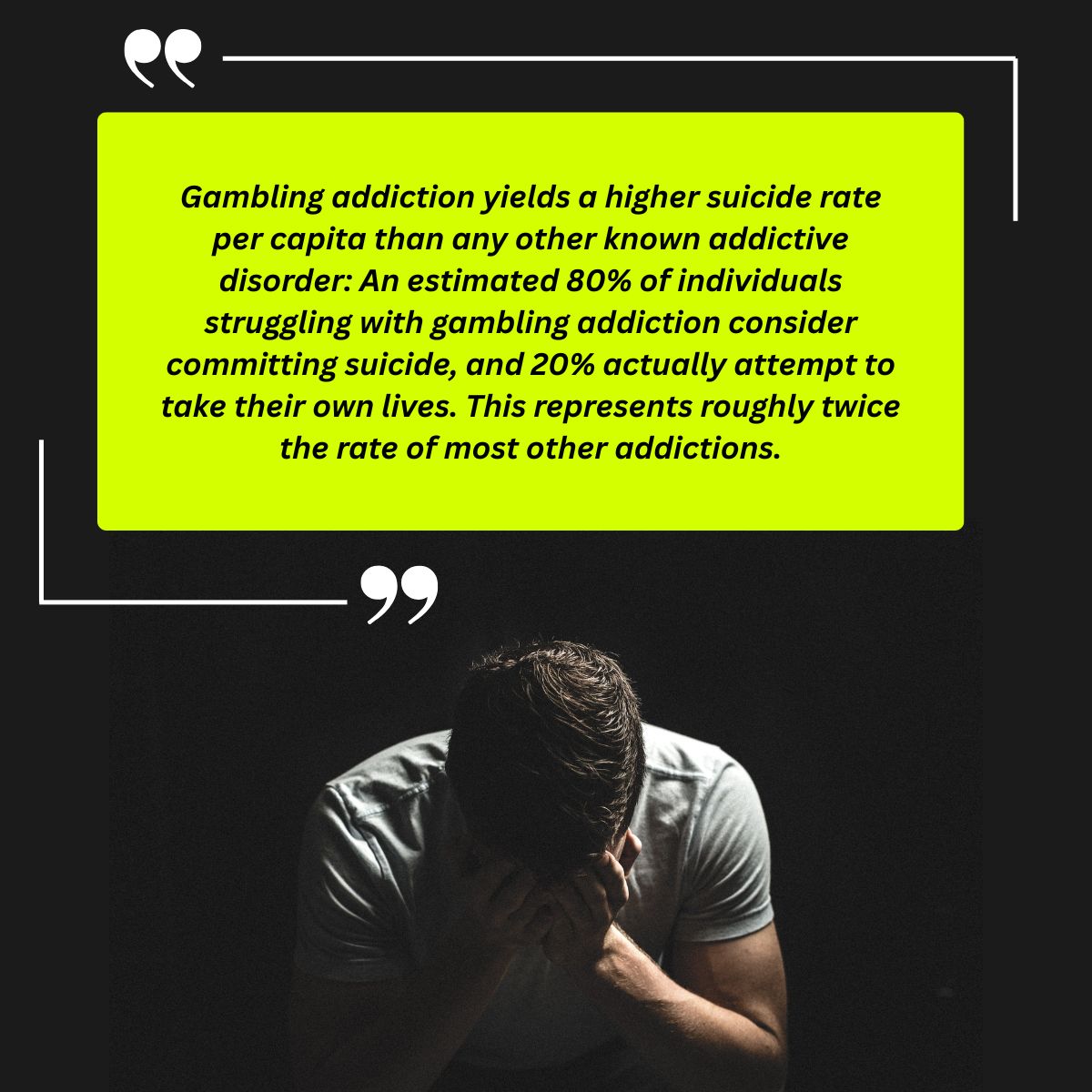
Regardless of the addiction, a life assignment has to be part of the remedy for those caught in the grips of one. And people who are guided by purpose don’t gamble with their money when meaning is on the line. Think about that for a moment. I define purpose as the assignment you were placed on this earth to accomplish for the benefit and betterment of others. With any life assignment, you’re going to have pop quizzes and open-book tests for growth-oriented purposes. And when chasing a lot of money, it’s easy to lose out on meaning. How so? Well, the allure of capitalizing on an improbable chance leads to getting caught up in a never-ending choice. What really happens is that problem gamblers lose the power of choice. You can only opt in to the next wager, not out of it. For gambling addicts, the choice is never binary (0 for not betting and 1 for the next bet). Because when choice is driven entirely by chance, which is the case with a gambling addiction, your life is operating in reverse order. This obviously will have a negative impact on a problem gambler’s circadian rhythm (how your body’s frequency or tuning system operates over a 24-hour period) and circaseptanrhythm (how in tune your life operates over an extended period of time, say 5 to 7 days). These two systems must be operating at peak efficiency for an individual to have a legitimate chance at fulfilling a purpose-centered, life assignment. And one of the telltale signs of a gambling addiction is a disrupted and dysregulated circadian rhythm. That’s when other vices show up—drinking, drugging, and drifting—to make up for the biochemical shortfall. This can lead to deep depression and suicidal ideation as losses mount. (The suicide continuum consists of fantasizing planning, vacillating, attempting, and completing self-inflicted death.)
Let me close out the series with this heartbreaking stat from Ohio’s Casino Control Commission website: