Gambling Addiction (Part III)
Wasted Lives, Wrecked Legacies
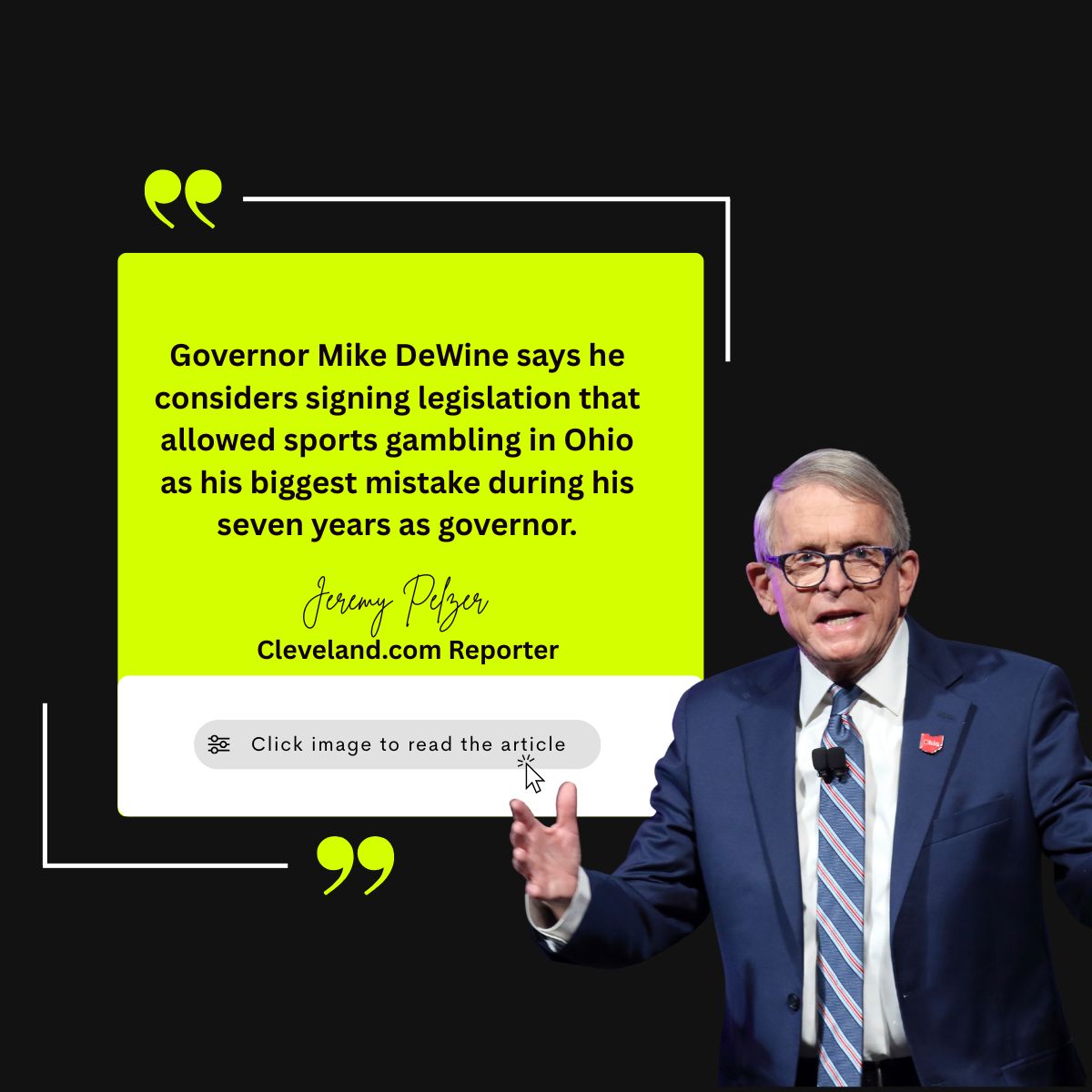
The fate of most problem gamblers who aren’t able to break free from their sports-betting addiction is some combination of a shortchanged life and a short-circuited legacy. Living is what they lose (in addition to a lot of money), and heritage is who suffers close to them (as a result of compulsive gamblers’ forfeited meaning or purposeless existence). Money lost, meaning less. And Ohio Governor Mike DeWine is intimately familiar with the personal brokenness journey behind the legislation he signed into law in 2021 but didn’t take effect until 2023. His jaw-dropping admission is one of the most shocking mea culpas I’ve ever heard a politician share in a public or private forum. I do applaud Governor DeWine for admitting his mistake, especially when so many gambling addicts have squandered their savings or home equity lines of credit, sabotaged their once-thriving marriages, and some have even taken their own lives. It’s so sad. On the sports side, Northeast Ohio native, Terry Rozier, tops the list. This former star basketball player at Shaker Heights High School and current NBA player (on suspended leave) has been implicated in a federal gambling probe. Two Cleveland Guardian pitchers, Emmanuel Chase and Luis Ortiz, were caught rigging pitch counts. Several University of Dayton basketball players faced threats from disgruntled sports gamblers. Brendan Sorsby, the star quarterback at Cincinnati over the past two seasons, admitted to placing thousands of sports bets while in college. (Sorsby has since transferred to Texas Tech; he did check himself into a residential treatment facility to address his gambling addiction.) Now think about how bad the side effects of sports gambling are for Ohio’s general population! Let’s discuss a few of them.
Side Effect #1: Financial Distress
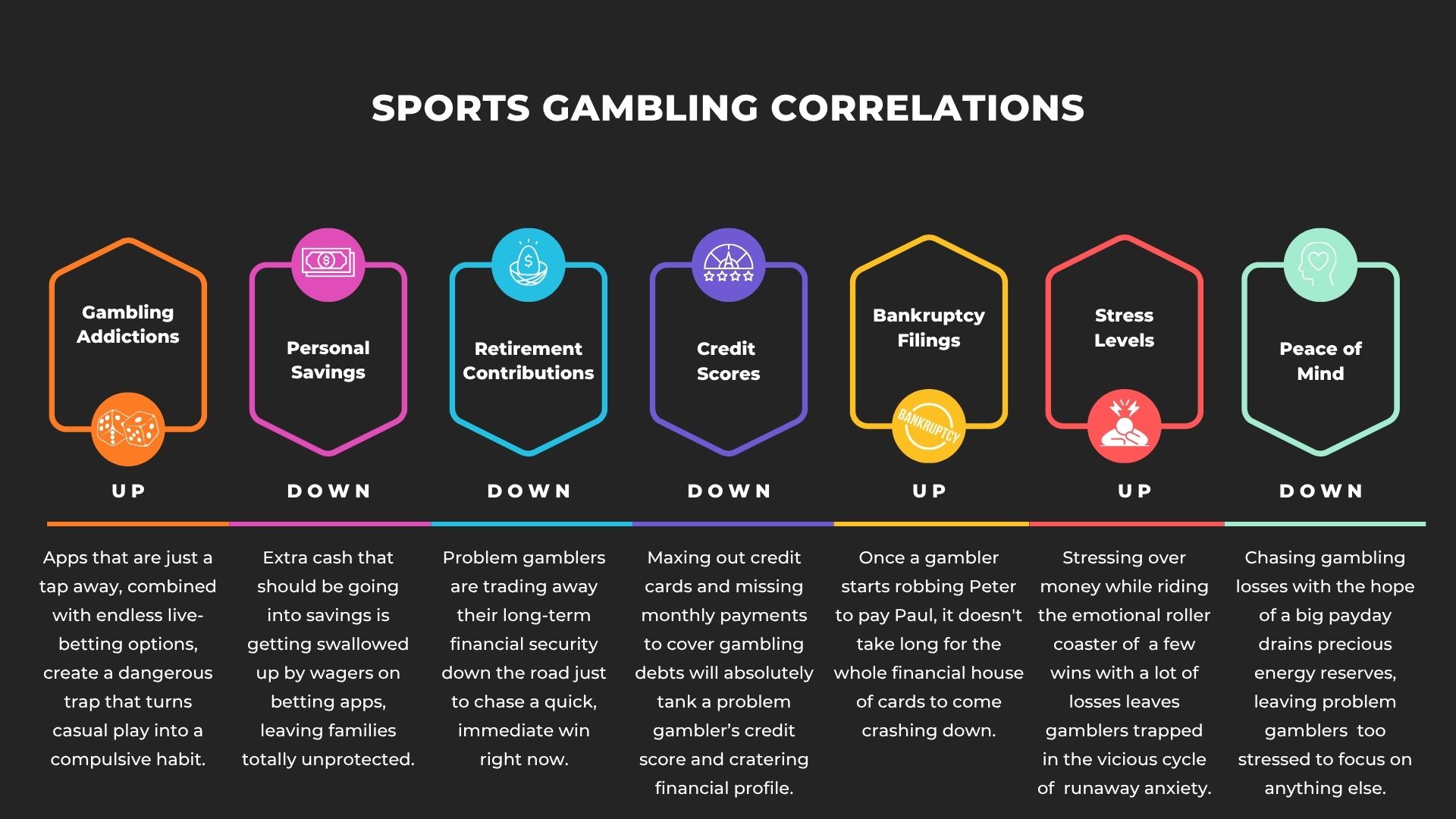
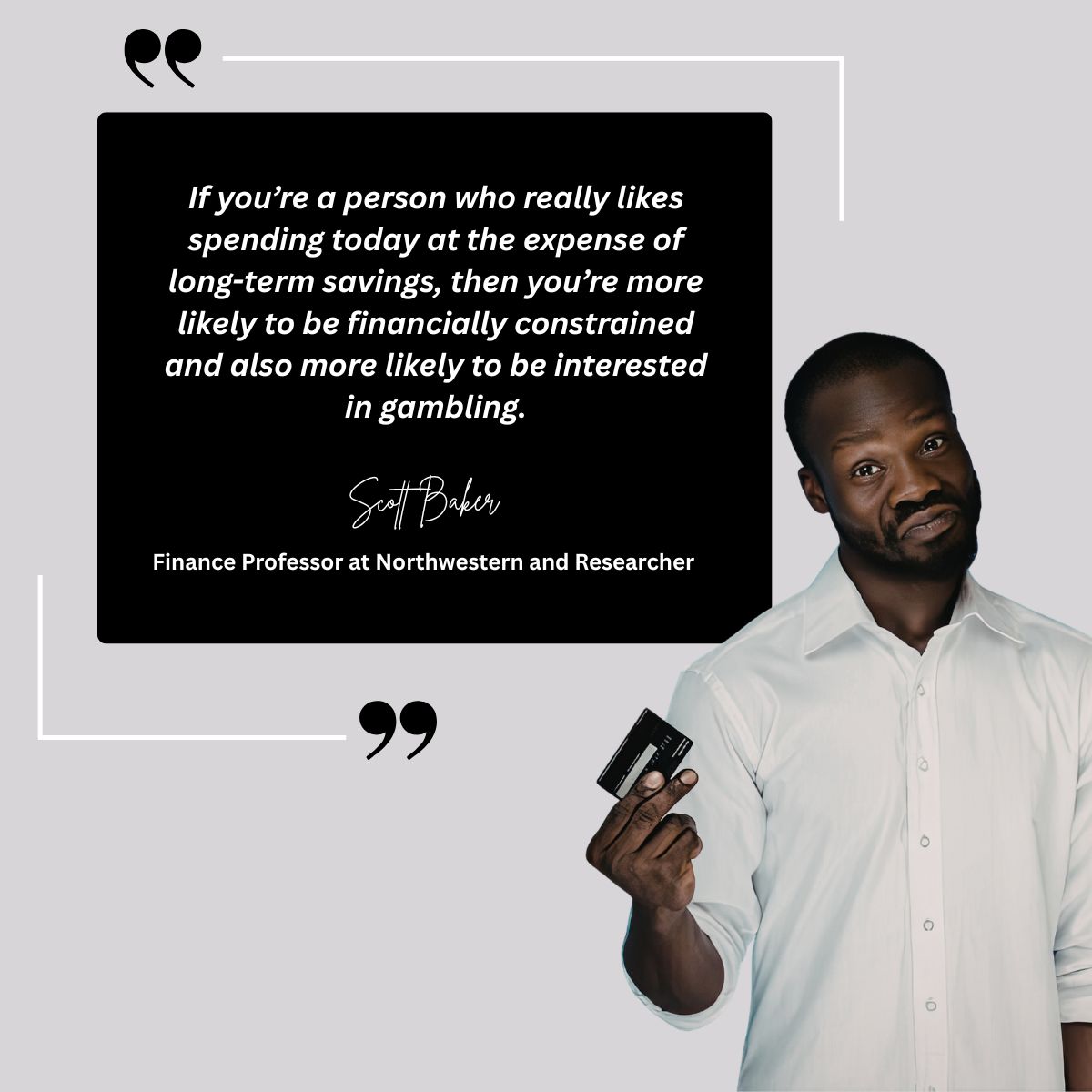
Throwing good money at incredibly bad odds is a painful lesson in futility. For most sports gamblers, chasing that next high will typically result in suffering through a new low. That new low—and the desperate measures that follow—has a ripple effect on personal or family finances for months (or even years) to come. “It’s a huge problem among young males up to 45,” Governor DeWine says. “And many of them are addicted, many of them spending money that they do not have.” Check this out. A groundbreaking study tracked the damage sports gambling has had in America over a five-year period from 2018 to 2023. Scott Baker, a finance professor at Northwestern University’s Kellogg School of Management and lead researcher, shared the following five conclusions, among others:
-
Researchers saw that nearly 8 percent of households were involved in some form of gambling.
-
While the amount of money people put into legal sports gambling rose, their net investments fell by nearly 14 percent.
-
For every $1 a household spent on betting, it put $2 fewer into investment accounts.
-
Evidence suggests greater access to sports gambling increased general participation in lottery games, particularly among households that frequently overdraw their bank accounts.
-
Beyond this, sports gambling also led to increased spending on cable TV, restaurants, and other forms of entertainment—possibly, the researchers speculate, driven by a greater engagement with live sporting events.
https://insight.kellogg.northwestern.edu/article/online-sports-betting-is-draining-household-savings
We, as a collective group, don’t have any money to waste. African Americans are at the bottom of the economic rung, with gambling debts and lottery losses adding to our shared misery. For every Oprah and Jay Z, we have Pookie and Ray Ray, Shamika and Sha Nay Nay. (By the way, my oldest niece is named Shamika.) As a community, we’re way behind financially when viewed from the prism of median net worth: $44,100 (African Americans), $62,000 (Hispanic Americans), $250,400 (Caucasian Americans), $535,400 (Asian Americans). We spend more on food, clothing, and entertainment than any other ethnic group. We contribute the least to our 401k retirement accounts than any other ethnic group. We are more prone to get-rich-quick schemes that promise huge payouts on small wagers than any other ethnic group. The 2022 census shared a shocking finding. Almost a quarter of black households had a negative to zero net worth compared to whites at 8.6 percent. So many ex-pro athletes and mega-paid celebrities claim to be pro black, but their endorsement deals with gambling companies contradict what they actually promote. Many of them were on the front lines of the Black Lives Matter Movement, but shouldn’t Black Legacies Matter More from an economic empowerment perspective? We’re quick to protest an unjust capitalistic system (and rightly so at times), but why are we setting up our own people for failure who gamble away money they can least afford to misspend? For African Americans, affinity bets using the advice of famous people who look, sound, and act like us do more harm than good. Sports gambling wagers should instead be redirected to fund 529 college savings accounts, increase contributions to retirement plans, start new businesses, make homeownership down payments, and more importantly, empower inner-city black youth through holistic initiatives.
Side Effect #2: Relational Distrust
Addiction found, trust lost. Troublesome measures are pursued by gambling addicts to cover their tracks in a relationship. As betting losses pile up, they must lie, hide, and/or steal to cover up the facade. Lying, hiding, and stealing are default responses that wounded players often display in the hurting games. Lie about the problem. Hide from personal responsibility. Steal from his, really their, financial future. To settle the score from the lost-bet scars—in their mind—all that’s needed is a big payout from the next wager. Unfortunately, problem gamblers end up digging an even deeper hole for themselves as well as the innocent bystanders around them. They not only lose more money; even worse, they mismanage relational capital with loved ones who feel betrayed. For many unsuspecting thrill-seekers who gamble, they are unaware of this roller-coaster outcome: The highs of relational deposits in the distant past are superseded by the lows of relational distrust in the present moment. Can the relationship recover? I guess it depends on two key factors, the gambling addict’s willingness to change and whether a loved one whose been deeply hurt has the heart to forgive. Both are required to build meaningful trust again, and they must occur simultaneously.
Jordan Acer (pronounced “Aker”), a certified financial planner and co-owner of Concordia Wealth Planning, has worked with hundreds of clients over his 10-year career. In a phone interview, he shared insights on several clients who’ve dealt with gambling struggles under his financial guidance. Acer points out, “When clients are withdrawing more than the plan is allowing, we, as planners, can highlight this in a loving way. But it’s their money, not ours.” He adds, “What ends up happening for some clients is that they’ll set up two separate financial planning accounts. Of course, this allows the husband to hide the gambling addiction from his wife.” He continues, “She knows when her husband is at the casino or a sports bar betting on games. His whereabouts are pinged by the location finder on her phone.” Trust is lost as the problem gambler burns through life savings, home equity lines, and retirement accounts to place ongoing bets. Wives or significant others don’t want to compete against an all-consuming gambling addiction; they want to be wholeheartedly pursued. Acer mentioned a close friend and problem gambler who stopped returning his calls, went through a difficult divorce, and moved out of state away from his kids. He notes, “And this phenomenon of relational distance has accelerated since sports gambling became legal in Ohio.” Unless something drastically changes on the legislative front, this will get far worse for those inside and outside the Buckeye state who are impacted by the side effects of gambling addictions.
Side Effect #3: Biochemical Disturbance
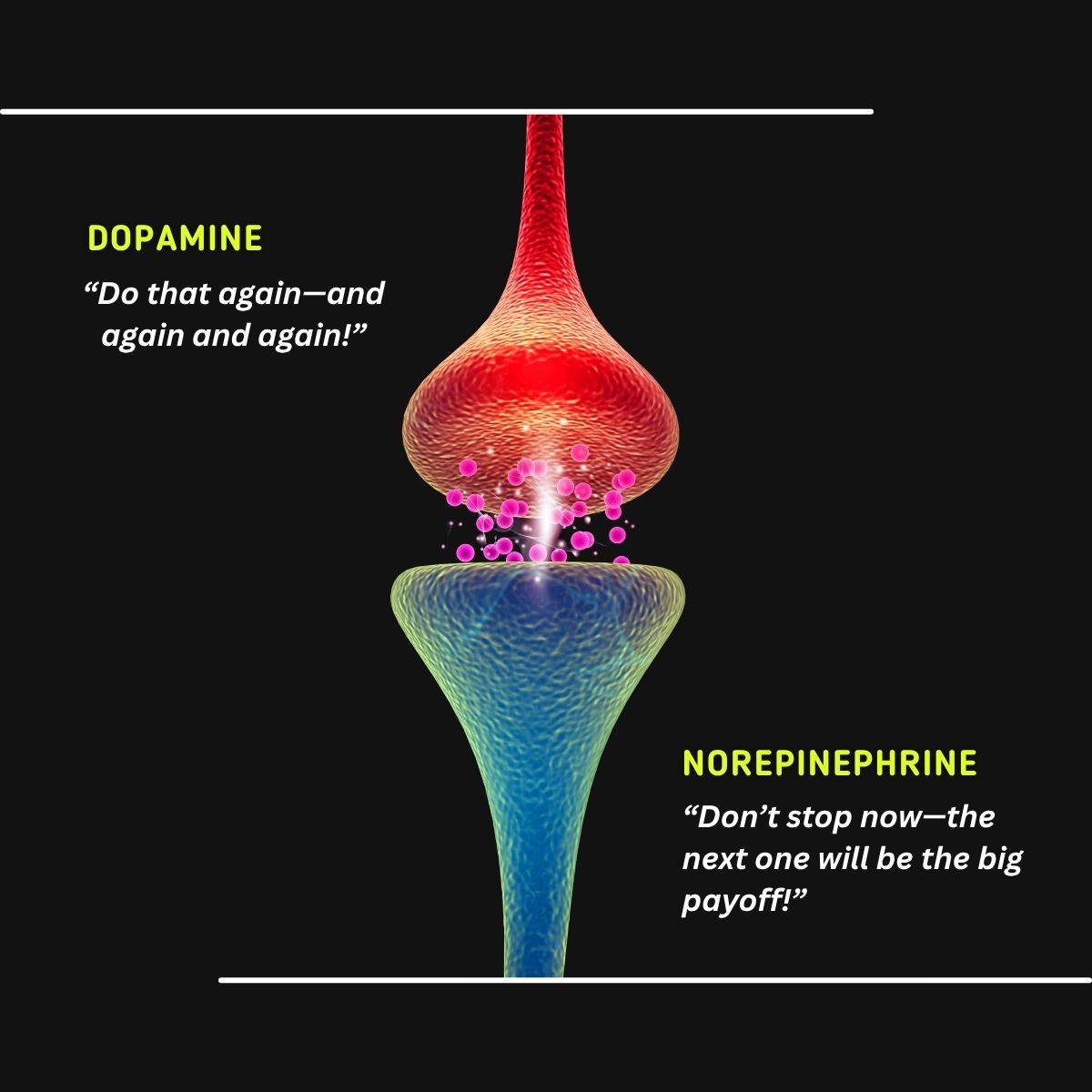
I know this to be true about addiction: the body doesn’t differentiate; it only responds. Doesn’t matter the addiction, the body is conditioned (through the reward pathway system) to replicate that initial high or low when the dopamine alert bells scream, “Do that again—and again and again!” And dopamine isn’t the only biochemical expression at play. A worn-out body needs a constant jolt of hyper-vigilance to keep a sports gambling addict locked in to the next wager. Norepinephrine, also known as noradrenaline, shows up and shows out with a vengeance. This excitatory neurotransmitter keeps the gas pedal on full throttle for problem gamblers who need every ounce of concentration from one bet to the next. It won’t let them miss out on a betting opportunity from sun up to sundown, whether it’s a west coast a west coast NBA playoff game or a table tennis tournament on the other side of the globe. There’s no rest for weary sports gamblers operating on fumes. They can’t deviate off course; norepinephrine, and it’s sidekick glutamate, won’t let them.
We can’t apply a bandaid to a gambling addict who is hemorrhaging from a wounded past. No, we must first offer a bandwidth solution, hopefully through the guidance of a qualified addiction counselor. Let me explain. Bandwidth is about tuning in to that gambling addict’s frequency meter or station of pain, say 106.5, where he plays or places 106 bets in 5 minutes by running from that permanent hurt to find his temporary relief. What permanent hurt? Being abandoned by his biological parents as a kid and shuffling between one foster care home to the next. Getting bullied on social media back in high school. Falling short as a misguided son, indecisive husband, or nonexistent father. The incessant betting is the remedy for his background noise or station of pain. (This also applies to females with gambling problems.) You see, most of us, if we’re honest, have background noise in our lives. We worry. We criticize. We doubt. The likely cause? Insecure attachments that still haunt us to this day, those maternal and/or paternal relationship deficits in childhood that follow us to adulthood. Experiences that aren’t even remembered before the age of six can negatively affect us decades later (Reference #1). Remember “Ryan” in the second article of this series? Well, he was born by Cesarean section; he also wasn’t breastfed as a baby. He admits, “I’ve always struggled with attachment issues as a teenager and young adult” (Reference #2). I’d venture to say that in the majority of cases, the roots of parental harm cause or greatly contribute to the offshoots of biochemical damage that lead to obsessive thoughts, compulsive tendencies, and addictive behaviors in children as they age.
Reference #1
Santiago Delboy. How Childhood Trauma Becomes Part of Who We Are as Adults. The origins of people pleasing, self doubt, shame, disassociation, and more. Psychology Today. March 31, 2025.
Reference #2
Marie-Andree Grisbrook and colleagues. The Association between Cesarean Section Delivery and Child Behavior: Is It Mediated by Maternal Post-Traumatic Stress Disorder and Maternal Postpartum Depression? January 17, 2024. NIH. National Library of Medicine.
Chasing Money, Losing Meaning
Regardless of the addiction, a life assignment has to be part of the remedy for those caught in the grips of one. And people who are guided by purpose don’t gamble with their money when meaning is on the line. Think about that for a moment. I define purpose as the assignment you were placed on this earth to accomplish for the benefit and betterment of others. With any life assignment, you’re going to have pop quizzes and open-book tests for growth-oriented purposes. And when chasing a lot of money, it’s easy to lose out on meaning. How so? Well, the allure of capitalizing on an improbable chance leads to getting caught up in a never-ending choice. What really happens is that problem gamblers lose the power of choice. You can only opt in to the next wager, not out of it. For gambling addicts, the choice is never binary (0 for not betting and 1 for the next bet). Because when choice is driven entirely by chance, which is the case with a gambling addiction, your life is operating in reverse order. This obviously will have a negative impact on a problem gambler’s circadian rhythm (how your body’s frequency or tuning system operates over a 24-hour period) and circaseptanrhythm (how in tune your life operates over an extended period of time, say 5 to 7 days). These two systems must be operating at peak efficiency for an individual to have a legitimate chance at fulfilling a purpose-centered, life assignment. And one of the telltale signs of a gambling addiction is a disrupted and dysregulated circadian rhythm. That’s when other vices show up—drinking, drugging, and drifting—to make up for the biochemical shortfall. This can lead to deep depression and suicidal ideation as losses mount. (The suicide continuum consists of fantasizing planning, vacillating, attempting, and completing self-inflicted death.)
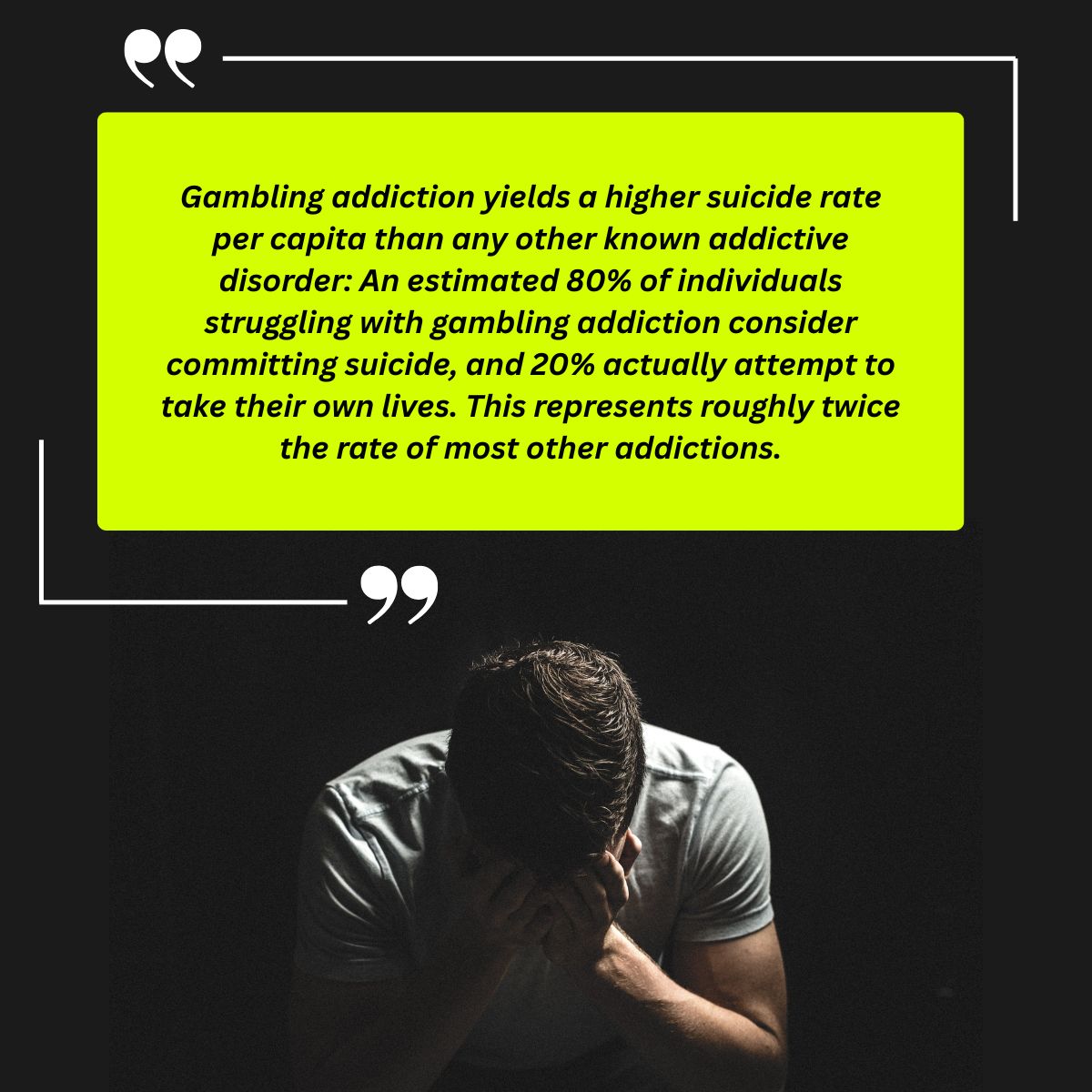
Let me close out the series with this heartbreaking stat from Ohio’s Casino Control Commission website:


Gambling Addiction (Part II)
Cracking the Gambling Addiction Code
An algorithmic node—that’s what a problem gambler is—in the addiction network. Online sports gambling is a significant part of the prediction economy, a system in which future (or even split-second live) bets can result in lucrative payoffs for an infinitesimally small number of winners. The problem is not with the anticipated gain; it’s the assumption that somehow a loss will be altogether avoided, or worse, not considered at all. Here’s what I mean. In order for the sports gambling system to capture pools of willing players, significant amounts of data have to be collected on “monetized targets,” notably where they live, play, and work; who they follow in the sports world; why they enjoy live betting more than static gambling; when they’re likely to place small, medium, or large bets; how frequently they wager over a given time period; and which mix of parlays or prop bets are most appealing to them, among many other considerations. What gambling addicts don’t realize is this: the very same information they voluntarily share in responding to an affinity-based questionnaire or on a rapport-building phone call will, at some point, be used for their own demise. I call this the entrapment of systemic risk. Stay with me now. In effect, every sports gambler’s individual risk (and affinity, VIP profile) is added to the group’s mutual risks. The problem? Betters rarely share in collective gains but do quite often participate in cumulative losses through the law of large numbers. And when gamblers try to walk away from impulsive betting, frequency capital will be used to reel them back in. Managing moods is the biochemical manipulation key bookmakers deploy to unlock, really extract, more and more money from out-of-tune gamblers.
Sports bets are often made on the basis of superstitious beliefs, lucky hunches, past performances, forecasted trends, and of course, expert opinions (thanks, in large part, to celebrity endorsements from retired pro athletes and comedy icons). You see, the currency of assurance is the insurance of conviction. And this is precisely why gambling companies pay influential voices—who often leverage their larger than life colorful personalities or comedic routines in scripted, attention-grabbing advertisements—a boatload of money. The outlay is certainly worth the investment from a return-on-capital perspective. It’s a brilliant marketing tactic using an incredibly deceptive entrapment practice. This practice, among others, is what keeps gambling addicts locked into a game with bad outcomes. Pay up. Play on. Pray for. That next winning bet! By the way, humor influences human emotion and distorts logical thinking, serving as an embellishment hook to draw people in rather than to push them away. Don’t ask questions, just laugh at the joke, flow with the skit, embrace the punchline, and forget your problems. But there’s nothing funny about losing a job, spouse, or worse, a loved one through suicide due to a runaway gambling addiction.
“He’s Feeling It!”
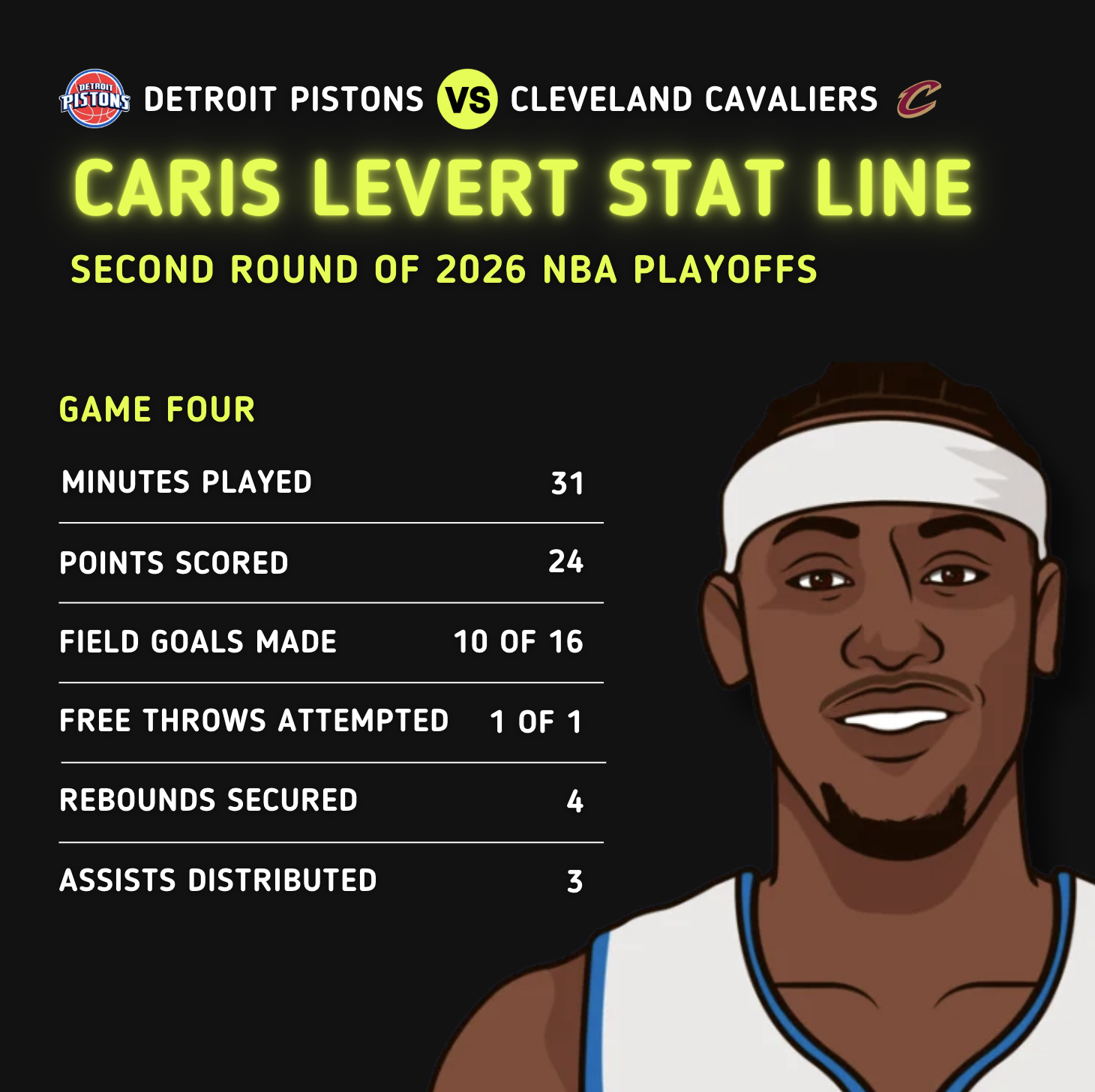
I’m a big fan of Carmelo (Mr. Cool) Anthony. I followed him at Syracuse, where he lead the Orangemen to a 2003 National Championship as a freshman. The Hall of Fame legend and three-time Olympic gold medalist had an illustrious NBA career. He scored 28,289 points in 19 NBA seasons. As the ultimate “Shot Hunter” and “Bucket Maker,” his confidence in scoring timely baskets was second to none. In our modern era, MJ was certainly next level, Kobe was a close second, and Kevin Durant right behind him. But Anthony could give all three of these all-world scorers a run for their money as the crème de la crème in making sure that spherical ball went through that orange hoop. With pinpoint accuracy! What I especially admired about Anthony was his ability to score—at will—on all four Olympic teams. Different makeup, same outcome. No matter who was on the floor with him, he knew how, where, and when to get his points. That’s why his insights carry a lot of weight as an NBC-Peacock basketball analyst for NBA games. During halftime of the fourth NBA playoff game between the Detroit Pistons and Cleveland Cavaliers, Anthony’s commentary on live player props for DraftKings caught my attention. Regarding Caris LeVert, a reserve player for the Pistons who scored 17 points in the first half, Anthony emphatically stated that LeVert would easily score more than the prop betting line, 23+. “All, that’s easy; he will get that in the third quarter!” LeVert had 22 points by the end of the third quarter, and finished with 24 for the game. Here’s the question to ask: How many viewers were persuaded by Anthony’s insights to bet on LeVert scoring more than 23 points before the start of the second half? Probably a lot.
The lure of predictive betting is very tempting to pass up. As noted in Part I of this series, I’m not a gambler. However, I do make predictive forecasts all the time as a former NBA player while watching college or pro basketball games. Because I am keenly familiar with the psychology and physiology of the sport, I do have “inside information” at my disposal. Through a production (more than a prediction) lens, I observe players’ and coaches’ body of work in previous games as well as their body language in the current game. Face of flight or focused for the fight? Blinking rapidly tends to convey stress, anxiety, and timidity, which may indicate that the moment is too big for a coach, player, or team to handle. My son Eli and I stayed up late to watch the first game of the 2026 Western Conference Finals. The San Antonio Spurs, led by Victor Wembanyama, won a thriller in double overtime against the Oklahoma City Thunder. I told him before heading to bed, “The Thunder are going to win game two by 8 to 10 points.” OKC won by 9. The Spurs gave a valiant effort, but OKC players had a different look in their eyes compared to the first game. They picked up their defense, pushed the tempo, and rode the wave of their electric crowd to a much-needed win. As the defending NBA champs, they had no other choice but to save face.
Incentives matter more than player stats or prop lines, which sports fans or gambling enthusiasts may not realize. Let’s revisit Caris LeVert’s game four breakout performance against the Cleveland Cavaliers. In the first round of the playoffs against the Orlando Magic, he averaged under 3 points a game. LeVert is a capable player; however, he struggled mightily against the Magic. But in the second round, LeVert averaged over 9 points, a 3x per-game scoring boost compared to the first round. What happened? Here’s my take. First, LeVert used to play for the Cavs. Obviously the team traded him; he may still have beef with Cavalier ownership about this. Second, he was born in the Buckeye State but played college basketball for that team up north. Cleveland Cavs fans reacted with boos to images on the jumbo screen of Jim Harbaugh, the former head coach of that team up north. I’m sure this fired up LeVert even more. Third, he is from Central Ohio, a roughly two-hour drive from downtown Cleveland. Now why wouldn’t he play better in front of family and friends who made the trip up from Columbus to support him against his former team? I would never share, no matter the financial incentive, any information for public consumption that could lead a problem gambler into financial ruin based on my “inside-information” recommendations. Keep the millions; I’m good.

Faith Framework, Belief Continuum
The faith framework (in what someone predicts while being a voice of trust) is part of the belief continuum, from plausibility to possibility to probability. Plausible. Possible. Probable. As you can tell by the synonym and semantic wordplay used, this type of belief offers the illusion of certainty at the expense of free choice through a cleverly packaged neuroscience hacking system. Guess where the faith framework and belief continuum are located in the brain? The temporal lobe, an area that also houses long-lasting memories, deep-rooted emotions, life-application scripts, trigger-inducing sounds, and aromatic-blended scents. The fragrance of a (perceived) winning bet passes the smell test long before, not after, it ever happens. And we know expectation and experience don’t always see eye to eye! Now, this doesn’t deter most gambling addicts who get caught up in the expectation-experience disappointment zone. No, they’re still convinced of the eventual outcome (in spite of evidence to the contrary), which is why they place their unwavering faith that it, or a follow-up wager, will at some point pay off.
This is the classic case of the stick dangling the proverbial carrot, also known as Pavlovian conditioning or associative learning (where a test subject can only opt in but not opt out of a reflex-guided experiment). Yes, dopamine may drive the conviction vehicle, but depleted levels of oxytocin are what fuel a wagering addict’s willingness to stay on the gambling belongingness bus, better yet, bankruptcy bust. And this, my friends, is an exhausting ordeal to pull off. Online all the time but in need of a lifeline. In a VIP suite full of other “lucky” gamblers while feeling alone in the corner of the room as the biggest loser. With family and close friends—at festive events full of laughter—who aren’t privy to the depth of darkness and newfound space-cadet ways of their loved one drowning in misery. If you’re an empath like me, you can feel their pain and grasp how problematic this whole setup is. It’s not a fair fight when a problem gambler can’t see or duck from the next punch coming. His reflexes are compromised, just the way gambling companies and their well-paid addiction scientists like it. (As a self-taught neuroscience hack and transparency ideologue, oxytocin is a connection pathway that I often appeal to as an empathetic-driven writer. Honesty is always the best policy.)
Before closing out this article, I want to introduce readers to a young man that I’ve had the pleasure of mentoring for the last year or so. To protect his identity, I’ll refer to him as “Ryan,” the alias he requested. Ryan’s a natural go-getter with an entrepreneurial spirit and stellar background in sales. His wisdom and understanding of life are quite impressive for a 24 year old. Heck, I learn just as much from him as he gleans from me. Unfortunately, Ryan’s a former sports gambling addict. At one point, his winnings exceeded $120,000. His losses? They were just over $225,000. Net-net, he’s in the hole more than $100,000. Some of his wins and losses are highlighted in the screenshots below. Ryan won early and often in the beginning, which kickstarted his gambling addiction. Off the rip, he won $28,000 in three hours without having a dollar of his own money at risk! As a result, BET365 banned him after he beat their algorithm; he won too much too quickly. However, the Midas touch eventually wears off for every above-average sports gambler, Ryan included. His addiction caught up with him, and he paid a handsome price for it—financially, relationally, and inspirationally.

A few years ago, Ryan’s sitting in the back seat of his parents car on the way to dinner with them. He notes, “I had just lost over $3,000—in a matter of minutes—using a sports betting app! Shocked and dazed, all I could do was continue scrolling while looking for my next pick-me-up bet.” The algorithm sent him into a state of fog, a common side effect experienced by problem gamblers. Ryan adds, “I couldn’t even have a meaningful conversation with my mom and dad. My mind was somewhere else, which was so disrespectful to them.” And that’s what a gambling addiction does to many players: they morph into (or take on) a scaled-down version of their best selves. It’s subtle, but as they bet and lose more, meaning is lost in lockstep with the money. Ryan continues, “I lived for that next wager. I made the erroneous assumption that this would be my purpose in life, an A-rated gambler who could consistently beat the odds.” His emotional state took a beating right alongside his betting: disgust, anger, shame, regret, and shock overwhelmed him. He concludes, “I lost myself and a girlfriend over my out-of-control gambling problem. What’s worse, I wasted so much time chasing an empty thrill.” Ryan’s still here, but some problem gamblers aren’t as fortunate. In the last installment of this series, I’ll discuss the pathological effects of runaway gambling addictions. Thank you.
Gambling Addiction (Part I)
Huge risks, big(ger) payoffs. For the record, I’m not a gambler. Nope, it has never been a gravitational pull of mine. However, I have seen many people, including former NBA teammates, get bitten by the gambling bug over the years. The side effects? Well, they’re dose dependent and ever present. More on them a bit later. Gambling has always been a part of the NBA culture, whether it’s card games with multi-thousand dollar jackpots on long road trips to the east (or west) coast in private planes, frivolous bets on half-court trick shots before and after practice, or locker room wagers on which referees are likely to officiate hotly contested playoff games, from one round to the next. I witnessed these scenarios—and many others—firsthand in the NBA. “Bet that” was part of our everyday, testosterone-driven lexicon; nothing was off the gambling table. It’s much worse today! The side effects of gambling addictions result in long-lasting symptoms, from financial problems to relationship challenges to internal stressors to sleepless nights to mental health issues, in particular, circadian rhythm disruptions. By the way, May is Mental Health Awareness Month. And yes, even casual betting indulgences can morph into full-blown gambling pursuits when triggered by an unforeseen setback, such as a job loss, economic downturn, death of a life partner (or beloved family member), or any number of crises-related events. What usually happens here is the chase becomes the run to the fun. To a place of refuge or from a space of torment. Either way, the addiction fix is in.
Are some individuals, like myself, predisposed to addictive tendencies because of genetic (or heritable) traits, epigenetic (or environmental) influences, or optogenetic (or shiny-object) sources? The evidence is mixed. Opinions vary in the medical community from “not at all” to “significantly so.” Here’s what we do know about people who have an innate ability to bet on themselves, many gambling addicts included. These individuals generally fall into one or more categories: movers and shakers, risk takers, and/or opportunity makers. Let’s break each of these down from a psychological point of view:
Movers and Shakers
Movers and shakers make things happen. Right now! For them, sitting still is missing out on the action. Even in a confined space of intense boredom, their mind is moving from one thought to the next. Broadly speaking, they’re long on creating million-dollar ideas in record time but short on producing the feasibility studies needed to pull them off. The number one drawback of movers and shakers? It’s easy for them to confuse movement for progress. In fact, going somewhere may not get them anywhere.
Risk Takers
Next up is risk takers, who cover the gamut. At one end of the spectrum are methodical and meticulous risk-taking brain types. Planning typically comes before acting. They’re philosophical and are often described as having “mundane personalities.” They usually excel in math and sciences, which is why they’re drawn to analytics and arbitrage strategies when gambling. At the other end of the risk-taking spectrum, we find carefree and careless brain types. When they feel it—that urge to splurge or need for speed—they’ve already acted upon it. An impulsive purchase. An unsolicited critique. A high-stakes wager. For these individuals, they assume delay automatically means denial. And in the world of sports betting, they’re prone to losing their shirts. Literally! Due to their spontaneous and combustible personalities, they’ll jump in the pool at the casino after a big win or pledge their home as collateral to chase a huge loss. One thing is fairly certain: they often move in lockstep with their mood. (I’ll cover this phenomenon in greater detail in Part II of this series.)
Opportunity Makers
Opportunity makers do just that … make opportunities happen for themselves and others. With this group, where there’s a will, there’s a way. Gut instincts, not impulses, drive their opportunity bus. As hockey legend Wayne Gretzky once said, “You miss 100 percent of the shots that you don’t take.” So true, but some shots are not worth taking regardless of the colorful appearances, celebrity endorsements, or commercial advertisements. Why gamble with your health or wealth using somebody else’s opinion?
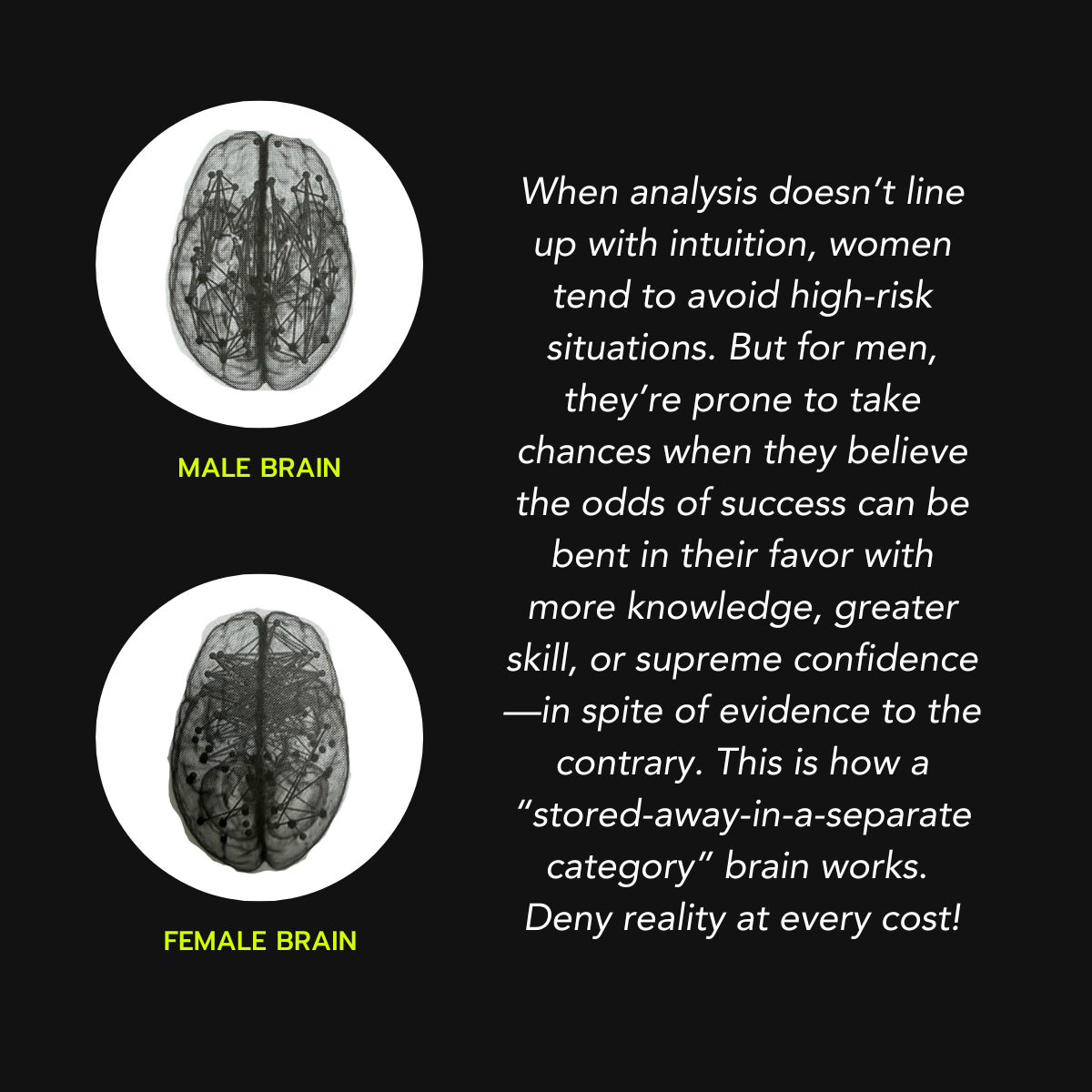
Why Males Can Compartmentalize Gambling Losses at the Expense of Isolated Wins
Not surprisingly, males are more impacted by gambling addictions than females. By a wide margin! Sounds controversial, but it shouldn’t be. According to Dr. Helena Boschi, an accomplished author and renowned psychologist specializing in applied neuroscience, she writes, “Men’s brains display front-to-back connectivity within the [left and right] hemispheres, moving between perception and decision-making” (reference #1). Women’s brains, Boschi notes, “are wired more laterally, between the hemispheres, suggesting greater communication between analysis and intuition.” (reference #2). Fellas, don’t shoot the messenger, but women are generally more intelligent than men. Ladies, I’m sure you already know this :). Neuroanatomy differences may also explain why male drivers pay higher car insurance premiums than female motorists. If male and female brains are exactly the same, then why are our risk profiles for automobile insurance so vastly different? Independent of ADD and ADHD diagnoses, risk-seeking behaviors are usually par for the course in the male brain. And gaming companies know this, which is why pubescent boys are being set up to become lifelong gaming and gambling customers through addictive video games with picturesque backdrops, exhilarating sounds, and masculine messages. Optical illusions. Acoustic frequencies. Semantic associations. A marketing campaign trifecta with terrible societal consequences.
Reference #1 and #2
Dr. Helena Boschi. Why We Do What We Do: Understanding Our Brain to Get the Best Out of Ourselves and Others. Chapter One, page 15. Wiley Publishing, 2020.
Chris Broussard is a sports analyst and commentator on FS1. Alongside Nick Wright, he is the co-host of the popular afternoon sports show, First Things First. A devout Christian, family man, and community ambassador, Broussard has worked for The New York Times, ESPN, ABC, and Fox Sports Radio. He covered the NBA’s blockbuster gambling scandal in 2025 involving Terry Rozier, Chauncey Billups, and Damon Jones. Rozier, a guard with the Miami Heat, and Billups, an NBA Champion and Portland Trail Blazers head coach, have been placed on indefinite suspension by the league as their cases are still under FBI investigation. Jones, a former NBA player and teammate of mine in Sacramento, pleaded guilty on April 24, 2026, to two counts of wire fraud conspiracy. In an interview, Broussard highlights, “The professional leagues may have inadvertently made a deal with the devil by getting in bed with these gambling companies.” He adds, “And there was no way to shield players from getting caught up in some kind of gambling scandal.”

I was heartbroken by the news when it first broke. I thought to myself, “This is a really bad nightmare. Current and former NBA players allegedly mixing and mingling with mob families to dupe unsuspecting poker players out of millions of dollars through rigged setups. Say it ain’t so?” The game I love and league I defend is facing a crisis in confidence on three fronts. First, this scandal will fuel skeptics who already think (with this serving as added proof) that the NBA is nothing more than scripted choreography. It’s not, but every missed open shot, careless turnover, or senseless foul will be scrupulously examined from a “suspect-entertainment lens.” Second, current players will face even more scrutiny from sports betters masquerading as diehard fans when wagers miss the payoff mark. An irate sports bettor rolled down his car window to confront NBA superstar, Jimmy Butler, who was standing on the curb in New Orleans while in town to play the Pelicans. “Bro, I put $3,000 to win 30 [thousand]. Why you ain’t have 30 points? Jimmy Butler, why you didn’t have the 30 points? You were supposed to go OVER b—h. You work for Vegas? You work for Vegas?” Third, how will America’s youth be affected, really infected, by the gambling bug if no safeguards are put in place to protect them? Without an alternative course of action, they’ll likely fall victim to gambling devices in adulthood, if not before. We’re in big trouble folks.
In closing, I shared the stage recently in Denver with Rob Minnick, a former gambling addict now turned recovery advocate. We were participating in an event hosted by Doura-Schawohl Consulting and several Colorado legislators to limit sports betting in the state. (The bipartisan bill passed this week and is awaiting Governor Jared Polis’ signature.) For six years, Minnick struggled with a runaway gambling addiction. From parlays to blackjack to slot machines, he gambled every day online and in the casinos for 6 to 8 hours. Upon first glance, he didn’t fit my jaded, gambling addict profile. Minnick is polite, soft-spoken, and measured with his words. His Youtube channel and One Day At A Time (ODAAT) website are timely resources that shed light on this growing epidemic, with over six million Americans battling mild to severe gambling addictions (reference #3). Minnick’s story is best illustrated against the backdrop of Dr. Steve Rose’s Seven Excuse Traps.
Reference #3
Dr. Kent S. Hoffman. Addiction Help: Gambling Addiction Statistics. March 3, 2026. www.addictionhelp.com/gambling/statistics/
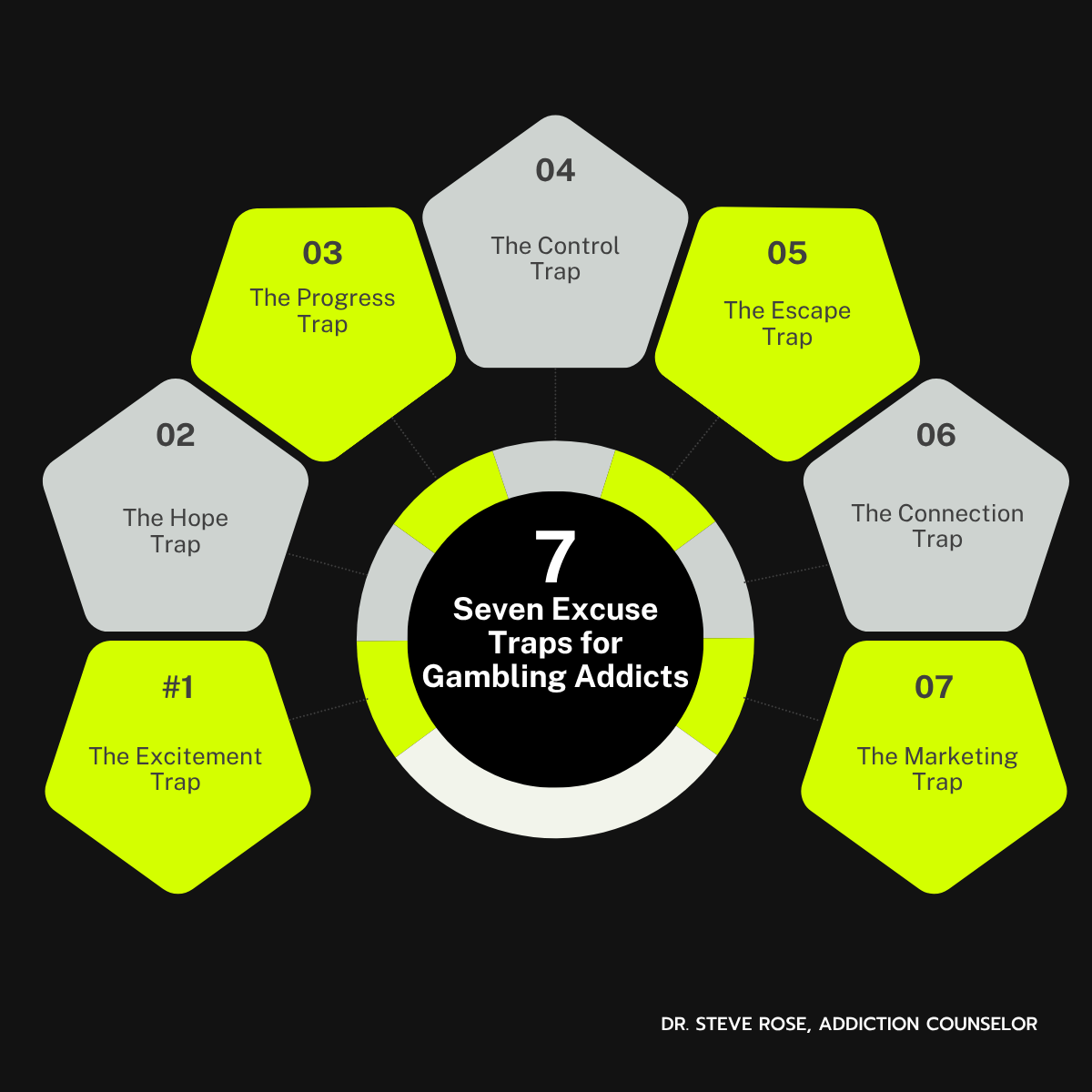
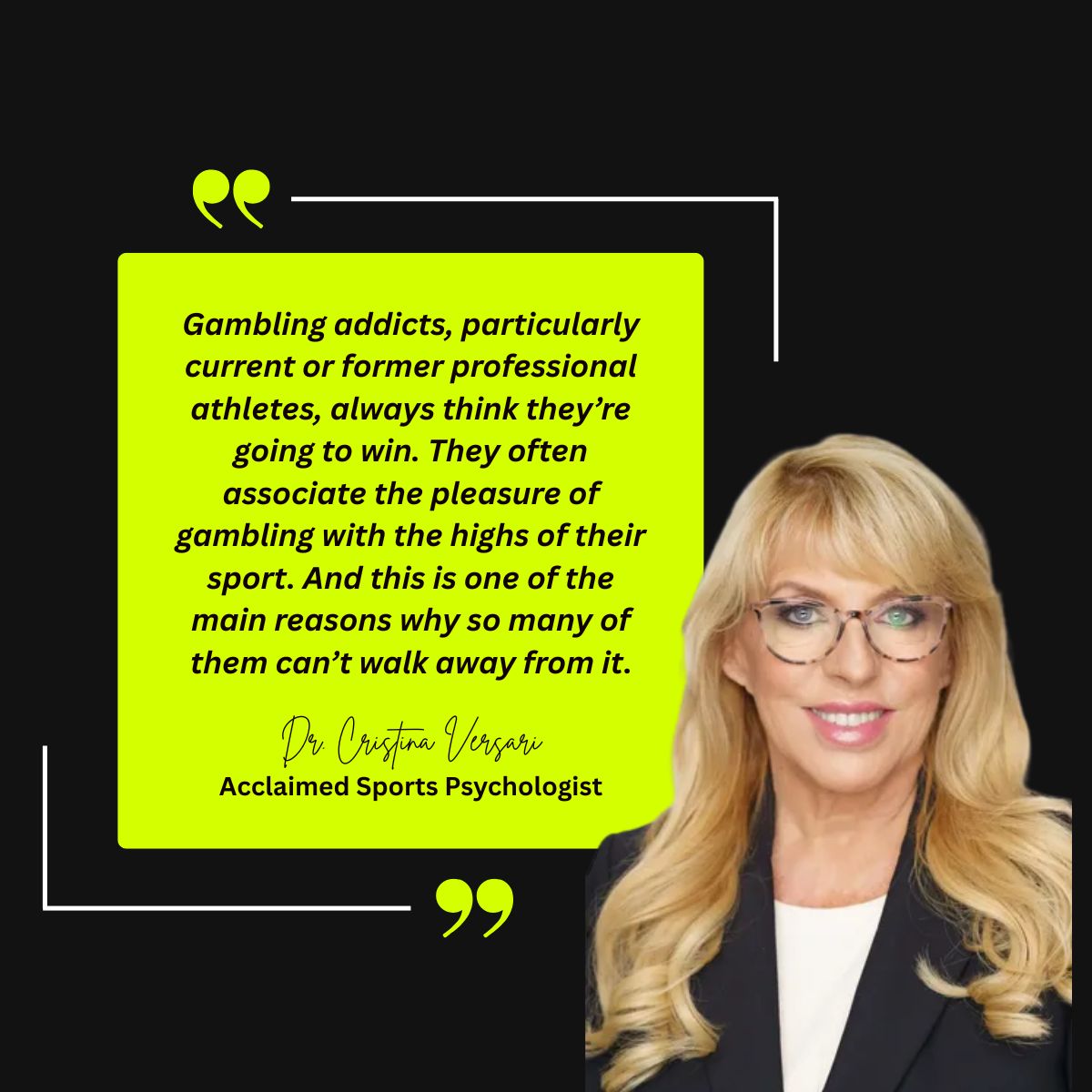
With Excuse #1: The Excitement Trap, Minnick’s addiction was set in motion by that initial dopamine hit coursing through his body. He points out, “This is where I got suckered in by the fun. Without that thrill, the gambling ride would have been boring and pointless for me.” The dangling carrot, Excuse #2: The Hope Trap, kept Minnick in the gambling feedback loop. Pay up. Play on. Pray for. That next win streak! Even when his losses piled up, Minnick convinced himself that one more bet—a winning wager—would cure his addiction in full. He admits, “Gambling addicts dig in when they should bail out.” That ray of hope, a promising payday, kept the hype fuel lit. The Progress Trap, Excuse #3, is where gamblers find themselves stuck in a rut with no tow truck in sight. Minnick warns, “Here is where the near-miss fallacy kicks in. You lose by a point and tell yourself, ‘Man, I was so close. Keep going.’” A gambling addict’s brain releases a larger dose of dopamine in comparison to someone in the general population who also almost wins. That extra surge fed Minnick’s urge.
Excuses 4 and 5 can be paired together, The Control Trap and The Escape Trap. Discipline, due diligence, and determination were factors that allowed Minnick to feel in control in an uncontrollable environment. He even developed some peculiar rituals while trying to escape from the madness. “I wore the same clothes, sat in the same spot, and hit the blackjack table in the same place every time before I bet. I even listened to vedic chants to center myself. Of course, nothing worked.” Excuse #6: The Connection Trap is where gambling delusions reach their highest peak. Minnick shares, “You’re paying for friendships with complete strangers.” He adds, “Your losses are funding the luxury suites gambling companies invite you to enjoy. Think about how crazy that is!” What’s even more disheartening is that VIP gamblers tell themselves, “I belong here and can get pretty good at this.” And just when a gambling addict tries to get out, the push notifications and free-cash ads ramp up. That’s why Excuse #7: The Marketing Trap, won’t let a betting enthusiast just walk away on his or her own terms. Minnick explains, “It’s so sinister what gambling companies do; they know us almost better than we know ourselves.” He concludes, “Fighting fair is not in their best interest financially.” Stay tuned for Part II in this series, The Physiology of Gambling Addictions, which will be released next week.