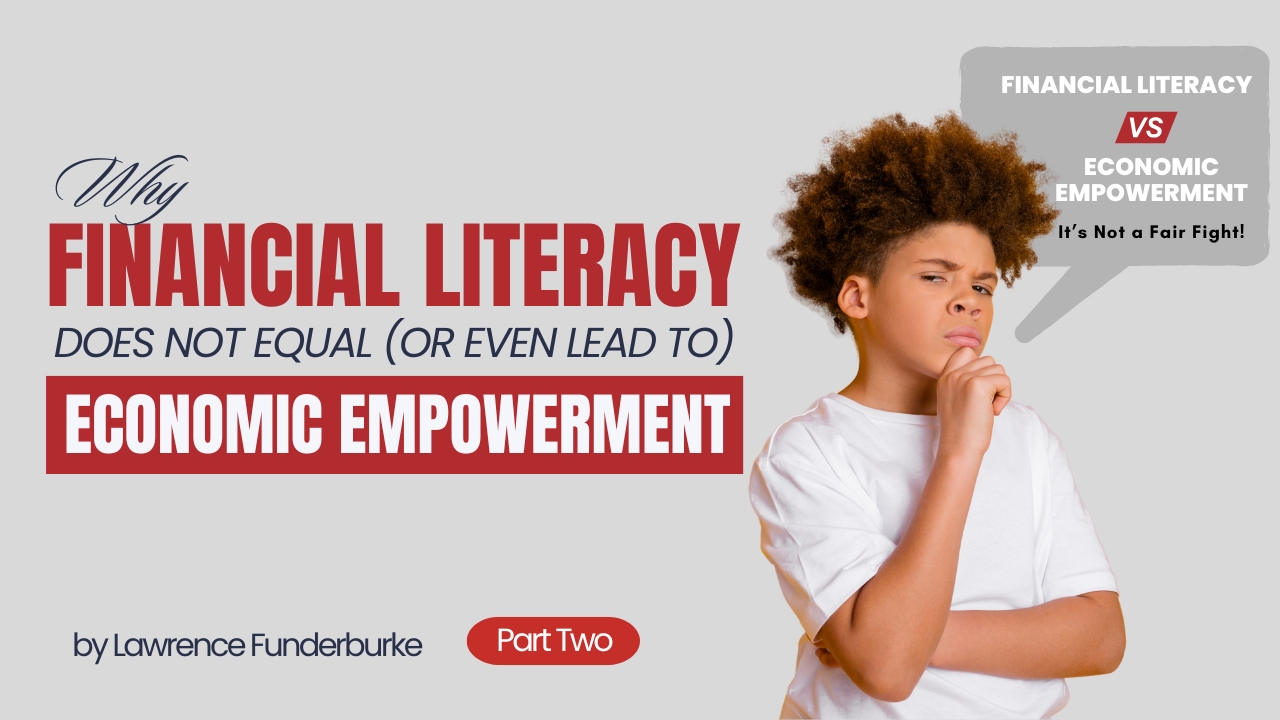
Financial Literacy vs. Economic Empowerment (Part Two)
It's Not a Fair Fight!
Start the course in childhood, continue the journey throughout adulthood. Developing financial life skills within the framework of wealth-building initiatives—investing in stocks, bonds, mutual funds, and other compounding-growth options—are critical to helping at-risk youth connect the academic and opportunistic dots. Yes, these concepts are foreign to most fifth-grade students (regardless of their family’s economic situation). But an introduction to personal finance should come sooner rather than later for children from under-resourced households. They’re quite familiar with the typical, outdated motivational track: Go to school. Secure a job. Earn an income. With some minor revising and major revealing, vulnerable students should have access to this updated, twenty-first century educational template: gain a foundational understanding of wealth-building principles in elementary school; identify talents, gifts, and abilities in middle school that align with a child’s mission-driven fit; and create a pathway for high schoolers to become philanthropic contributors as change-agent specialists within their respective communities. When high-need students experience the miscues of financial mismanagement and the virtues of wealth accumulation firsthand in game-based settings, they’re generally more aware and excited about their future prospects and place in this world.
Not Nearly Enough vs. Just Barely Enough vs. More Than Enough
One of the biggest mistakes middle-class facilitators in the financial literacy field or educational arena make when working with low-income households is this: They often place limits on how far up the economic ladder the less fortunate (as well as members of their own social class clique) can climb. Surface-level mantras, even innocent ones, do more harm than good. “Get a safe and secure job.” “Stick to a realistic budget.” “Be careful investing; it’s not that much different than gambling.” You get the picture. Safe and secure jobs don’t exist anymore in our modern, AI- and algorithm-driven world. Workforce cracks, aka seismic shifts in the (un)employment landscape, are just around the corner. Budgeting is so passé, so why not highlight cash flow management instead? The former is suffocating, while the latter is liberating. Yes, semantics matter a great deal when financial freedom is on the line. True enough, speculative investing is akin to gambling. However, calculated risk taking—when guided by and guarded with due diligence—is not. As any value investor knows who typically pays more attention to balance sheets than income statements (when evaluating prospective companies), extensive research is the key to finding good stocks selling at a steep discount to their intrinsic value or fundamental worth.

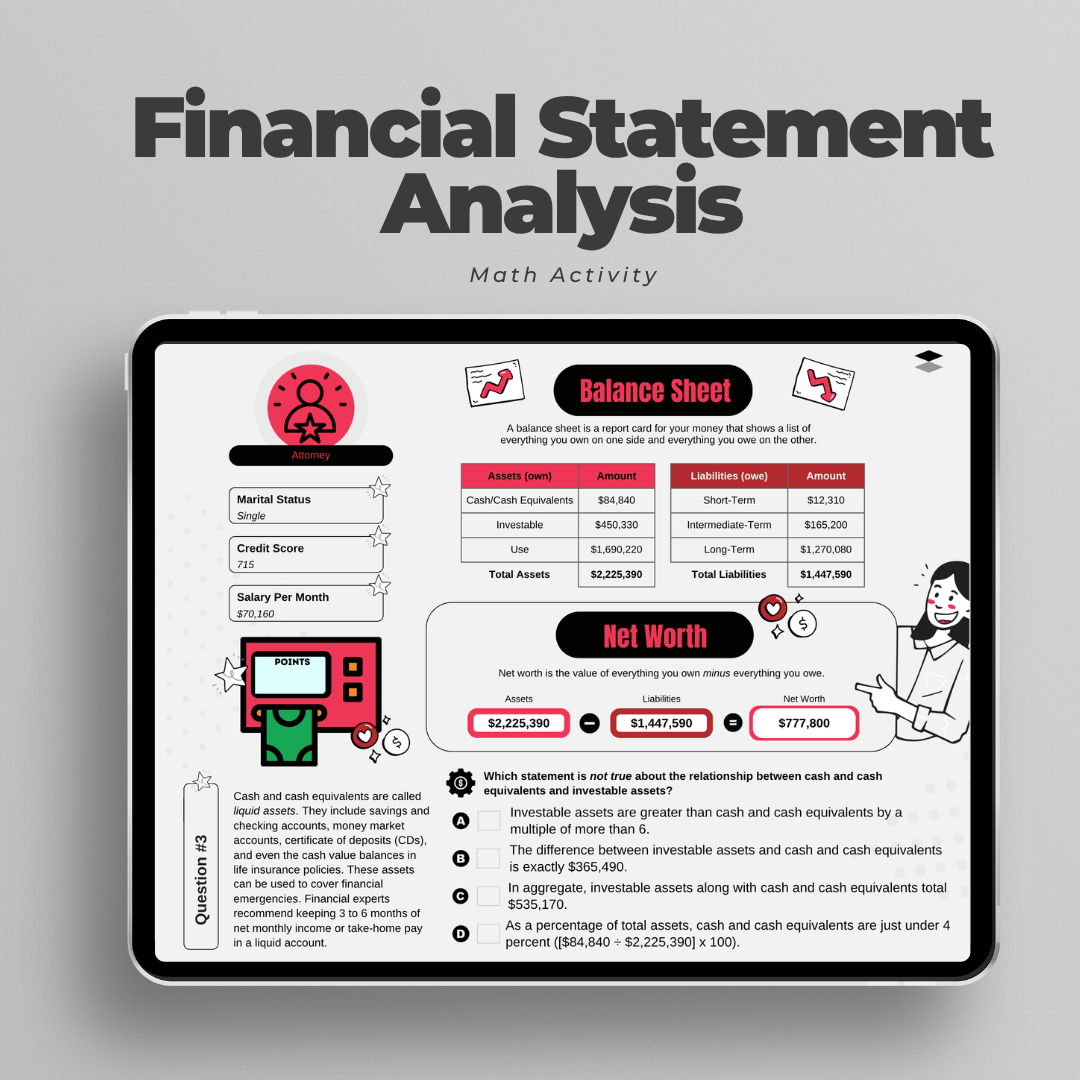
In settings using make-believe money, vulnerable students should dream big. In our Buying Your Dream Car activity, we allow underserved youth to reach for the stars. In this interactive exercise using an iPad, students are assigned a hypothetical occupation, monthly salary, marital status, credit score, and balance sheet to purchase their dream car. The experience even includes step-by-step instructions on financing considerations, notably making a down payment or placing a deposit, buying an extended warranty, and selecting the number of monthly payments until the bank loan is repaid. Luxury vehicle selections are as follows: Range Rover Sport, Mercedes-Benz Maybach, Bentley Flying Spur, Ferrari Spider, Lamborghini Urus, Tesla X, Porsche Panamera, BMW 7 Series, Audi RS e-tron GT, and a Mercedes-Benz G Wagon. While scrolling through the list of dream cars, the collective oohs and aahs of students is music to our ears. The acoustics and optics in the classroom are why we, Monya and I, do what we do as economic empowerment crusaders. Create an enriching environment—through gamification activities—that places each student in the driver’s seat of holistic success. As tour-guide representatives, it’s incumbent upon us (like teachers, principals, and administrators) to provide inner-city youth with the navigational aptitude needed to achieve a prosperous life with legacy benefits.
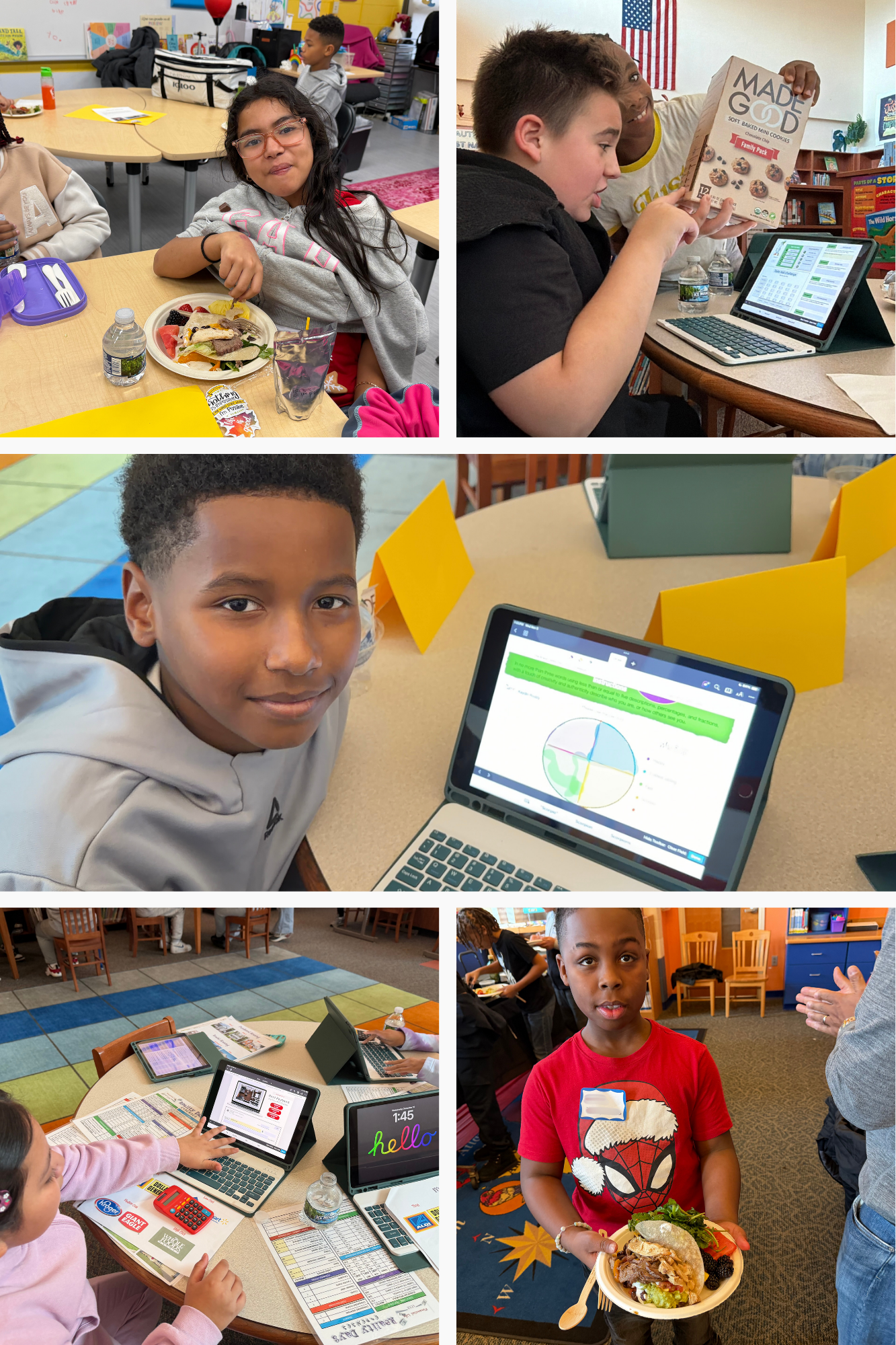
In closing, choice architecture (along with consequence assessment) is the name of the life improvement game for at-risk communities, who often choose the path of least resistance when they can’t opt out of higher-level thinking while evaluating mentally challenging strategies. Here’s what I’ve learned as a non-traditional educator and certified financial planner over the last 15 years: Data processing can quickly turn into information overload for vulnerable students who are short on academic conditioning. And when fatigue sets in, disinterest levels ramp up. The remedy? Provide a constant supply of stimulating flashpoints that connect inner-city students’ present reality (personal boredom) with their future possibility (financial freedom). A well-timed break to serve healthy snacks helps too! You see, the dream car they desire to purchase down the road comes with a hefty price tag. Whether it’s a car, house, or stock investment, everything has a cost. Pay now, play later. Play now, pay later. That choice, even by default, is theirs to make—whether they realize it or not. And reminding LFYO participants what could be and how they can achieve it is rooted in biochemical tuning. “Pay-careful-attention” comments boost norepinephrine or concentration levels. “Imagine-what-life-will-be-like-when-you’re-net-worth-is-off-the-charts” reflections increase serotonin or feel-good levels. “Stay-with-it” promptings amplify their endorphin or resiliency levels. Without question, neurotransmitter development is the most important factor in helping inner-city students step outside their math sweet spot and into their computational growth zone through personal finance concepts. And friction is required for this to occur! We have included a page from one of our financial math worksheets below for your review. Keep an eye out for part three in this economic empowerment series, which I’ll release next week. Until then, stay blessed.
2026 LFYO Fundraising Luncheon
September 18, 2026
Join us for our annual fundraiser! We’re passionate about equipping the next generation with the tools they need to go from just 'knowing' about money to truly mastering their economic future.