Bridging the Opportunity Divide for Vulnerable Youth and Young Adults
LFYO's Targeted Investment Campaign (3 of 3)
Press Play!
Highlight Video
Podcast
Mr. Fundy provides an in-depth scouting report of this generation's lineup of wounded players and their hurting games, or how vulnerable youth and young adults deal with the painful drop of parental abandonment.
Bridging the Opportunity Divide
Why the Rodney Dangerfield generation needs our help the most but receives the least amount of investment support for their development.
Targeted Investment Campaign
If you’re under the age of 40, you probably have no clue who Rodney Dangerfield is or what he was known for. This comedic actor starred in the 1980 iconic movie, Caddyshack. He passed away in 2004, but his popular catchphrase will always be remembered by Generation X and Baby Boomers: “I get no respect.” In word and deed, the jokes (which he often parodied) were always on him. Dangerfield certainly fell into a typecast role that he could never step out of or walk away from. And this is how many at-risk youth and vulnerable young adults feel, stuck and stranded inside the stereotype of perpetual brokenness. Broken hearts, damaged goods. As someone who has worked with over 30,000 teens across three decades, I can spot paternal pain within the first few minutes of meeting a person who’s shackled to it. Frightened eyes. Slumped shoulders. Folded arms. Distant demeanors. Angry faces. Pursed lips. Head tilts. Clinched fists. Rigid bodies. Shallow breaths. Nervous energies. Ice-cold hands. I could go on and on, but you get the picture. Here’s something you might have missed from the list: It doesn’t include any references to a young person’s (dis)interests, beliefs, attitudes, mindsets, or orientations. Nothing has been said but a whole lot is communicated by wounded players participating in the hurting games. I speak from past experience.

Hurting Games, Wounded Players
You show me the drop and I’ll point you to the drug, the drink, the drift, the drive, the drag, the drain, the drown, the drip, or the dread. And every one of these words starts with “DR,” which is an acronym for doctor. That’s exactly what you do when writing your own prescriptions for acute internal pain caused by residual affective trauma or RAT. Unfortunately, every prescription medication has unwanted … side effects. We are dealing with the side effects of marginalized youth facing a care-inflicted, personal brokenness crisis. Dropped by “care”givers (who likely were dropped by their own parents). Dropped by “care”fulness (in trusting their own flawed judgment). Dropped by “care”lessness (while trying to ease their pain by any means necessary). As a former participant in the hurting games, outcomes have immense consequences that very few wounded players stop to consider. Retaliatory contests. Spiteful pursuits. Vindictive agendas. Never-ending battles. Out-of-control addictions.
Even when wounded players win, many of them still feel like losers. Doesn’t matter if they graduate with honors academically, make it to the pros athletically, or wear the freshest clothes aesthetically. This is especially the case when their brains are undergoing the full-court-press or rapid-fire phase of synaptic pruning taking place in the executive function area of the brain. You see, between the ages of 18 to 25 the frontal lobe* is aggressively trimming off weak or unused neural connections so that existing ones can operate at peak efficiency. Here’s the problem. Unanswered questions from childhood—notably those dealing with the caregiver drop—can (and often do) lead to detrimental effects in young adulthood when impulse control is underdeveloped and self-worth deficits are overmatched. Sports-bet gambling addictions can take root. Drinking binges, of the alcoholic kind, can become daily occurrences. Explosive tempers, going from flat to furious in a split second, can be the norm rather than the exception. Dr. Charisse Penn, a friend and foster care expert, pointed out: “The foster child might not have a scar but still likely has an open wound emotionally.” She added, “Maybe the child has moved from one foster care home to the next and didn’t have a chance for previous wounds to turn into healed scars. And when this child has enough trouble and trauma from a triggered memory, that open wound will bust wide open again.” Wow, what a powerful illustration for us to ponder before foster care youth age out of the system and fend for themselves.
Reference: Do patterns of synaptic pruning underlie psychoses, autism and ADHD? Prasanna N. de Silva. Cambridge University Press. 25 April 2018.
Everyone Has a Father But Not Every Child Is Blessed to Have a Dad
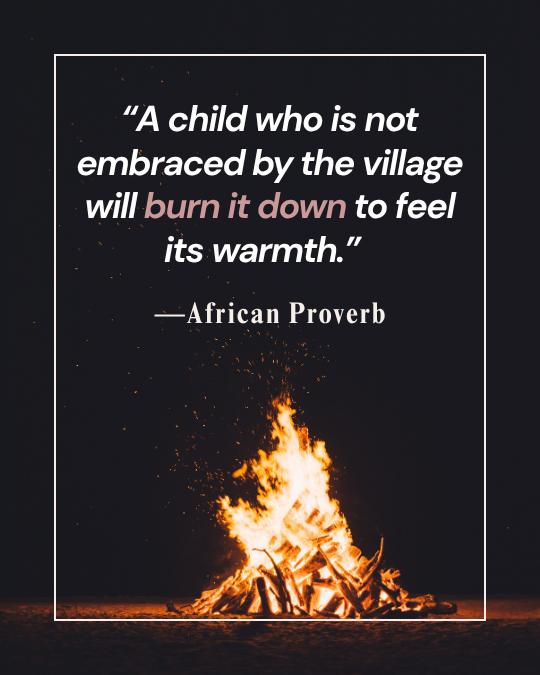
In closing, I realize this last section may trigger some of you while reflecting on your relationship (or lack thereof) with your biological father or paternal surrogate. One of the biggest problems teens struggle with today, especially broken or traumatized youth, is parental abandonment. And what’s unfair but certainly understandable is this: children, without being aware of it, can project the offshoots of their father’s paternal neglect onto me. Again, it’s not something a troubled teen says or even does. It’s that look, the body language holding me accountable, really hostage, for what an LFYO participant’s father didn’t provide him or her at critical stages of development. He dropped the ball and I have to pay for it until trust is earned. Upon entering a classroom, group home, or even prison, I can sense paternal tension in the air. At worst, they initially view me as an opponent. At best, they’re willing to hold a neutral opinion of me as a referee, that is, until my Papa Boost instincts or dad duties surface. Of course, I’m their teammate; they just don’t know it yet.
Let me leave you with this heartwarming story. A black female teenager from Philadelphia is sitting to my left in a room full of over 40 attendees. My paternal pain triggered hers; she sobbed uncontrollably throughout the remainder of my presentation. I let her go. In a safe environment, crying is cathartic. As she waited in line to chat with me after my speech ended, the tears were still flowing. Anticipating my embrace, I gave her a daddy side hug. In a mumbled tone mixed with stammering cries, she shared with me: “My father has been in and out of prison. Every time I reach out to him, he gives one excuse after another on why he can’t stop by to see me. Mr. Fundy, why doesn’t my father love me?” I repeated these Papa Boost words of encouragement to her as well as every listening ear within a ten-foot radius of our conversation, “It’s going to be alright, daughter. Don’t give up. Keep moving forward.” Every child deserves a paternal blessing, even when it’s unexpected. Thank you for your consideration to help LFYO as an investment supporter.
Investment Options for LFYO MVP Teammates
Ready to be an LFYO MVP teammate? We need your help! Support the Bridging the Opportunity Divide for Vulnerable Youth and Young Adults today.
Tap the link below to make a one-time gift.